The Head Girl at the Gables, Angela Brazil – WWI Challenge


The Head Girl at the Gables by Angela Brazil (1919) is available for free download at Gutenberg.org.

I chose this book for the The WWI Challenge for several reasons. I already had it on my e-reader, along with a number of others by the same author. I needed to read an English school story as research for a panel at Arisia (held in January). This particular book is interesting because it has some character overlap with another Brazil novel, Monitress Merle. Finally, the novel has more explicit references to World War One than I’ve yet encountered in her work.

The book was published in 1919, which leads me to think it was written while the war was still going on. In the story itself, it isn’t clear how far along the war has progressed–there’s no specific reference to years or events–but it had to have been after gas was introduced as a weapon, because at one point the students are collecting “fruit-stones and nuts, to be sent to headquarters for use in the manufacture of gas-masks for the army.”

The tone overall is one of patriotism and optimism, perhaps more due to the book’s genre than the mood of the country when it was written. Or perhaps the tone is aspirational. When a peripheral character is reported killed in action, there’s grief, but it’s nobly restrained. “Lindon, their one treasured boy, had “gone west”. Well, other mothers had given their dearest and best! She would offer him gladly, joyfully, on the altar of Britain’s glory! But her face seemed to grow suddenly shrunken, and the high colour faded from her cheeks, leaving a network of little red veins instead.”

The sentiments expressed in the school year’s opening speech are exemplary of WWI-era rhetoric:

At this crisis in the world’s affairs we don’t want to bring up ‘slackers’. Your fathers, uncles, brothers, cousins have answered their country’s call and gone to defend Britain’s honour, and you have been proud to see them go. The women of the Empire have played their part as nobly as the men, and it is these brave and splendid women whom you must try to imitate. Do you think they would have been able to give the help they have given to their country unless they had prepared their characters for it beforehand? I’m sure not…We hope it is going to be a beautiful world when the war is over, but it can only be so if we remember the sacrifices that have been made, and determine to be worthy of those who gave up everything for us.

Throughout the story, life goes on. The heroine, Lorraine, is elected Head Girl at the novel’s opening and spends the novel learning how to manage her duties as well as the personalities of the other students. In addition, she finds a mentor and begins to discover her own life’s passion, art. All the while, the War is a backdrop. Two of her brothers are at “the front, in the thick of the fighting” and another is “in training for the Air Force.” There’s also a subplot of spies who have infiltrated the sleepy, artistic English village setting. It’s apparently okay to complain about rationing. “In these days of rations there’s never even a scrap of margarine to spare, let alone butter!” and
“…home-made chocolate concocted with cocoa and condensed milk. Like most war substitutes, it was not so good as the real thing…”

What I like best about this novel is its hints of feminism. The main characters are almost all female, and they’re all active in the war effort as well as in their education. The school’s head quotes Nellie McClung in her opening speech of the year: “A nation never rises higher than its women.” Ultimately, the story has a Victorian tone, though. At the novel’s end, there’s a hint of the “angel in the house” idea when the main male character confesses to Lorraine, “I’ve been a fool, Lorraine. I’m going to start a fresh page, and try to be worthy of my best friends. I simply can’t express what I owe you. You’re the sort of girl that keeps a fellow straight–some women send them on the rocks. When I think of you, I think of everything that is true and good.”

“I’m not much to boast of, I’m afraid,” said Lorraine humbly, “but I’m trying–trying hard, like many other people who are a great deal better, and nicer, and sweeter tempered than I am.”

That scene does not defeat, however, the scenes throughout of girls who make art and uncover enemy activity.

Overall, this was a fun read for me.

Posted in wwi, ya | Tagged | 4 Comments

Budapest Noir

I have a preview of Budapest Noir by Vilmos Kondor up at The Criminal Element, if you missed it last week!

Posted in writing | Comments Off on Budapest Noir

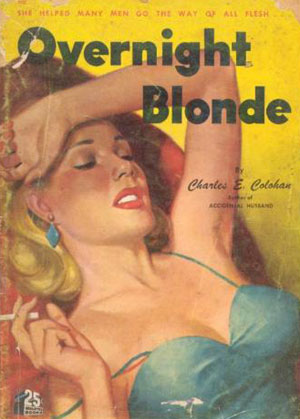
Gentlemen Prefer Blondes – Vintage Erotica Covers


Posted in erotica, images | Tagged | Comments Off on Gentlemen Prefer Blondes – Vintage Erotica Covers

“Edith Cavell,” Laurence Binyon

Edith Cavell

She was binding the wounds of her enemies when they came—
The lint in her hand unrolled.
They battered the door with their rifle-butts, crashed it in:
She faced them gentle and bold.

They haled her before the judges where they sat
In their places, helmet on head.
With question and menace the judges assailed her, “Yes,
I have broken your law,” she said.

“I have tended the hurt and hidden the hunted, have done
As a sister does to a brother,
Because of a law that is greater than that you have made,
Because I could do none other.

“Deal as you will with me. This is my choice to the end,
To live in the life I vowed.”
“She is self-confessed,” they cried; “she is self-condemned.
She shall die, that the rest may be cowed.”

In the terrible hour of the dawn, when the veins are cold,
They led her forth to the wall.
“I have loved my land,” she said, “but it is not enough:
Love requires of me all.

“I will empty my heart of the bitterness, hating none.”
And sweetness filled her brave
With a vision of understanding beyond the hour
That knelled to the waiting grave.

They bound her eyes, but she stood as if she shone.
The rifles it was that shook
When the hoarse command rang out. They could not endure
That last, that defenceless look.

And the officer strode and pistolled her surely, ashamed
That men, seasoned in blood,
Should quail at a woman, only a woman,–
As a flower stamped in the mud.

And now that the deed was securely done, in the night
When none had known her fate,
They answered those that had striven for her, day by day:
“It is over, you come too late.”

And with many words and sorrowful-phrased excuse
Argued their German right
To kill, most legally; hard though the duty be,
The law must assert its might.

Only a woman! yet she had pity on them,
The victim offered slain
To the gods of fear that they worship. Leave them there,
Red hands, to clutch their gain!

She bewailed not herself, and we will bewail her not,
But with tears of pride rejoice
That an English soul was found so crystal-clear
To be triumphant voice

Of the human heart that dares adventure all
But live to itself untrue,
And beyond all laws sees love as the light in the night,
As the star it must answer to.

The hurts she healed, the thousands comforted—these
Make a fragrance of her fame.
But because she stept to her star right on through death
It is Victory speaks her name.

–Laurence Binyon

Posted in binyon, wwi poetry | Tagged | Comments Off on “Edith Cavell,” Laurence Binyon

Writers’ Ephemera

I’ve been cleaning up assorted papers I’d accumulated over the last few years. Like many writers, I have a strange attraction to notebooks, some decorative, some plain spiral-bound of varying qualities, bought for various reasons: a pretty one on a clearance table, a cheap stenographer’s pad purchased on a journey. I’ve set aside a few of the nice ones from my collection to give as gifts.

However, that still left all the ones that were half-used, or tattered from being carried with me for days on end, or that had notes scribbled on just one or two pages. Part of the problem is that in the last few years I’ve mostly switched over to the Moleskine brand, since they produce a slender notebook that will open out flat; it fits much better in my everyday messenger bag than anything else I’ve tried. What to do with the small spiral-bounds?

Most have lots of empty pages I can use. On the used pages, I found Calls for Submissions, long past; those I tore out and recycled. I found grocery lists, packing lists, and the like; recycled. I also found my own writing ephemera: notes on a story or novel I was writing, early versions of story drafts, ideas for stories, opening scenes for stories I’d utterly forgotten about. Tucked inside, there were train tickets for trips to conventions and readings I’d traveled to. I couldn’t bring myself to recycle them. I tore those pages out, trimmed the ragged edges, and placed them into the acid-free boxes I use for my novel manuscripts. (Eventually, they were shipped out to Texas A&M, where my papers are archived.) Slowly, I’m filling up those empty pages.

Posted in writing process | Comments Off on Writers’ Ephemera

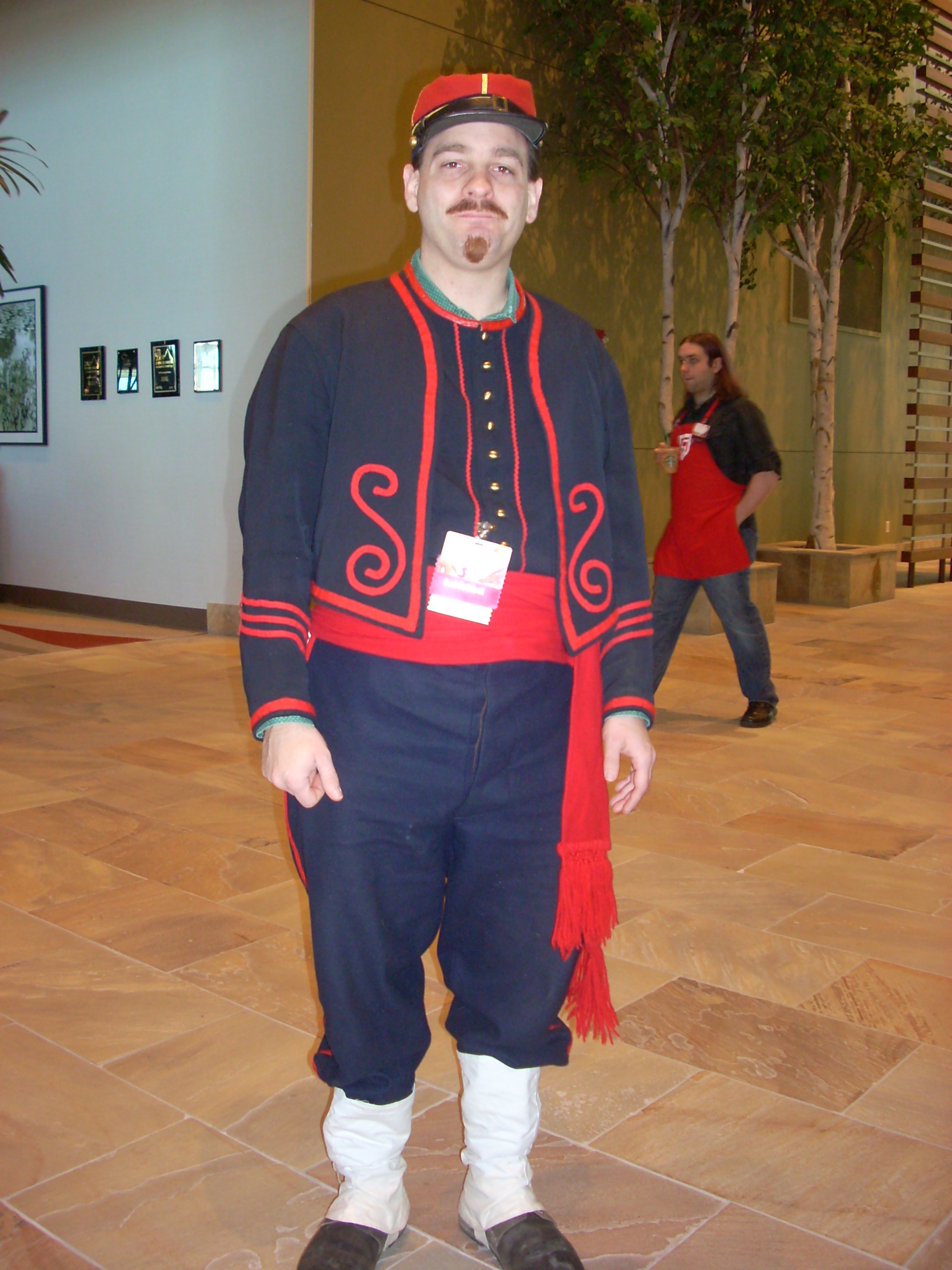
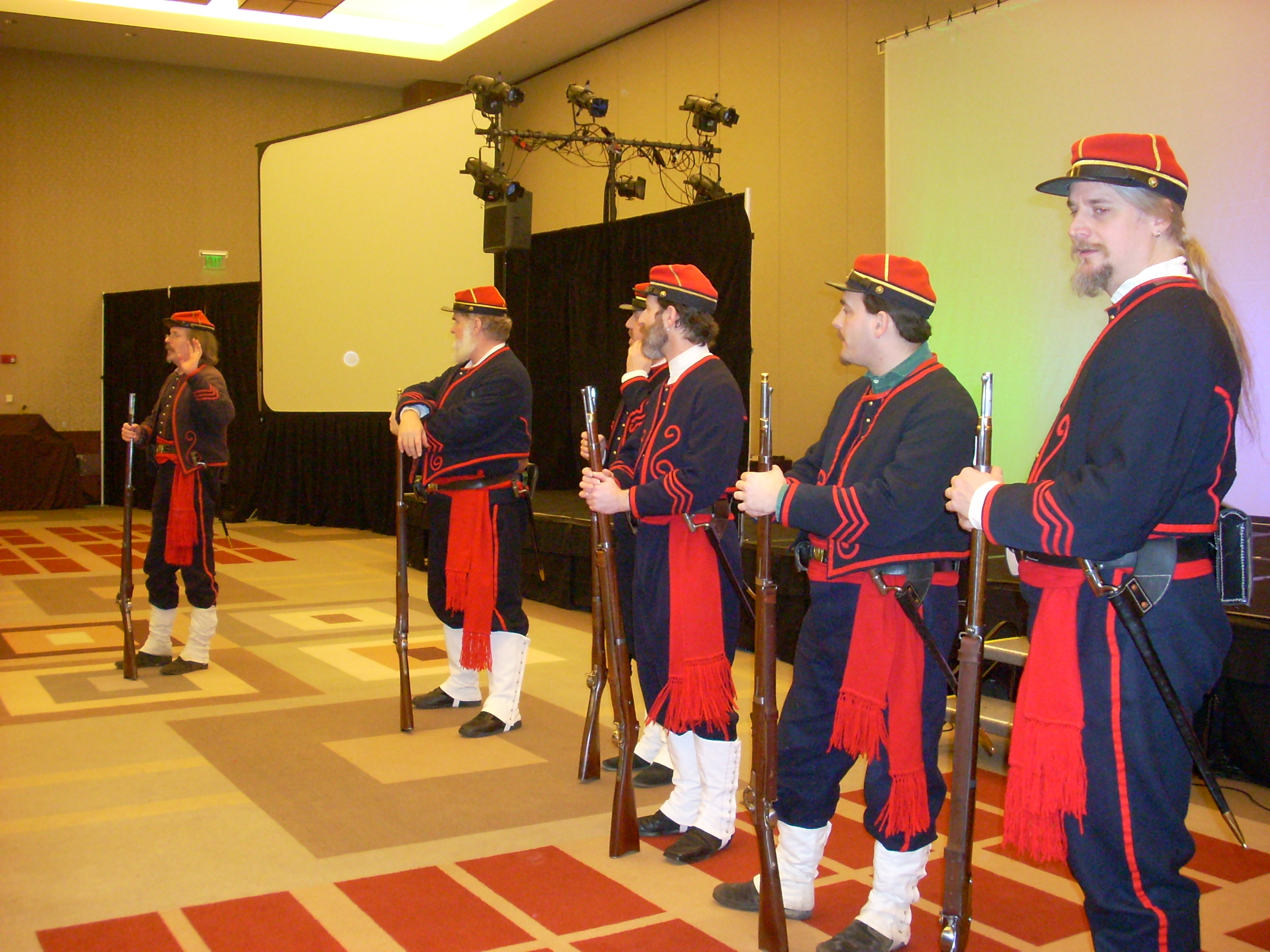
Zouaves at Arisia – Pics

I was thrilled on Sunday morning at Arisia when, while ambling through the lobby, I spotted a zouave. I walked a little past, wondering if I’d been mistaken – maybe it was just a similar uniform, and he was busy chatting with someone – but then I couldn’t resist, and went back to request a picture. There’s a French zouave in The Moonlight Mistress, in a bit part, simply because I think they were pretty cool. (My zouave is riding a motorbike.)
These guys were dressed as American zouaves, American Civil War vintage, from a volunteer guard unit. You can learn more about them here.


Posted in arisia, images, moonlight mistress, research | Tagged | Comments Off on Zouaves at Arisia – Pics

Girl Fever: Cover Reveal

I have a post on World War One male/male romances over at Heroes & Heartbreakers.

Girl Fever: 69 Stories of Sudden Sex for Lesbians from Cleis Press now has a publication date of June 12, 2012 and is available for Amazon pre-order. “The Airplane Story” by me will appear in this anthology. Isn’t the cover nice?

Posted in promo | Comments Off on Girl Fever: Cover Reveal

“Fleurette,” Robert W. Service

Fleurette

THE WOUNDED CANADIAN SPEAKS:
My leg? It’s off at the knee.
Do I miss it? Well, some. You see
I’ve had it since I was born;
And lately a devilish corn.
(I rather chuckle with glee
To think how I’ve fooled that corn.)

But I’ll hobble around all right.
It is n’t that, it’s my face.
Oh, I know I’m a hideous sight,
Hardly a thing in place.
Sort of gargoyle, you’d say.
Nurse won’t give me a glass,
But I see the folks as they pass
Shudder and turn away;
Turn away in distress…
Mirror enough, I guess.
I’m gay! You bet I am gay,
But I was n’t a while ago.
If you’d seen me even to-day,
The darnedest picture of woe,
With this Caliban mug of mine,
So ravaged and raw and red,
Turned to the wall—in fine
Wishing that I was dead….
What has happened since then,
Since I lay with my face to the wall,
The most despairing of men!
Listen! I’ll tell you all.

That poilu across the way,
With the shrapnel wound on his head,
Has a sister: she came to-day
To sit awhile by his bed.
All morning I heard him fret:
“Oh, when will she come, Fleurette?”

Then sudden, a joyous cry;
The tripping of little feet;
The softest, tenderest sigh;
A voice so fresh and sweet;
Clear as a silver bell,
Fresh as the morning dews:
“C’est toi, c’est toi, Marcel!
Mon frère, comme je suis heureuse!”

So over the blanket’s rim
I raised my terrible face,
And I saw–how I envied him!
A girl of such delicate grace;
Sixteen, all laughter and love;
As gay as a linnet, and yet
As tenderly sweet as a dove;
Half woman, half child–Fleurette.
Then I turned to the wall again.
(I was awfully blue, you see,)
And I thought with a bitter pain:
“Such visions are not for me.”
So there like a log I lay,
All hidden, I thought, from view,
When sudden I heard her say:
“Ah! Who is that malheureux?”
Then briefly I heard him tell
(However he came to know)
How I’d smothered a bomb that fell
Into the trench, and so
None of my men were hit,
Though it busted me up a bit.

Well, I did n’t quiver an eye,
And he chattered and there she sat;
And I fancied I heard her sigh–
But I would n’t just swear to that.
And maybe she was n’t so bright,
Though she talked in a merry strain,
And I closed my eyes ever so tight,
Yet I saw her ever so plain:
Her dear little tilted nose,
Her delicate, dimpled chin,
Her mouth like a budding rose,
And the glistening pearls within;
Her eyes like the violet:
Such a rare little queen–Fleurette.

And at last when she rose to go,
The light was a little dim,
And I ventured to peep, and so
I saw her, graceful and slim,
And she kissed him and kissed him, and oh
How I envied and envied him!

So when she was gone I said
In rather a dreary voice
To him of the opposite bed:
“Ah, friend, how you must rejoice!
But me, I’m a thing of dread.
For me nevermore the bliss,
The thrill of a woman’s kiss.”

Then I stopped, for lo! she was there,
And a great light shone in her eyes.
And me! I could only stare,
I was taken so by surprise,
When gently she bent her head:
“May I kiss you, sergeant?” she said.

Then she kissed my burning lips,
With her mouth like a scented flower,
And I thrilled to the finger-tips,
And I had n’t even the power
To say: “God bless you, dear!”
And I felt such a precious tear
Fall on my withered cheek,
And darn it! I could n’t speak.
And so she went sadly away,
And I know that my eyes were wet.
Ah, not to my dying day
Will I forget, forget!
Can you wonder now I am gay?
God bless her, that little Fleurette!

–Robert W. Service

Posted in service, wwi poetry | Tagged | Comments Off on “Fleurette,” Robert W. Service

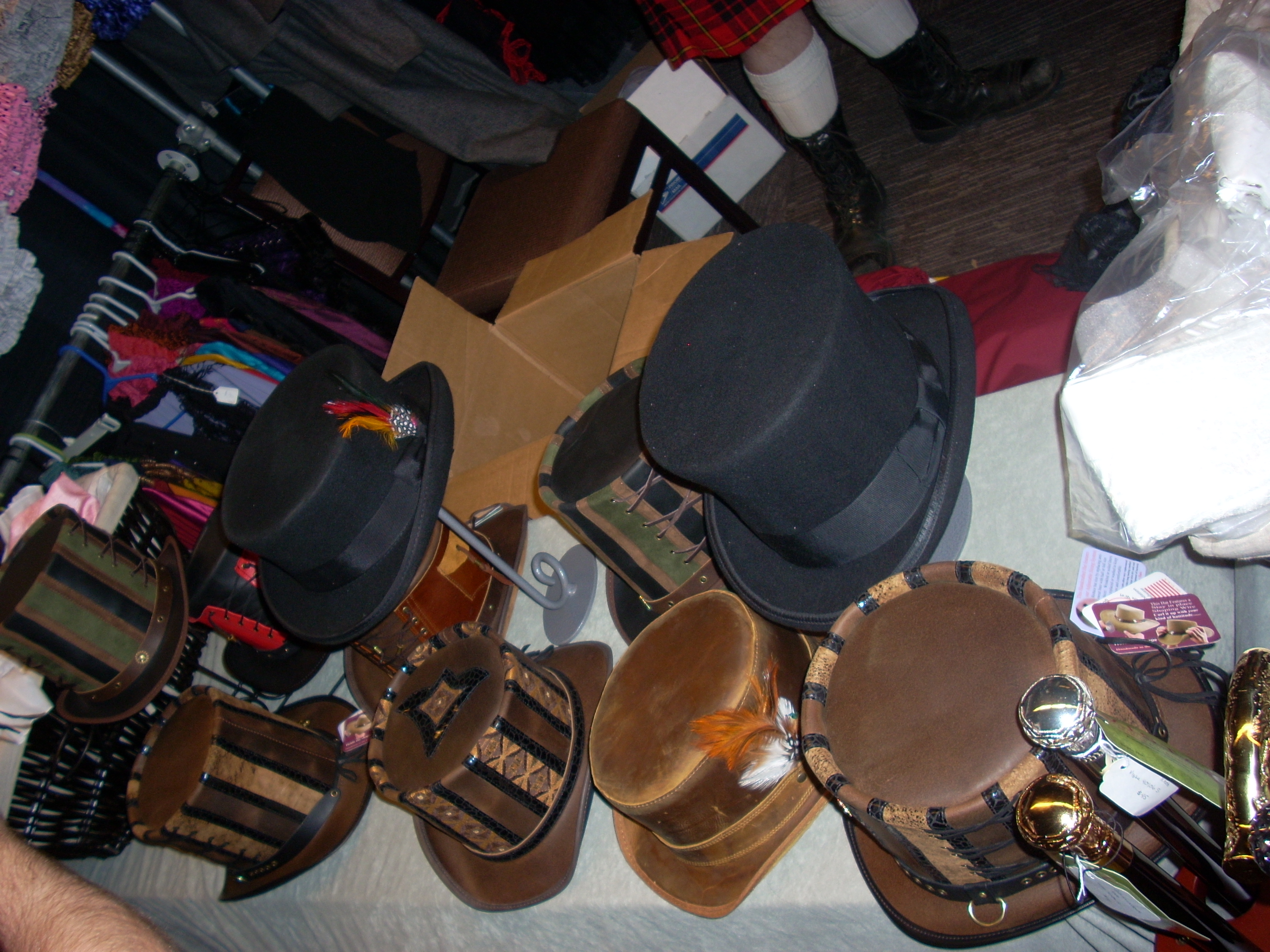
Steampunk at Arisia 2012 – Pics


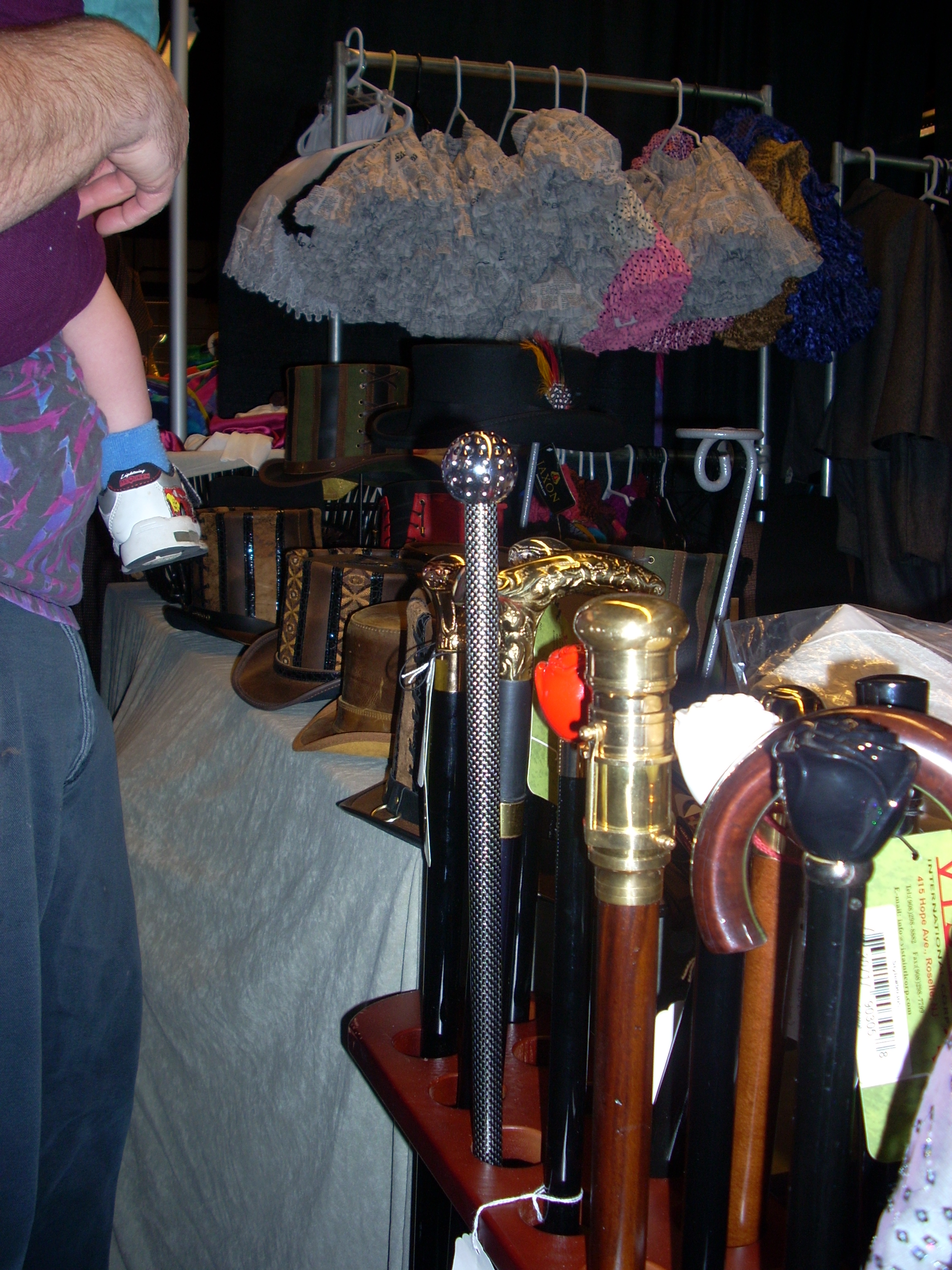
Posted in arisia, images, steampunk | Comments Off on Steampunk at Arisia 2012 – Pics

Heroes of Anne Stuart

Wickedly Funny: the humor of Anne Stuart’s Heroes is up at Heroes & Heartbreakers. The post focused on Stuart’s novel Devil’s Waltz.

Posted in writing | Comments Off on Heroes of Anne Stuart