Brainstorming Panel Ideas

I’m attending a couple of my favorite science fiction/fantasy conventions next year, WisCon and Readercon. One of the reasons I love them is that they solicit ideas for the programming that will be offered. Here are some of the panel ideas I’ve come up with so far.

They’re rough ideas; it’s seemed to work well in the past if I didn’t narrow the topic down too much, because eventually other people will be tweaking the ideas and voting on them and figuring out what will work best with the available panelists. If you have any thoughts, feel free to comment!

I love trying to come up with catchy titles, too.

Apocalypses, Personality Sorting, and Love Triangles: How is current YA speculative fiction reflecting current social anxieties? And what’s the next trend? Social justice movements?

Addiction in Fiction: Real drugs, imaginary drugs, and magical addictions to other people’s dreams – how are addictions handled in science fiction and fantasy? How about fictional worlds in which addiction is not seen as a problem? Or in which addiction has become adaptive (are vampires addicted to blood?). The panel could focus on either real or imaginary addictive substances.

Unpacking Tarzan: Interest in the work of Edgar Rice Burroughs is bound to increase this spring when the new John Carter of Mars movie premieres. ERB character Tarzan, though, is the one who really took root in American culture, with movies and comic strips popularizing the character until he was firmly entrenched in “canon.” How does the Tarzan character’s popularity relate to enduring sterotypes of Africa? How does Tarzan, and the idea of the “white man gone native” (or in this case, ape) still reverberate in today’s entertainment world? Who are the modern descendents of Tarzan? (*cough* “Avatar”)

Fen to Pros and Pros to Fen: In many sectors of fandom, those who make money from writing or editing or publishing speculative fiction are sometimes set apart from those who are primarily readers. This separation isn’t present everywhere, though. Some “pros” maintain fannish activity and some who primarily act as “fans” might have, for example, sold a novel or two. With the growing mainstream popularity of fanfiction and self-publishing, how is that division changing? How do these divisions affect online interactions, live interactions, and how fandom is viewed from outside? Is there truly a “geek hierarchy”?

MUPPETS!: What did you think of the 2011 movie? What’s been your life experience of the muppets? Does your age group make a difference in how you feel about them? I think it would be awesome to discuss the muppets as a vehicle for social change, but suspect we wouldn’t get beyond the squeeing.

YA Love Triangles – Cultural Advance or Retreat?: A common theme in popular YA novels, spec fic and otherwise, is the ongoing love triangle, usually one girl who is in love with two boys. So far, she always chooses just one of them. Why is this so popular right now? Does it support at least thoughts of polyamory or other alternatives, or does the average reader refuse to consider that option? Is the love triangle meant to demonstrate conclusively that only heteronormative couples are acceptable? Have any YA writers been specifically working against this trend?

Posted in conferences, sf/f | Tagged , , | Comments Off on Brainstorming Panel Ideas

“To Belgium in Exile,” Owen Seaman

To Belgium in Exile

[Lines dedicated to one of her priests, by whose words they were prompted.]

Land of the desolate, Mother of tears,
Weeping your beauty marred and torn,
Your children tossed upon the spears,
Your altars rent, your hearths forlorn,
Where Spring has no renewing spell,
And Love no language save a long Farewell!

Ah, precious tears, and each a pearl,
Whose price–for so in God we trust
Who saw them fall in that blind swirl
Of ravening flame and reeking dust–
The spoiler with his life shall pay,
When Justice at the last demands her Day.

O tried and proved, whose record stands
Lettered in blood too deep to fade,
Take courage! Never in our hands
Shall the avenging sword be stayed
Till you are healed of all your pain,
And come with Honour to your own again.

May 19, 1915

–Owen Seaman

Posted in wwi poetry | Tagged | Comments Off on “To Belgium in Exile,” Owen Seaman

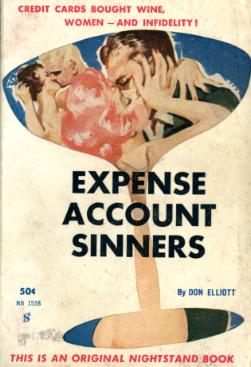
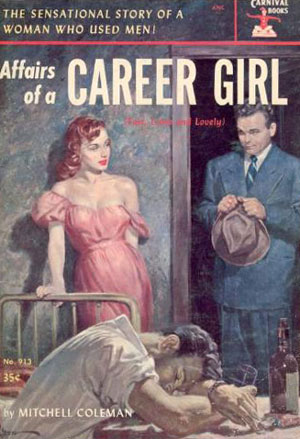
Office Hijinks – Vintage Erotica Covers


Posted in erotica, images | Tagged | Comments Off on Office Hijinks – Vintage Erotica Covers

An Annual Tradition

My chief hobby is choral singing, which for me goes along with listening to music. Lots of music. Frequently.

Most Decembers, I get the urge to listen to Christmas music (generally sacred, not secular). It’s usually something completely different from whatever my choir happens to be singing for the holidays.

My favorite genres are early music, such as that from the Medieval and Renaissance periods, Baroque, and Folk, with some old-school American hymns mixed in. To give you an idea of some music I like, check out the ensemble Boston Camerata.

After much prowling around online and listening to samples, I finally settled on The Cambridge Singers’ Christmas Album – they’re a choir that doesn’t perform, they only do recordings, and they’re conducted by the well-known British composer John Rutter. I liked the mix of songs on this particular cd, as well as the singers’ precision. I guess I’ll find out after a few listens if it goes into my regular December rotation.

You can listen to samples here, if you’re interested.

Posted in holiday, music | 6 Comments

Writing (Erotic) Short Fiction – FAQ

In the depths of my website are some useful articles I wrote. I thought I would reproduce this one here, out front.

Short Fiction FAQ

Establishing yourself as a writer of short fiction can pay a little money and, more importantly, establish a “track record” which can help in making valuable contacts among your fellow writers, editors, and agents. Short fiction also provides experience with writing to spec (answering calls for submissions), dealing with editors, reading contracts, locating reprint opportunities, and discovering the range of your writing skills.

Question: How do you find good models for short fiction submissions?

I think it’s important to read authors of the genre you intend to write, and it’s better to read as wide a range as possible.

For erotica, the approach I used was to go to a local bookstore and sit down in the coffee shop with a pile of anthologies. I soon became familiar with the most prolific editors and got an idea of their tastes. I also began recognizing the names of frequent contributors, and getting an idea of what themes seemed overused and what might be a fresher approach. Maxim Jakubowski’s Mammoth Book of Best New Erotica series is especially useful to look at, because it contains only reprints; by checking the copyright information on the stories, you can get a broad idea about a wide variety of markets of all kinds (book anthologies, novel excerpts, magazines, online markets).

For romance, I think a good approach is to look at the anthologies coming out in mass market paperback or trade paperback and shelved in the romance section. Most of those will include 3-4 writers. In general, those anthologies are invitation-only, but I think it’s a good idea to familiarize yourself with the style and story structures.

Question: How do you find markets for particular types of short stories?

I recommend using the search engine on Duotrope, which will let you choose options such as pay rate, length, and theme. They’re a good site, but if you have any doubts about a particular publication, it’s worth checking out Writer Beware.

For erotica calls for submissions, my favorite site is Erotica-Readers.com, because it’s updated regularly.

Question: How do you interpret guidelines on calls for submissions?

So far as guidelines go, I stay as close to the concrete requests as possible: word count, genre, theme, location. If there are no specifics, I look for guidance in previous work by that editor or from that magazine or anthology. Beyond that, I think it helps a great deal to be different, so long as you’re within the basic requirements. Easier said than done, I know!

When writing for a specific anthology, I discard the most obvious story topics and try to take a different angle. For instance, an early sale I made was to a lesbian erotica anthology titled Tough Girls. I immediately realized that a lot of submissions would involve female soldiers, criminals, etc.. My idea was to write about a female soldier, but I set the story in the future on a spaceship, which turned out to be much rarer than contemporary settings. Mingling science fiction or fantasy with my erotica also helped with themeless anthologies such as Best Lesbian Erotica.

I can’t overstate how useful it is to read in the market to which you plan to submit. If you know the tastes of the major editors, you’re already a bit ahead of your competition. If you’ve read a number of stories published in the last couple of years, you have a much better idea of what ideas have been done to death.

Question: Is there a market for erotic flash fiction? Will agents and editors think I can’t write novels if most of my sales are short fiction?

There is not a huge paying market for flash fiction, but there is some. I would browse Erotica-Readers.com regularly.

For publications that don’t specifically mention accepting flash fiction or short-shorts, it rarely hurts to ask. The editor might need something tiny to fill in a gap. I’ve sold a couple of flash fiction reprints for that purpose.

I don’t think there’s any danger of being thought incapable of writing a novel unless you never write one. In my opinion, it’s always a plus to have some publication experience.

Question: What are the word count limits of various types of short fiction?

In general, the story should be as long as it needs to be, but I realize that isn’t much help! I always check the specific guidelines of the publication first, as definitions vary. If a story seems really well suited to a particular market, and is close to the right length but a little too short or too long, I might submit anyway, or I might trim or expand it just a little.

Here are some rough length guidelines:

Flash fiction: usually means less than 1,000 words. Sometimes a market will specify a word count. I’ve done “flash fiction” that was only 100 words long.

Short story: from about 1,500 words up to about 7,500 words. Depends on the market, however. Often, longer stories are harder to place because they take up more room in an anthology. Many markets don’t want anything longer than 5,000 words.

Novelette: 7,500-20,000 words in some markets; The Science Fiction and Fantasy Writers of America (SFWA) defines it as 7,500-17,500 words.

Novella: 20-50,000 words by some definitions. SFWA defines it as 17,500-40,000 words, and anything over 40K as a novel. “National Novel Writing Month” says 50K is a novel. In reality, an adult novel shorter than 60K is very rare. Young adult usually runs 40-60K. I’ve noticed that a lot of electronic markets seem to prefer novella length to novel-length.

Question: What is a possible path to breaking in to invitation-only print anthologies, if I have already sold stories to magazines?

I would first find out which publishers issue the sort of anthology that’s suited to your stories, then look at the list of authors to see if you have any contacts: authors you know, friends of authors you know, authors who share an agent with you or one of your friends, that sort of thing. I would then simply ask how they did it and if they’re willing to put you in touch with an editor. This method is probably restricted to those who’ve already published short stories.

Another option would be to contact the magazine editors who bought your stories and ask if they have any contacts in book publishing, for instance if the magazines and book lines are owned by the same corporation.

A third option might be viable after you have more of a track record with print anthologies: create and submit your own anthology with co-authors, for instance those with whom you share a publisher.

Question: I haven’t been able to find a suitable market for a story within my genre. What are my options?

It might be helpful to think “outside the box.” What are the other themes in your story? There are magazines that publish stories about travel, about environmental issues, etc.. If it’s not an obvious fit anywhere, be prepared to submit to a wide range of places; sometimes a story that’s slightly unusual for a given market is an easier sale. I’ve had stories hang around for years after I wrote them, and suddenly an appropriate market arises. My first novel came out of a story like that.

Browsing Duotrope might be helpful. Writer Beware will let you know about dodgy publications.

Other options, if you still can’t find a market, are to put the stories on your website as free reads; or accumulate enough stories to publish a collection of your stories, or for a chapbook. A small press is sometimes the best option for short story collections. A chapbook can be a useful publicity item that you could sell from your website or at readings, or simply give away, as a sampler of your work. Finally, there’s electronic self-publishing, which is too massive a topic to address here.

You might also want to check out 5 Tips for Writing Erotica.

The erotica I’ve written is listed on this page.

Posted in erotica, links, short fiction, writing craft | Tagged | 2 Comments

“Jimmy Doane,” Rowland Thirlmere

Jimmy Doane

Often I think of you, Jimmy Doane,–
You who, light-heartedly, came to my house
Three autumns, to shoot and to eat a grouse!

As I sat apart in this quiet room,
My mind was full of the horror of war
And not with the hope of a visitor.

I had dined on food that had lost its taste;
My soul was cold and I wished you were here,–
When, all in a moment, I knew you were near.

Placing that chair where you used to sit,
I looked at my book: –Three years to-day
Since you laughed in that seat and I heard you say–

“My country is with you, whatever befall:
America–Britain–these two are akin
In courage and honour; they underpin

“The rights of Mankind!” Then you grasped my hand
With a brotherly grip, and you made me feel
Something that Time would surely reveal.

You were comely and tall; you had corded arms,
And sympathy’s grace with your strength was blent;
You were generous, clever, and confident.

There was that in your hopes which uncountable lives
Have perished to make; your heart was fulfilled
With the breath of God that can never be stilled.

A living symbol of power, you talked
Of the work to do in the world to make
Life beautiful: yes, and my heartstrings ache

To think how you, at the stroke of War,
Chose that your steadfast soul should fly
With the eagles of France as their proud ally.

You were America’s self, dear lad–
The first swift son of your bright, free land
To heed the call of the Inner Command–

To image its spirit in such rare deeds
As braced the valour of France, who knows
That the heart of America thrills with her woes.

For a little leaven leavens the whole!
Mostly we find, when we trouble to seek
The soul of a people, that some unique,

Brave man is its flower and symbol, who
Makes bold to utter the words that choke
The throats of feebler, timider folk.

You flew for the western eagle–and fell
Doing great things for your country’s pride:
For the beauty and peace of life you died.

Britain and France have shrined in their souls
Your memory; yes, and for ever you share
Their love with their perished lords of the air.

Invisible now, in that empty seat,
You sit, who came through the clouds to me,
Swift as a message from over the sea.

My house is always open to you:
Dear spirit, come often and you will find
Welcome, where mind can foregather with mind!

And may we sit together one day
Quietly here, when a word is said
To bring new gladness unto our dead,

Knowing your dream is a dream no more;
And seeing on some momentous pact
Your vision upbuilt as a deathless fact.

–Rowland Thirlmere

Posted in wwi poetry | Tagged | Comments Off on “Jimmy Doane,” Rowland Thirlmere

McDaniel Conference Linkage

I wasn’t able to attend the McDaniel Conference on Popular Romance, but here are some reports on the proceedings.

Amy Burge reports on Reflections on (Re)Reading Romance: A ‘Hands-On’ Harlequin Workshop at the recent conference held at McDaniel College. Not only does the workshop sound fascinating and illuminating, the blog post about it is, too. Here’s a bit more about the workshop and conference.

The excellent blog Read, React, Review has three posts on the McDaniel Conference:
Reflections on the McDaniel Popular Romance Conference, Part 1.
Reflections on the McDaniel Popular Romance Conference: My Paper (part 2).
Eloisa James’ Keynote for the McDaniel Popular Romance Conference.

The Liturgy of Cliche by Angela Toscano, one of the papers presented at the conference.

And another: Romance, Readers, Affect by Jonathan A. Allan.

I can’t wait until more of the papers are published, and I can read them!

Posted in links, romance novels | Tagged | Comments Off on McDaniel Conference Linkage

Of Regional Interest – Vintage Erotica Covers


Posted in erotica, images | Tagged | Comments Off on Of Regional Interest – Vintage Erotica Covers

The Sebastian St. Cyr Mysteries

From the holiday weekend, I have a Criminal Element post up on The Sebastian St. Cyr mysteries by C.S. Harris.

I also have another preview up at Heroes and Heartbreakers: The Merchant’s Daughter by Melanie Dickerson, another take on “Beauty and the Beast.”

Posted in writing | Comments Off on The Sebastian St. Cyr Mysteries

Philcon 2011: 3 Things I Learned

Philcon actually happened November 18-20th, but I’m only just getting around to my report!

I had quite a good time, despite my lingering cold, which I soothed with hot tea and cough suppressants. I met several new people (without really meaning to!) and had fun chats with them, as well as talking with people I already knew, and even doing some business (I met with my tax preparer, and was invited to speak at an event next June).

Here are the things I learned from this year’s convention:

1. If you meet someone new, and would like to remember them, and they don’t have a business card, write down their name and contact information in your notebook or your program guide or somewhere. If you’re me, you won’t remember it, otherwise.

I gave four people my card. One of them had a bookmark with her name; none of the others had cards or anything. Of the four, how many names did I remember the next day? Two. One because I had a bookmark, the second because I misheard her name at first, which made us both laugh, which made it stick in my memory.

2. There is a point, when you are moderating a panel, in which moderation just isn’t going to happen.

When it’s getting on for 10 pm, and there’s a large enthusiastic crowd, and the moderator is losing her voice, and then two of the panelists start giggling and can’t stop…just let it go, and don’t hate yourself the next day. Everybody appeared to be having fun. That’s the point.

3. Sometimes you’re better off skipping the parties.

Yes, networking, yes, fun, yes, free booze…but if you’re recovering from a cold, and the subsequent lack of sleep? Finish your panels, and go sit quietly in your room, and then get some sleep. You’ll be happier the next day.

Posted in conferences | Tagged | Comments Off on Philcon 2011: 3 Things I Learned