Musical Linkgasm

Here are some of my current favorite music blogs – just in case you, like me, don’t have enough music to listen to. (Kidding!)

Silence is a Rhythm Too has been around for a decade! It’s interesting because it reflects the taste of a single blogger.

Mashuptown focuses on, you guessed it, Mashups! I am consistently amused and impressed by how seemingly disparate songs can be, with editing skill, seamlessly blended into something that is greater than the sum of its parts.

Cover Me grew out of a cover songs radio show; posts focus on cover songs (of course), tribute albums, etc., including links to free downloads. Covers often give a new take on songs, similar to mashups, in a way.

I also continue to love Cover Lay Down, which focuses on folk/Americana covers of all sorts of musical genres. You can find more Americana at A Fifty Cent Lighter & a Whiskey Buzz.

Keytars and Violins gives weird art along with techno and house tracks.

Lend Me Your Ears “appreciates less obvious music.”

Finally, Aurgasm, “your favorite music you’ve never heard,” doesn’t actually focus – the blog has presented everything from scandinavian to brazilian to bluegrass to electronica.

Posted in links, music | Comments Off on Musical Linkgasm

Sexual Mores in J.D. Robb

One of the ways J.D. Robb (Nora Roberts) uses to cue “it’s the future!” in the Eve Dallas mysteries is her portrayal of social/sexual mores. Though the future is noir, rife with horrible murders and serial killers (otherwise, no work for Eve Dallas!), it’s also a liberal world in some ways, though far from a utopia. Here’s the rundown, so far as I can remember.

1. Prostitution is legal if the person is licensed. “Licensed companions” are not universally successful, however. Robb shows a gamut running from Charles, who is high-priced and skilled, to various “Street L.C.s” who are not any better off for legality. The L.C.s come under legal fire in the first novel of the series.

2. Trans people are mentioned several times in the series. Though Dallas seems accepting of their presence, if I recall correctly they are always mentioned as either L.C.s or living on a lower social rung. (Someone correct me if I’m wrong!) Also, Dallas refers to trans people with an offensive slang term–not sure if that’s meant to imply the term is less offensive nomenclature in the future, or is simply because the author was looking for cop-like slang and didn’t realize it was offensive at the time. In later books, the offensive term is not used.

3. One of the novels focuses on cloning, which is apparently Not On with most of the future society. I think it’s more because of the subsequent manipulation of the clones than an objection to the process itself, but cloning as a standard form of reproduction is never mentioned.

4. Homosexual as well as heterosexual marriage is legal, apparently in all states (the series focuses on New York, but gay couples are mentioned from other states, and I recall one lesbian couple in NY). [ETA: This was established in the series prior to real-life legality in the United States.] No polyamorous marriages have been depicted so far. “Cohabitation” may or may not be a legal category; it’s unclear to me from the references to it in the text.

5. My favorite institution in the Robb universe is “professional mother” status. From various mentions in the series, the status is something that must be applied for, and seems to be paid by the government until the child is a certain age. Single mothers can hold the status as well as married ones. There’s no mention of “professional father” as a status.

6. It’s never been clear to me exactly how human the droids in this series are, and how self-aware. They do not seem to be self-aware. Some are apparently constructed for sexual purposes. From the mentions I remember, in the future society this use is known but not considered classy. But the series doesn’t delve too deeply into droid and their rights, if any.

Posted in mystery, reading | Tagged | Comments Off on Sexual Mores in J.D. Robb

“The Dead,” Rupert Brooke

The Dead

I

Blow out, you bugles, over the rich Dead!
There’s none of these so lonely and poor of old,
But, dying, has made us rarer gifts than gold.
These laid the world away; poured out the red
Sweet wine of youth; gave up the years to be
Of work and joy, and that unhoped serene,
That men call age; and those who would have been,
Their sons, they gave, their immortality.

Blow, bugles, blow! They brought us, for our dearth,
Holiness, lacked so long, and Love, and Pain.
Honour has come back, as a king, to earth,
And paid his subjects with a royal wage;
And Nobleness walks in our ways again;
And we have come into our heritage.

II

These hearts were woven of human joys and cares
Washed marvellously with sorrow, swift to mirth.
The years had given them kindness. Dawn was theirs,
And sunset, and the colours of the earth.
These had seen movement and heard music; known
Slumber and waking; loved; gone proudly friended;
Felt the quick stir of wonder; sat alone;
Touched flowers and furs and cheeks. All this is ended.

There are waters blown by changing winds to laughter
And lit by the rich skies, all day. And after,
Frost, with a gesture, stays the waves that dance
And wandering loveliness. He leaves a white
Unbroken glory, a gathered radiance,
A width, a shining peace, under the night.

— Rupert Brooke

Posted in brooke, holiday, wwi poetry | Comments Off on “The Dead,” Rupert Brooke

“The One-Legged Man,” Siegfried Sassoon

The One-Legged Man

Propped on a stick he viewed the August weald;
Squat orchard trees and oasts with painted cowls;
A homely, tangled hedge, a corn-stalked field,
And sound of barking dogs and farmyard fowls.

And he’d come home again to find it more
Desirable than ever it was before.
How right it seemed that he should reach the span
Of comfortable years allowed to man!
Splendid to eat and sleep and choose a wife,
Safe with his wound, a citizen of life.
He hobbled blithely through the garden gate,
And thought: ‘Thank God they had to amputate!’

–Siegfried Sassoon, The Old Huntsman and Other Poems, 1918

Posted in sassoon, wwi poetry | Comments Off on “The One-Legged Man,” Siegfried Sassoon

Reviews of Dream Lover

I have a post up at The Criminal Element today: Hijinks with History: Abigail Adams as Detective?

Dream Lover: Paranormal Tales of Erotic Romance, an anthology in which I have a short story, “Vanilla,” has received a number of reviews so far.

The Discriminating Fangirl liked it–“Vanilla” was mentioned as a favorite on the romantic side.

Lady Caella’s review; again, “Vanilla” has a favorable mention.

Whipped Cream Reviews.

Pagan Spirits review.

Posted in erotica, promo, short fiction | Comments Off on Reviews of Dream Lover

Unusual Pirates

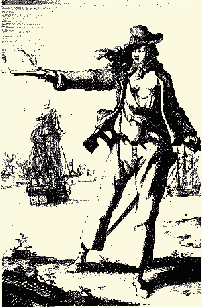
My post on Unusual Pirate Romances is online at Heroes and Heartbreakers.

Posted in links, pirates | Comments Off on Unusual Pirates

Imaginary Alleys

London 1900: The Imperial Metropolis got me to thinking. How accurate does a historical writer have to be about the tiny details of place? Does it only matter about the major landmarks, or do the side streets count as well? How about what houses were on that street at that time exactly? Or is there no way to be perfect, because some reader will always know more about that particular place than you ever will?
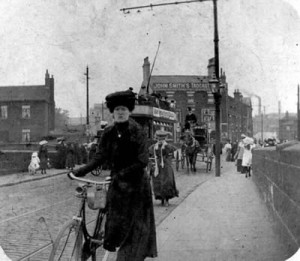
I’m not thinking about clothing or household utensils or behavior or anything like that; just place. Real places, at real times.

I think about this overall issue all the time, applying it to many different aspects of my historical research and writing. Much as I love research, both the general reading and the detective work of digging out tiny details, for the most part I come down on the side of less is more.

I’m beginning to think imaginary might be more, too. In The Moonlight Mistress, two characters are driving from Germany to France. I started to check distances, and look for towns along the route, and thought how I would figure out the gasoline consumption of a 1910s model car so I know where they had to stop…and then I whapped myself in the head (mentally, and because I’m stubborn, it took several whaps). I didn’t need to do any of that, not for the type of book I was writing. Cool as it would have been, no one would have noticed and I would have fallen behind on my wordcount goals. I made up the name of a town where they stopped and bought some petrol. And to this day, no one has complained.

Sometimes, despite one’s best efforts at research, one’s best efforts at bending the story to the real setting, it’s just better to have an imaginary alley. Not totally imaginary–it will seem more real if you tie in the [small] imaginary to the [larger] real. But imaginary facts can be better and more useful at times. Why? I will give a numbered list.

1. Trying to research every inch of a certain place at a certain time can drive you demented (see above, with the whapping). If you’re writing a novel, the writing part should take precedence over the research part, because you are a fiction writer, not a researcher. It’s up to you, of course, to decide where to stop researching. I would advise doing so before you start trying to wear a microfiche viewer as a hat.

2. The information you want to find might not even exist. You could easily keep looking for ten years and then find out the only copy of the insurance map that showed the houses on that street in 1908 was ironically destroyed in a fire back in 1972. What do you do then? Besides weep, I mean.

3. Let’s be sensible, people. Really. Who’s going to check? And if they did check and complain to you twenty years later, would you care? Feel free to complain to me about my guesstimated petrol consumption in The Moonlight Mistress. I’ll wait.
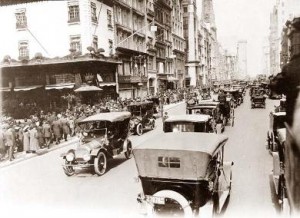
4. Sometimes your imagination can get a fictional idea across in a better way than the reality. If in reality, there was a beautifully clean alley, but your story is noir, the story might be better served by a trash-strewn alley with mysterious stains. An example: I’m told for one of the cases dramatized in the series “Garrow’s Law,” Garrow is portrayed as the defender, when in real life he prosecuted that case. However, the show is about his innovations as a defense attorney.

5. Knowing too much can hamper the writing, not because it’s bad to know things, but because you can become too tangled in trying to include all of the things you know in the story. And not all of those things belong.

Finally, there’s the time issue. Certain series, for example Patrick O’Brian’s Aubrey/Maturin sea adventures, have a little too much story for history. As in, all the stuff that happens in those books? Is impossible, within the time frame when they supposedly occur. But I love those books, and I’d rather have the stories than have them be crammed into “real” time. So…I just kind of go with it. How long was that journey to Australia by sailing ship again?

#

Yesterday author Isobel Carr had a terrific post at History Hoydens about research and documentation, from a re-enactor’s pov.

Posted in historical fiction, moonlight mistress, research, writing craft | 9 Comments

Days of Our (Future) Lives: Romance in J.D. Robb

One of the reasons J.D. Robb’s mystery series has continued so long, so successfully, is that it has ongoing romantic elements. There’s the main couple, futuristic police detective Eve Dallas and her financier husband Roarke, but there is also a host of secondary characters.

In the first novel, Naked in Death, Eve and Roarke meet and, eventually, become a couple. Their romance leading to marriage continues for several books, but once they’re married, their romantic relationship…well, doesn’t take a back seat, exactly. Each book offers good dialogue between the couple, some new twist on or problem with their relationship that must be dealt with, and a couple of sex scenes that relate to their current issues. Sometimes, their relationship is tied closely in with the mystery plot. Other times, it’s less so.

Since I tend to read this series two and three novels at a time, I found that I began to skim over the sex scenes, despite the fact that Robb (Nora Roberts) introduces new elements and settings. But I continue to be intrigued by the developing romances and relationships among the main couple’s colleagues and friends. New couples get a little more attention; more important characters get more “screen time” and often more relationship issues.

For example, Dallas’ police partner Peabody, a major character, keeps Dallas informed of the state of her relationship with her lover through dialogue, and in the course of the series has overcome various issues in that relationship.

The various relationships in the books are intertwined with the mystery plots; the romantic interests reappear as witnesses, suspects, victims. Different sorts of relationships are presented: the young couple, the old married couple with grown children, the high-powered couple (there are several of those), etc..

This technique of holding the reader’s interest is particularly effective, I think, because some of the secondary characters are around for quite a long time before entering into a romance. For example, it’s some time before the psychiatrist Mira’s husband is introduced. Immediately, that adds both interest to both Mira’s character and to Dallas’, because she can be seen in a different light.

Me, I’m waiting for Summerset to find the love of his life.

Posted in mystery, reading, sf/f | Tagged | 1 Comment

“Enemies,” Siegfried Sassoon

Enemies

He stood alone in some queer sunless place
Where Armageddon ends. Perhaps he longed
For days he might have lived; but his young face
Gazed forth untroubled: and suddenly there thronged
Round him the hulking Germans that I shot
When for his death my brooding rage was hot.

He stared at them, half-wondering; and then
They told him how I’d killed them for his sake–
Those patient, stupid, sullen ghosts of men;
And still there seemed no answer he could make.
At last he turned and smiled. One took his hand
Because his face could make them understand.

–Siegfried Sassoon, The Old Huntsman and Other Poems, 1918

Posted in sassoon, wwi poetry | Comments Off on “Enemies,” Siegfried Sassoon

Regarding the Miracle of Time

I’m blogging over at Novelists, Inc. today – Regarding the Miracle of Time.

Also, have a pretty picture:

Posted in writing | Comments Off on Regarding the Miracle of Time