My Top Five Conference Tips (RWA 2009)

This year will be only my second RWA National, but I’ve been attending science fiction and fantasy conventions for over two decades now; these are the main things I try to remember.

1. Get cash beforehand. It’s convenient to use a credit card, and then all your expenses are organized when it comes to tax time, but when eating out with a large group at an inexpensive restaurant, it’s often easiest to pay cash. Hotels can’t be guaranteed to have a bank machine that will not charge a fee, and it might take time to find one. I prefer to spend my conference time doing other things. Plus, cash in small bills is handy for tips to baggage handlers at the hotel, hotel housekeeping, cab drivers, etc..

2. Stay hydrated. Conference hotels are usually extra-cold because they’re calibrated for large groups of people wearing wool business suits. The air conditioning, as well as running from event to event, means it’s easy to forget to drink anything. Take advantage of those tables with pitchers of water and glasses; carry a refillable water bottle with you. Try not to drink caffeinated beverages unless you really need the caffeine.

3. Sleep. Some people can get by with less than others, but we all need some. I find it difficult to sleep in a strange place, so I help myself out by bringing earplugs and an eyemask. Those things also help when you have roommates who might be coming into and out of the room while you’re sleeping.

4. Business cards. Even if you’re not a writer, these are the single most valuable item I had at last year’s conference. You’re going to meet a lot of people in random places. If you want to connect with them in future, it’s a lot easier to hand over a business card with your email address than to stop and write it down.

5. Don’t overschedule yourself. I go through the events schedules and mark off things I’d like to attend, but I know that I will, in actuality, only attend a fraction of them. I’ve been to science fiction conventions where I attended not a single panel other than those on which I served. Leave time for hanging out, chatting, and letting your brain rest. Sitting in workshops or talks all day leaves most people sleepy and unable to concentrate on anything else.

See you there!

Posted in conferences, rwa | Comments Off on My Top Five Conference Tips (RWA 2009)

Not Going To Conference Conference

Not Going To RWA Nationals in DC?

Let Romance Divas bring the conference to you!

Site registration is free – if you aren’t already a member of the best free romance writing community on the web, sign up today!

July 14-18, 2009. Workshops from some of the hottest talent in writing will make you glad you stayed home!
Marley Gibson
Joey W. Hill
Steve Hockingsmith
Carrie Jones
Shayla Kersten
Josh Lanyon
Rowan Mcbride
Jet Mykles
Patti O’Shea
Ona Russel
Linnea Sinclair
Sasha White

(Also, prizes!)

Posted in conferences, promo, writing | Comments Off on Not Going To Conference Conference

Tate Hallaway Guest Post – "If You Built It…"

Please welcome my guest, Tate Hallaway!
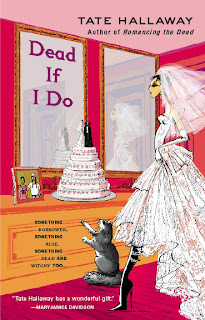
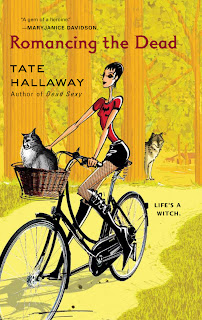
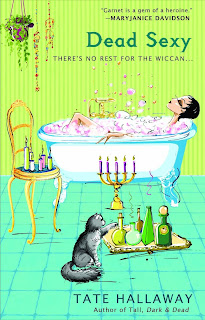
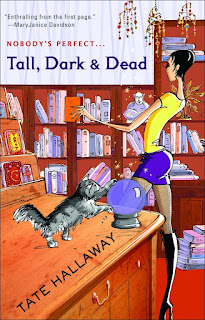
If You Built It…

When Victoria asked me to write about world-building, I was stymied. What world-building? I didn’t invent Madison, Wisconsin, after all. It’s just this place, you know? I was particularly baffled because in my other life as a science fiction writer when people talk about building a world, they mean literally constructing a planet and populating it, inventing culture, economies, religion, politics, and even sometimes an entire language. From scratch.

Meanwhile, most urban fantasy worlds have characters who speaking English, have recognizable job, and come from real places you can find on any map…

…yet not.

Aye, there’s the rub.

The world that the urban fantasy author builds is a very subtle one, and no less complex. It’s the kind that takes something familiar and asks you to imagine -–no, believe in — something lurking just under the surface, something some part of you has always sort of suspected might be there. In my opinion, an urban fantasy works precisely because it’s so very anchored in the real world, only the perspective is a little sideways. You suddenly see the shadows more clearly. What was once nebulous gray solidifies into… a vampire? A werewolf? A genie? A ghost? A fairy?
For me, as a reader, I appreciate the author who can make me look up from their novel that I’m reading and start looking suspiciously at all the other riders on the bus. Is that bearded guy reading the stock pages secretly a werewolf? What about that young mother with the stroller? Does she fight demons in her spare time? Is the bus driver really a troll?

Yes, but how is it done? How do you get readers to buy into your fantasy? I don’t really know for sure, because not everything works the same for every reader. However, I can tell you some of the elements that I use and that I’ve read that seem to me to be successful.
* Don’t stray far from the… truth. There are a lot of things out there already that have a lot of what the corporate world calls “buy in.” You might not really believe it works, but most people know that leaving milk out attracts fairies, brownies in particular. If you write a story that builds on an idea that already has a lot of mythical power to it, your world automatically feels more “real.”

* Remember that the truth is often complicated. You might remember hearing that milk attracts housecleaning fairies, but did you know that brownies have a darker side? It’s been written about in several classic Irish folktales, and, while you don’t have to only use what’s “provable” via earlier legends, when you do there’s a kind of “Oh, yeah! That makes sense” that can happen for readers. Even if they’re not familiar with the same source material as you, readers have a good sense of what rings true. Plus, as a bonus, after they read your novel and check out brownies on wikipedia they might be pleasantly shocked to see how “like real life” your depictions were. I used this with Mátyás, my dhampyr. I came across an entry on dhampyrs in one of those Vampire Encyclopedias and I thought: Oh, I totally have to use that!

* Truth is always full of the sublime, the ridiculous, and the down-right hilarious. One device I use a lot to make my vampires seem real is to point out the joke. Because life is silly, and when you highlight what’s humorous about a vampire who has to live in a coffin in someone’s storage locker, it seems perversely more true. Humor, when used right, kind of breaks through what actors call the “fifth wall” between player and audience and the experience can resonate as more personal and realistic.
* The devil is in the details. The more you ask yourself what would it really be like to be a [fill in supernatural creature of choice] the more your world begins to flesh out. And thinking beyond the obvious helps too. Sure, vampires are suited for night shift jobs, but which ones? How about a job, like coal mining, that goes from dawn to dusk and effectively takes the vampire out of the sun all day? And then you have to ask, how can I make *that* interesting?

And maybe you can’t. The important thing is to consider every possibility, go down every road, and explore the viability of all ideas…. You might not end up using them all, but the more you’ve worked out the questions, the deeper and more rich your world becomes.

Good luck and happy building!

Tate Hallaway is the author of the Garnet Lacey vamire romance series that started with TALL, DARK & DEAD. Her current release is DEAD IF I DO (May 2009). She lives an alternate life as an award-winning science fiction novelist.

Posted in guest, paranormal, writing craft | 2 Comments

Edward Thomas, "Rain"

Rain

Rain, midnight rain, nothing but the wild rain
On this bleak hut, and solitude, and me
Remembering again that I shall die
And neither hear the rain nor give it thanks
For washing me cleaner than I have been
Since I was born into this solitude.
Blessed are the dead that the rain rains upon:
But here I pray that none whom once I loved
Is dying to-night or lying still awake
Solitary, listening to the rain,
Either in pain or thus in sympathy
Helpless among the living and the dead,
Like a cold water among broken reeds,
Myriads of broken reeds all still and stiff,
Like me who have no love which this wild rain
Has not dissolved except the love of death,
If love it be towards what is perfect and
Cannot, the tempest tells me, disappoint.

–Edward Thomas
7 January 1916

Posted in thomas, wwi poetry | Comments Off on Edward Thomas, "Rain"

Readercon 2009 Schedule

My Readercon Schedule. This is what I’m doing this weekend!

Friday 6:00 PM, VT: Reading (30 min.)

Reading from Moonlight Mistress, forthcoming in December from Spice.

Friday 7:00 PM, ME/ CT: Talk / Discussion (60 min.)

Excellent Foppery: The Use of History in the Fantastic. Graham Sleight with discussion by John Clute, John Crowley, Greer Gilman, Victoria Janssen, Robert Killheffer

Following on from his talk at last year’s Readercon (a potted history of the last twenty years in speculative fiction), Sleight now discusses the use of history in the fantastic – from John Crowley’s AEgypt sequence to Tim Powers’s fantasies of history. Other works discussed include Road Runner cartoons, Harry Potter, slash fiction, and the stories of Elizabeth Hand, Russell T. Davies, and Thomas Pynchon. Overarching theories may be suggested; gratuitous mentions of Shakespeare may also take place.

Friday 8:00 PM, Salon E: Panel: How Do We Choose What We Read?

Michael Bishop, Michael Dirda, Victoria Janssen, Rosemary Kirstein (L), Chuck Rothman, Rick Wilber

Those of us with broad tastes in literature are constantly choosing among many different types of story. What determines these choices? Do our story preferences vary with psychological state? What’s behind the phenomena of concentrating on one subgenre or even one author, or acquiring a transient aversion to same?

Saturday 2:00 PM, RI: Workshop (120 minutes), Where Do You Get Your Ideas? Improv for Writers

Ellen Klages with participation by Nick Antosca, Inanna Arthen, Jeffrey A. Carver, Craig Shaw Gardner, Victoria Janssen, Vylar Kaftan, Shira Lipkin, Jennifer Pelland, Chuck Rothman

Remember when writing was fun? If you’re stuck, out of ideas, or if your Editor/Critic keeps shutting down your muse-get out of your head and into this class. We’re going to improvise, play with our imaginations, and rediscover our creativity. We’ll explore characters, settings, plot twists, and dialogue, all using simple theater games. What bubbles up will be the basis for a few short writing exercises. Wear comfortable clothing, and come prepared to laugh. (2 hrs)

Sunday 11:00 AM, Vineyard: Kaffeeklatsch

Drink tea or coffee and chat with me!

Posted in conferences, promo | Comments Off on Readercon 2009 Schedule

Guestblogging at Fiction That Defies Boundaries.

Today I am guestblogging for Michelle Lauren’s Fiction That Defies Boundaries Blog. I wrote about some plot-generating worldbuilding techniques I’m using for my novel-in-progress, tentatively titled The Duke and The Pirate Queen.

Hope to see you there!

I’m at Readercon in Burlington, Massachusetts. My program schedule is:

Friday 6:00 PM, VT: Reading (30 min.)

Reading from Moonlight Mistress, forthcoming in December from Spice.

Friday 7:00 PM, ME/ CT: Talk / Discussion (60 min.)

Excellent Foppery: The Use of History in the Fantastic. Graham Sleight with discussion by John Clute, John Crowley, Greer Gilman, Victoria Janssen, Robert Killheffer

Following on from his talk at last year’s Readercon (a potted history of the last twenty years in speculative fiction), Sleight now discusses the use of history in the fantastic – from John Crowley’s AEgypt sequence to Tim Powers’s fantasies of history. Other works discussed include Road Runner cartoons, Harry Potter, slash fiction, and the stories of Elizabeth Hand, Russell T. Davies, and Thomas Pynchon. Overarching theories may be suggested; gratuitous mentions of Shakespeare may also take place.

Friday 8:00 PM, Salon E: Panel

How Do We Choose What We Read? Michael Bishop, Michael Dirda, Victoria
Janssen, Rosemary Kirstein (L), Chuck Rothman, Rick Wilber

Those of us with broad tastes in literature are constantly choosing among many different types of story. What determines these choices? Do our story preferences vary with psychological state? What’s behind the phenomena of concentrating on one subgenre or even one author, or acquiring a transient aversion to same?

Saturday 2:00 PM, RI: Workshop (120 minutes), Where Do You Get Your Ideas? Improv for Writers

Ellen Klages with participation by Nick Antosca, Inanna Arthen, Jeffrey A. Carver, Craig Shaw Gardner, Victoria Janssen, Vylar Kaftan, Shira Lipkin, Jennifer Pelland, Chuck Rothman

Remember when writing was fun? If you’re stuck, out of ideas, or if your Editor/Critic keeps shutting down your muse-get out of your head and into this class. We’re going to improvise, play with our imaginations, and rediscover our creativity. We’ll explore characters, settings, plot twists, and dialogue, all using simple theater games. What bubbles up will be the basis for a few short writing exercises. Wear comfortable clothing, and come prepared to laugh. (2 hrs)

Sunday 11:00 AM, Vineyard: Kaffeeklatsch

Drink tea or coffee and chat with me!

Posted in guest, sf/f, the duke | Comments Off on Guestblogging at Fiction That Defies Boundaries.

The Daily Grind of the Writer – The Duchess, Her Maid, The Groom and Their Lover

This might be the most boring blog post ever, but I hope at least a few people find it interesting. This is my writing log for The Duchess, Her Maid, The Groom and Their Lover, in which I tracked how much I wrote each day, and sometimes what I specifically worked on. “Ducal Service” was the original title for the short story, and I referred to it as both that and “The Duchess and the Stableboy” until the final title for the novel was chosen.

When this log begins, I already had a version of what would eventually become the second chapter of the novel. Note that the chapter numbers in the log are no longer accurate, because the new chapter one was added very late in the process.

2/20/06: some notes for possible expansion of “Ducal Service.”
2/21/06: 698 in outline for “The Duchess and the Stableboy” proposal.
2/22/06: 592 on proposal outline.
2/23/06: 505 on chapter 2 of proposal.
2/25/06, on plane: 432 on proposal outline.
3/1/06: 514 on chapter 2 of proposal.
3/2/06: 1011 on chap. 3 of proposal, since I’m stuck on 2.
3/4/06: 215 on proposal outline, changing focus of 2 and touching up the rest to match. 1684 on chapter 2, morning and early afternoon. 365 more in the evening.
3/5/06: 942 on chapter 2 (finished draft, 3822; chapter 1 draft, 3163). Edited outline to add more chapters, increased wordcount = 501. In evening, 1277 on chapter 3.
3/6/06: 521 on chapter 3.
3/7/06: 182 on outline. 1018 to finish draft of chapter 3.
3/11/06: 618 on edits.
3/12/06: 526 on proposal, both outline and chapters.
3/19/06: 85 words on chapter 4 of the duchess/stableboy. (Also worked on short story, 381 words.)

Sent proposal to agent.

By June, the proposal had not yet sold, but I was still working on the next chapters, to be ahead of the game should it sell. My enthusiasm for the project waxed and waned. I worked on some other projects, as well (logged separately). I worked on it only twice in July of 2006, four times in August.

6/7/06: 127
6/11/06: 773
6/13/06: 723
6/14/06: 555
6/18/06: 73
7/27/06: 603
7/31/06: 534
8/7/06: 525
8/8/06: 530
8/9/06: 575
8/10/06: 71
4/21/07: 1014
4/22/07: 686 morning; finished chapter 5 draft. 95 evening.
5/15/07: didn’t count words; did some edits on chapters 1-4. Didn’t finish editing chapter 4 yet. Changed spelling from Duc and Duchesse to Duke and Duchess. Trimmed out a lot of adverbs.
5/18/07: 729 on edits of chapter 4, setting up Maxime chapters.
5/19/07: 1006 morning and early afternoon, finishing major edits to chapter 4 and working on chapter 6. 655 on chapter 6 in evening; 1661 total for day.
5/20/07: 133 in morning. Outlined sex scene that goes in chapter 6; prepared files for chapters 7-12 with notes on what goes in them.
5/22/07: 736 on chapter 6.
5/29/07: 1017 on chapter 7.
5/30/07: 689 on chapter 7.
6/2/07: 1342 to finish chapter 7. 1085 on chapter 8. 35 words and some edits evening.
6/3/07: 735 in the morning on chapter 8. 1202 evening to finish chapter 8 draft. For a set value of “finish.”
6/4/07: 542 on chapter 9. First foray into Sylvie pov.
6/5/07: 1238 on chapter 9 morning. 1530 to finish chapter draft evening.
6/6/07: 2001 morning and early afternoon; 2006 evening/night on chapter 10.
6/7/07: 2025 morning on chapter 11. 438 evening, to finish chapter 11. It’s a bit under wordcount for other chapters.
6/8/07: 2435 morning/afternoon on chapter 12. 1278 evening.
6/9/07: 548, on chapter 13 and 16.
6/11/07: 500, on chapter 13.
6/12/07: 535 on chapter 17.
6/14/07: 611 on chapter 13.
6/16/07: 581 on chapters 13 and 17.
6/17/07: 532 on chapter 17.
6/19/07: 654 on chapter 17.
8/11/07: 1273 on chapters 13 & 17.
8/26/07: morning 1601, finishing chapters 13 & 17. 409 evening.
8/27/07: 1217 morning, chapter 15.
8/28/07: 1162 morning, chapter 15.
8/29/07: 1572 on chapters 16 and 18.
8/30/07: 1518 morning, on chapter 18. 272 afternoon.
8/31/07: 296 on chapter 18. Notes on 14, 16, and 18.
9/1/07: 330 on chapter 18.
9/5/07: 603 to finish chapters 18 and 15.
9/8/07: 1014 on chapter 16.
9/9/07: 516 on chapter 14.
9/10/07: 841 on chapter 14.
9/11/07: 533 on chapter 14.
9/12/07: 567 on chapter 16.
9/13/07: 529 on chapter 16.
9/15/07: 859, to finish chapter 16.
9/16/07: 353 and 1219, on 16 and 14.
9/17/07: 503 to start chapter 19.
9/18/07: 225 on chapter 19. Seems to be going in the wrong direction.
9/20/07: Cut about 650 from chapter 19. Added to chapter 18, editing it a bit. New start for 19. 1023 total.
9/21/07: 543 on 19.
9/23/07: Brainstormed 3 new proposal ideas. Edited outline for chapters 20-23. 541on chapter 19.
9/24/07: 1062 on 19.
9/25/07: 1012 to finish 19.
9/28/07: 581 on 20. Removed old chapter 20 (Sylvie/Maxime) from outline as unnecessary.
9/29/07: workshop.
9/30/07: 1293 on 20. 146 more in evening, and some notes on 21.

10/4/07: 73 on 20. Still recovering from cold. In the interim, lots of paper edits.
10/16/07: 539 on 20, and more entering edits.
10/20/07: In the interim, finished entering edits. 1029 morning to finish chapter 20 draft. 657 afternoon on 21. Notes in evening.
10/21/07: 1872 on 21.
10/22/07: 1009 on 22.
10/23/07: Added words to compiled document, approximately 1500. 264 on 22.
10/24/07: 925 during day. 1116 handwritten during day, typed up later.
10/25/07: 257 from handwritten from previous day. 1198 on chapter 23.
10/26/07: Approximately 1300 during day. 1032 on 22 and 24, night.
10/27/07: 2366 morning. 1674 evening.
10/28/07: 1335 morning. Done with draft. ending wordcount 89K. Submitted draft to editor.

Revisions on DMGL, based on editor’s revision letter: 5/10/08-5/12/08: notes, cuts, trifling edits.
5/13/08: 1005 on new chapter one
5/14/08: 570
5/15/08: 579
5/17/08: 1552
5/18/08: 1002 morning. 87646 total count
5/27/08: 729
5/28/08: 189. 88051 total count
5/29/08, 5/30/08, 5/31/08: writing by hand, about 4 pages each day. 5/31/08: 1678 typed. Wordcount at end of typing, editing: 89703 total.
6/1/08: 91142 total wordcount. 1623 typed and written new.
6/2/08: 91648 total. Cut some. Typed 662.
6/3/08: 93068 total. 1422 typed plus written new.
6/4/08: edited on paper.
6/6/08: entered paper edits. Typed handwritten words, edited, 597 words. 93646 total wordcount.
6/7/08: 483 words. 94034 total.
6/8/08: 1198 words, some new, some typed from earlier.
Final Revision Wordcount: 95193.

Edits after this point were done on paper, so I don’t have a count of them.

Related Posts: How To Write a Novel (in 72 Easy Steps!) and Zero Drafting.

Posted in the duchess, writing, writing process | 2 Comments

Historical and Paranormal: Two Great Tastes That Taste Great Together

For my December 2009 erotic novel for Harlequin Spice, Moonlight Mistress, I combined a historical novel with paranormal elements. The book is set during the early days of World War One, and begins with a romance between Lucilla, an English chemist and nurse, and Pascal, a French scientist. They’re trapped in Germany when war is declared and must escape together. I could have proceeded from there to write a perfectly straightforward wartime adventure novel, but I love science fiction as well as romance, so it turns out the reason Pascal is in Germany in the first place is because he’s investigating rumors of a werewolf held captive by an amoral scientist. Soon, two werewolf characters are introduced, one a soldier and the other a spy, and their role in the war and their relationship is woven into the novel’s main plot.

I love historical romance, but even more I love historical science fiction and fantasy with romance, or romantic elements. There’s something about the mix of flavors that draws me in; I get an extra buzz from the story when more than one genre element is present. I loved Colleen Gleason’s Regency vampire-slayer novels (The Gardella Chronicles, beginning with The Rest Falls Away: The Gardella Vampire Chronicles) and the time travel aspect of Diana Gabaldon’s Outlander. Susan Krinard’s werewolf romances (beginning with Touch of the Wolf (Historical Werewolf Series, Book 1) do a wonderful job of fitting paranormal creatures into nineteenth century history. From the fantasy side, Judith Tarr’s novels such as Pride of Kings and Caroline Stevermer’s When The King Comes Home (A College of Magics) mix magic and romantic elements into history.

I think the main reason I love combined flavors is that mixing genres is a way to avoid the same-old, same-old of historical romance. The plot usually runs like this: hero and heroine meet, family/money/status/scandalous past/amnesia keep them apart, then they are brought together once more. For me, those plot complications become more compelling if the family issue is that a werewolf needs to marry another werewolf or he can’t have werewolf children, or if the scandalous past is only because the heroine isn’t human and doesn’t have human standards of behavior. I don’t know what to expect, and the reading experience becomes more exciting as a result.

From a marketing standpoint, cross-genre books can be a problem–how do you market the book? Is it a romance/erotic novel, or is it a paranormal? Should there be a clench on the cover, or a man turning into a wolf? Will the book be shelved in Romance on Science Fiction and Fantasy? Do the readers of the two genres have differing expectations, so in trying to please both, you please neither? For Moonlight Mistress, at least, this was less of an issue. As an “erotic novel” rather than a straightforward romance, I had a little more freedom in how the plot and relationships progressed. Though there are several romances in the novel, they proceed in different ways, and end at different stages: one clearly Happily Ever After, one on the brink of a marriage that’s clearly only the beginning of the relationship, and a third, a ménage, still in the formative stages. Adding werewolves merely added a new flavor to the blend.

(This essay originated as a guest appearance at Romance Junkies.)

Related Post: Types of Paranormal Romance.

Romancing the Beast.

Why Werewolves?

Werewolves in Moonlight Mistress.

Posted in genre, historical fiction, moonlight mistress, paranormal | Comments Off on Historical and Paranormal: Two Great Tastes That Taste Great Together

Joanna Russ, How to Suppress Women’s Writing

I’ve been thinking about this book lately, and considering a re-read.

Excerpt from How to Suppress Women’s Writing by Joanna Russ:

If certain people are not supposed to have the ability to produce “great” literature, and if this supposition is one of the means used to keep such people in their place, the ideal situation (socially speaking) is one in which such people are prevented from producing any literature at all. But a formal prohibition tends to give the game away–that is, if the peasants are kept illiterate, it will occur to somebody sooner or later that illiteracy absolutely precludes written literature, whether such literature be good or bad; and if significant literature can by definition be produced only in Latin, the custom of not teaching Latin to girls will again, sooner or later, cause somebody to wonder what would happen if the situation were changed. The arguments for this sort of status quo are too circular for comfort. (In fact such questions were asked over and over again in Europe in recent centuries, and eventually reforms were made.)

In a nominally egalitarian society the ideal situation (socially speaking) is one in which the members of the “wrong” groups have the freedom to engage in literature (or equally significant activities) and yet do not do so, thus proving that they can’t. But, alas, give them the least real freedom and they will do it. The trick thus becomes to make the freedom as nominal a freedom as possible and then—since some of the so-and-so’s will do it anyway—develop various strategies for ignoring, condemning, or belittling the artistic works that result. If properly done, these strategies result in a social situation in which the “wrong” people are (supposedly) free to commit literature, art, or whatever, but very few do, and those who do (it seems) do it badly, so we can all go home to lunch.

The methods indicated above are varied but tend to occur in certain key areas: informal prohibitions (including discouragement and the inaccessibility of materials and training), denying the authorship of the work in question (this ploy ranges from simple misattribution to psychological subtleties that make the head spin), belittlement of the work itself in various ways, isolation of the work from the tradition to which it belongs and its consequent presentation as anomalous, assertions that the work indicates the author’s bad character and hence is of primarily scandalous interest or ought not to have been done at all (this did not end with the nineteenth century), and simply ignoring the works, the workers, and the whole tradition, the most commonly employed technique and the hardest to combat.

Buy from University of Texas Press.

Posted in quotes, writing | Comments Off on Joanna Russ, How to Suppress Women’s Writing

Why I Love the Marriage of Convenience Plot

The “marriage of convenience” plot in historical romance might focus on an arranged marriage, but more typically, shenanigans are involved; the couple marries to save the heroine from ruin at the hands of a dastardly plotter, or to ensure the hero or heroine receives an inheritance, or because money is needed to avoid disgrace by covering the transgressions of a family member. Occasionally, though, the plot is as simple as a man of good fortune being in want of a wife, as in Georgette Heyer’s The Convenient Marriage.

As a reader, I don’t particularly care how the marriage happens, so long as it happens quickly, so the real plot of the novel can begin. What I enjoy about this plot is that the hero and heroine are forced to work together and create a meaningful relationship out of nothing. There may be an attraction between the two before the marriage, or one character may harbor a secret passion for the other, but once they are married, their fate is inescapable. They must make a life together or forever live unhappy.

The potential tensions in a marriage of convenience are myriad. Given a historical setting, the woman is potentially in grave danger once she places herself under the legal protection of a man. Depending upon marriage settlements, she might lose both money and property in the bargain. She gives him rights over her that could lead to her death. The hero has more social freedom to seek a lover outside marriage, if needed, but at the same time, any child his wife bears within the marriage is assumed to be his own, so he risks someone else’s child inheriting his property. If his wife is barren or he abandons her, his property might go to a distant or hated relative.

Less dramatically, the heroine of the novel might be a virgin or might not, but regardless, sex with her new husband is an integral part of their marriage. If they are new to each other, all the tensions of a “first time” apply; if they were previously friends or acquaintances, having sex with each other will still be alien territory. For example, there’s a scene in Dorothy Sayers’ Gaudy Night in which the heroine watches the hero while he sleeps. They’ve known each other for years, been friends and worked together, but this is the first time she’s been sexually attracted to him and admits it to herself. After that point, everything between them changes, and nothing; it’s a fascinating tipping point.

Similarly, the tipping point between friends and lovers is often key in a marriage of convenience plot. When will it happen? And how?

It’s an old plot, but a good one.

And it might be reappearing in a different form in paranormal romance. Check out Crystal Jordan’s guest post on paranormal mate bonds.

Posted in genre, historical fiction, reading, romance novels | 3 Comments