Backwards Outlining

I did not come up with this on my own; I got it from Sarah Monette back in 2003.

Backwards or reverse outlining is, essentially, seeing what you’ve already done. It’s an aid to structure, and it’s helped me more than once.

Take your completed novel draft. Outline it. What are the major ideas of each chapter, each scene?

Study your outline. What did you repeat too many times? What didn’t you write about enough?

The outline itself can be angled to suit your purposes. You can outline from a character angle, or a plot angle, or a theme angle. (For me, it’s usually the character angle.) You can break your novel down into fragments as small as you find helpful.

The purpose of the exercise is to look at the overall shape without being distracted by the pretty illustrations.

This also works for published books – you can get a good idea of the plot structure from outlining the central problems of each chapter, and seeing how the author resolved them.

Posted in writing craft | 1 Comment

Ivor Gurney, "The Silent One"


The Silent One

Who died on the wires, and hung
there, one of two–
Who for his hours of life had
chattered through
Infinite lovely chatter of Bucks
accent:
Yet faced unbroken wires;
stepped over, and went
A noble fool, faithful to his stripes
–and ended.
But I weak, hungry, and willing
only for the chance
Of line–to fight in the line, lay
down under unbroken
Wires, and saw the flashes and
kept unshaken,
Till the politest voice–a finicking
accent, said:
‘Do you think you might crawl
through there: there’s a hole.’
Darkness, shot at: I smiled, as
politely replied–
‘I’m afraid not, Sir.’ There was no
hole no way to be seen
Nothing but chance of death, after
tearing of clothes.
Kept flat, and watched the
darkness, hearing bullets whizzing—-
And thought of music–and
swore deep heart’s oaths
(Polite to God) and retreated and
came on again,
Again retreated–a second time
faced the screen.

–Ivor Gurney

Posted in gurney, wwi poetry | Comments Off on Ivor Gurney, "The Silent One"

Anne Sexton, "Courage"


Courage

It is in the small things we see it.
The child’s first step,
as awesome as an earthquake.
The first time you rode a bike,
wallowing up the sidewalk.
The first spanking when your heart
went on a journey all alone.
When they called you crybaby
or poor or fatty or crazy
and made you into an alien,
you drank their acid
and concealed it.

Later, if you faced the death of bombs and bullets
you did not do it with a banner,
you did it with only a hat to
cover your heart.
You did not fondle the weakness inside you
though it was there.
Your courage was a small coal
that you kept swallowing.
If your buddy saved you
and died himself in so doing,
then his courage was not courage,
it was love; love as simple as shaving soap.

Later,
if you have endured a great despair,
then you did it alone,
getting a transfusion from the fire,
picking the scabs off your heart,
then wringing it out like a sock.
Next, my kinsman, you powdered your sorrow,
you gave it a back rub
and then you covered it with a blanket
and after it had slept a while
it woke to the wings of the roses
and was transformed.

Later,
when you face old age and its natural conclusion
your courage will still be shown in the little ways,
each spring will be a sword you’ll sharpen,
those you love will live in a fever of love,
and you’ll bargain with the calendar
and at the last moment
when death opens the back door
you’ll put on your carpet slippers
and stride out.

–Anne Sexton, The Awful Rowing Toward God

Posted in poetry, sexton | Comments Off on Anne Sexton, "Courage"

Why Not Twentieth Century Historicals?

Why are so few (print) romance novels set in the twentieth century?

If you go to a bookstore and look at the section labelled “Romance,” certain things are there and certain things are not. With the exception of occasional outliers like Harlequin’s line of 20th century “decade” books– a line of categories that some bookstores didn’t carry, and which was then closed down–historicals seem to include only a few periods.
The highest proportion of historicals set in Britain and Europe are set in the 19th century, with the Regency era far surpassing the earlier Georgian period (technically, Regency is still Georgian, I know–but in Romance the distinction seems to be made that way). Medievals seem to be a much smaller slice of the market, as are Victorians. Sometimes, you get something set in the Renaissance, mostly in Italy, or in France during the Revolution. (There are always exceptions, and I love exceptions, so please tell me your favorites!)

American history seems to consist of the Civil War and the “western expansion” era of the late 19th and sometimes very early 20th century. I have seen some paranormal authors, for example Susan Krinard, write books that take place at least partly on the US East Coast in the 19th century, but that isn’t common. Occasionally someone writes a book set in the American Revolution, usually including some intersection between Americans and British. Suzanne Brockmann got away with some WWII content mixed with contemporary in some of her Navy SEALS romance/suspense novels, but I note that she’s stopped doing that some time ago; her current series is all contemporary. And that is mostly it, at least that I can think of.

Why is this? Who decided? Are more current time periods–the 1920s through, say, the 1970s–seen as less interesting? Are writers simply not producing books set in those periods, or is it that publishers don’t want them? Have they tried them, and they don’t sell? Is it just too weird for people to read about a period they lived through, or that their parents lived through? Is the recent past too close to us, and does it disrupt the fantasy aspects of the story? Do we know too much that’s disturbing about our recent history?
Aside from all those issues, it may be part of the problem that one researches a romance partially by reading other romances to see the shape of the genre, and there are few predecessors for romances set during more recent historical periods (what about novels contemporary to those periods, from the 1960s and 1970s, for example?).

Or could it be the fault of readers that 20th century historicals aren’t popular? Regular readers of, say, Regencies, acquire a basic grasp of that time period. In relation to periods in which one never lived, what if the majority of readers don’t want to learn about a new time period, since they’re happy in the one they’ve chosen?

Since we’re well into the twenty-first century now, perhaps it’s time to think more about writing books set in the twentieth.

Posted in genre, historical fiction, romance novels | 20 Comments

How to Write – Linkgasm #4

I visited Lauren Dane’s blog yesterday for Writerly Wednesday, to talk about Dialog Tricks.

Also, Great War Fiction, one of my favorite blogs, reviewed The Moonlight Mistress yesterday! Here’s the link. It’s so cool to be meandering about, reading your usual blog feeds, and something like this pops up.

But enough about me.

The Magic Treehouse Writing Lessons. No, really. Have a look. Especially if you’re stuck on something.

A really great post on Craft, Story, and Voice by Rachelle Gardner.

How to write a novel in 100 days or less, by John Coyne. It’s a day-by-day guide with some excellent advice which bears repeating.

Anita Burgh has a lot of good, direct advice.

I don’t think I’m organized enough to use the snowflake method of writing a novel, but it’s an interesting approach.

If you’ve never read The Turkey City Lexicon, why not? It’s not just applicable to writing science fiction.

An Insider’s Guide to Writing for Mills and Boon in The Guardian.

History by Decades gives brief information about (mostly European) history, by decade, from 1650-2000. It’s more a useful source to spark further research.

And just for fun, the Hollywood Plot-O-Matic.

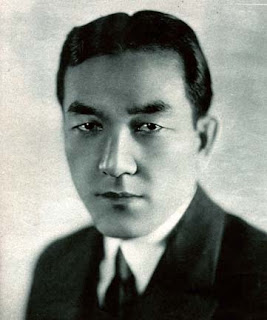
The photograph is of Douglas Fairbanks, Jr.

Posted in links, writing | 2 Comments

I Like Being Reviewed

I like getting reviews of my work.

Not everyone does. Not everyone is required to like it, or even to read reviews of their work. But some of us like reading reviews and commentary (which is how I think of feedback that states it isn’t intended as a review, or is briefer or less thorough than a review).

Reviews can give me a new way to think about my work. I like it when they confirm an opinion I already had about the story. I like it when they identify weaknesses, so I can think about those and how I might strengthen those weaknesses next time. I don’t directly make changes, but I might be influenced. The best thing is when a reviewer comments on something they liked or even disliked – and even if they disliked it, if it’s something I did on purpose, it makes me happy that my intentions came through.

Reviews, of course, aren’t always pleasant to read. If there’s one that’s too difficult for you to read without becoming overly angry or upset, my recommendation is not to read it, or not to finish reading it if you’ve started, and most especially not to comment and read the comments of others. I think most writers would agree it’s best not to argue with reviewers, because their opinions as readers are just as valid as those of the writer. Maybe return in a few days when you’ve had a chance to think it through, if you can then read with a clear head. But there’s no law that says you’re required to read every review of your work.

I especially love gaining new insights from commentary on my books – how do readers perceive what I’ve written? I want to know if they liked certain characters, their favorite scenes, and what they wish would have happened, or happened differently; the things they loved, the things that made them angry. Their thoughts and interpretations give the novel new life; their opinions help me to see the story from the outside, as a reader might. Since I write things I’d like to read, to me this is extremely important. I feel a little moment of wonder every time.

Even more than all those considerations, I like having my books reviewed because it means someone read the book. “Silly,” you say. “Thousands of people read your book.” (Or however many it was. I’m guestimating.)

That isn’t the point.

Sure, I know that copies sold. I see it in bookstores. I have all sorts of figures. It’s still not the same as having a stranger tell you what they thought. And that is different from having a friend read the book and tell you what they thought. The feedback in a review is coming from what was on the page. It’s feedback from someone who is more interested in the book itself than in its author.

Since I’m the author and I already know about me, I want to know about my book, unaffected by anything else. I want to know if anything in it struck the reader as true or meaningful, or if they loved a certain character, or wished an event had turned out differently. It’s a special treat to find out. It doesn’t matter, at base level, if the reviewer hated the book or loved it. What matters is that they went to the trouble of writing about it, and sharing their view of the novel’s world with me. Thousands don’t bother.

Posted in business of writing | 5 Comments

Romance in Short

Having written a short romance story last month, I naturally had to think about how to do it. I’ve written many short stories, but I would classify them all as erotica whether or not they were romantic. This was the first time I’d explicitly tried to write a romance, meaning a story in which the romance was the primary focus. (And I hadn’t written a short story in quite some time.)

I had planned to have several different angles to the story. First, it was to be a historical, set during the Crimean War, in which the hero would be participating. Second, there was to be time travel, a traveler from the far future to the 1850s. Third, I’d decided the time traveler was herself from the past, but had been brought to the future. And fourth, there had to be a romance.

You can see where the trouble lies. It’s just too much for a short story, even one with a length of 6,000 – 10,000 words. To establish the heroine’s backstory would require additional space; comparing it to the other elements, I decided it was unnecessary. Out it went. The time travel aspect itself, in my first version, required considerable setup. I needed wordcount to explain who the heroine was, what her world was like, why she was doing what she was doing, and why the reader should care about her and her actions. All that before the story truly began.

I abandoned that entire approach, and decided the time travel element would be as mysterious to the reader as to the point of view character. That way, I’d be sure to include only information the reader needed to know to follow the main idea of the story: that a time traveler falls in love with someone in the past. It gave me more space to concentrate on the development of the characters and their relationship.

The other important thing I learned is that an entire courtship is difficult to condense. There needs to be enough there for the reader to become emotionally involved despite the limited wordcount. One approach is to show only part of their relationship, for instance their initial meeting, or their reunion after a long separation. The other key points along their personal relationship timeline can then be dropped in with hints or references. The approach I took was to condense their relationship using pressure. They don’t know each other for very much time at all, but the time they do spend together is very intense, and in the midst of a dangerous situation. Months pass between the times they meet, but I condense the time they are not together, making sure they are together in the beginning, middle, and end of the story.

I’m still not sure I’m satisfied with the pacing I chose. But it was a valuable experiment.

Posted in short fiction, writing craft | 2 Comments

Guest at Midnight Moon Cafe


I’m a guest today over at Midnight Moon Cafe, on “Making the Paranormal Real – Boundaries and Consequences.”

Posted in guest | Comments Off on Guest at Midnight Moon Cafe

e.e. cummings, "may my heart always be open to little"

may my heart always be open to little
birds who are the secrets of living
whatever they sing is better than to know
and if men should not hear them men are old

may my mind stroll about hungry
and fearless and thirsty and supple
and even if it’s sunday may i be wrong
for whenever men are right they are not young

and may myself do nothing usefully
and love yourself so more than truly
there’s never been quite such a fool who could fail
pulling all the sky over him with one smile

–e.e. cummings

Posted in cummings, poetry | 1 Comment

e.e. cummings, "you being in love… (XII)"

you being in love
will tell who softly asks in love,

am i separated from your body smile brain hands merely
to become the jumping puppets of a dream? oh i mean:
entirely having in my careful how
careful arms created this at length
inexcusable, this inexplicable pleasure-you go from several
persons: believe me that strangers arrive
when i have kissed you into a memory
slowly, oh seriously
-that since and if you disappear

solemnly
myselves
ask “life, the question how do i drink dream smile

and how do i prefer this face to another and
why do i weep eat sleep-what does the whole intend”
they wonder. oh and they cry “to be, being, that i am alive
this absurd fraction in its lowest terms
with everything cancelled
but shadows
-what does it all come down to? love? Love
if you like and i like,for the reason that i
hate people and lean out of this window is love,love
and the reason that i laugh and breathe is oh love and the reason
that i do not fall into this street is love.”

–e.e. cummings

Posted in cummings, poetry | Comments Off on e.e. cummings, "you being in love… (XII)"