I Am My Own Muse

How’s that for a pretentious title? But aren’t all writers, really, their own muses? It’s sort of in how you talk about it. Some personify, and talk about their “muse” as if it’s something/someone outside of them. Others, like me, feel the “muse” is internal, ideas cooked up by the subconscious.

When I think about writing and inspiration, I go around and around in my opinions. (It’s one thing on which every writer has an opinion, or opinions. Just ask us. Better yet, ask a herd of us all at once.)

I can’t personify my urge to write and my inspirations. I know it’s one way to feel you control those elements of writing, because if you can describe something, it’s there. You can do things with it. You can “tell your muse to behave.” All of these techniques are no doubt helpful at one time or another in the writing process.

At the same time, personifying means giving up control: my muse is not me. If my muse is not cooperating, it’s not my fault. That can be good or bad. Sometimes, giving up control helps summon new depths to writing. Sometimes, you end up with confusing slop.

I’d rather, for the most part, have an element of control over my creative impulses. If I give in and write with little thought, I always, later, go over it with a critical eye. Maybe I’m just a control freak.

What about you?

Posted in writing process | 2 Comments

Galleys now available for THE DUKE & THE PIRATE QUEEN

The Duke and the Pirate Queen is now available on NetGalley if you’re a reviewer who’s registered with the site. If you’re just curious about the service, here’s the FAQ.

Excerpt from the opening chapter.

Second excerpt.

Third excerpt.

Fourth excerpt.

Amazon link for pre-order.

Posted in promo, the duke | Comments Off on Galleys now available for THE DUKE & THE PIRATE QUEEN

Wilfrid Wilson Gibson, "Retreat"

Retreat

Broken, bewildered by the long retreat
Across the stifling leagues of southern plain,
Across the scorching leagues of trampled grain,
Half-stunned, half-blinded, by the trudge of feet
And dusty smother of the August
He dreamt of flowers in an English lane,
Of hedgerow flowers glistening after rain–
All-heal and willow-herb and meadow-sweet.

All-heal and willow-herb and meadow-sweet–
The innocent names kept up a cool refrain–
All-heal and willow-herb and meadow-sweet,
Chiming and tinkling in his aching brain,
Until he babbled like a child again—
“All-heal and willow-herb and meadow-sweet.”

–Wilfrid Wilson Gibson

Posted in gibson, wwi poetry | Tagged | Comments Off on Wilfrid Wilson Gibson, "Retreat"

Edmund Blunden, “The Zonnebeke Road”

The Zonnebeke Road

Morning, if this late withered light can claim
Some kindred with that merry flame
Which the young day was wont to fling through space!
Agony stares from each grey face.
And yet the day is come; stand down! stand down!
Your hands unclasp from rifles while you can;
The frost has pierced them to the bended bone?
Why see old Stevens there, that iron man,
Melting the ice to shave his grotesque chin!
Go ask him, shall we win?
I never liked this bay, some foolish fear
Caught me the first time that I came here;
That dugout fallen in awakes, perhaps
Some formless haunting of some corpse’s chaps.
True, and wherever we have held the line,
There were such corners, seeming-saturnine
For no good cause.

Now where the Haymarket starts,
There is no place for soldiers with weak hearts;
The minenwerfers have it to the inch.
Look, how the snow-dust whisks along the road
Piteous and silly; the stones themselves must flinch
In this east wind; the low sky like a load
Hangs over, a dead-weight. But what a pain
Must gnaw where its clay cheek
Crushes the shell-chopped trees that fang the plain–
The ice-bound throat gulps out a gargoyle shriek.
That wretched wire before the village line
Rattles like rusty brambles on dead bine,
And there the daylight oozes into dun;
Black pillars, those are trees where roadways run
Even Ypres now would warm our souls; fond fool,
Our tour’s but one night old, seven more to cool!
O screaming dumbness, o dull clashing death,
Shreds of dead grass and willows, homes and men,
Watch as you will, men clench their chattering teeth
And freeze you back with that one hope, disdain.

–Edmund Blunden

Posted in blunden, wwi poetry | Tagged | Comments Off on Edmund Blunden, “The Zonnebeke Road”

Prose Architecture and Experimentation

Back when I wrote a lot more short stories, I used to use each one as an opportunity for experimentation. This was partly because I feel experimentation is one of the best ways to improve your writing, and partly so I wouldn’t get bored.

I experimented with different aspects of craft and character. I wrote a story in first-person. I wrote stories in second-person present tense. I tried out a light-hearted, slangy character voice; I tried a dark, despairing character voice; I tried sounding like a fairy tale and I tried sounding like myth. This post isn’t really about whether I was successful or not. This post is more about what you need before you can experiment.

I looked back at some of those stories recently, and realized I wouldn’t have been able to write them if I’d tried to do so when, say, I was in college. At that point, I just didn’t have the chops. If you don’t have the basics of prose down cold, and have not yet found your own voice, it’s a lot harder to experiment. I think, once I started to sell those short experimental pieces, that I was ready for them, and it showed.

You can experiment as a beginner, and I think it’s good to do so, but I think it’s a lot harder to sell those experiments when you’re still getting control of your prose. I think, to make a style experiment salable, it needs to have some substance besides the experimental aspect. You have to be a good enough writer to play with more than one aspect of craft at a time. You have to be able to keep the basic architecture of your building from falling down while you layer on the gargoyles and little curlicues.

At least, that’s what I think right now. Doubtless a few years from now, after (hopefully) I’ve reached a new level in my writing, I’ll have yet another opinion.

One of the most useful blog posts I’ve seen this week:
Why you should blog to build your writing career even if you don’t think you need to by Justine Musk.

Posted in links, writing craft | Comments Off on Prose Architecture and Experimentation

LeGuin Festschrift

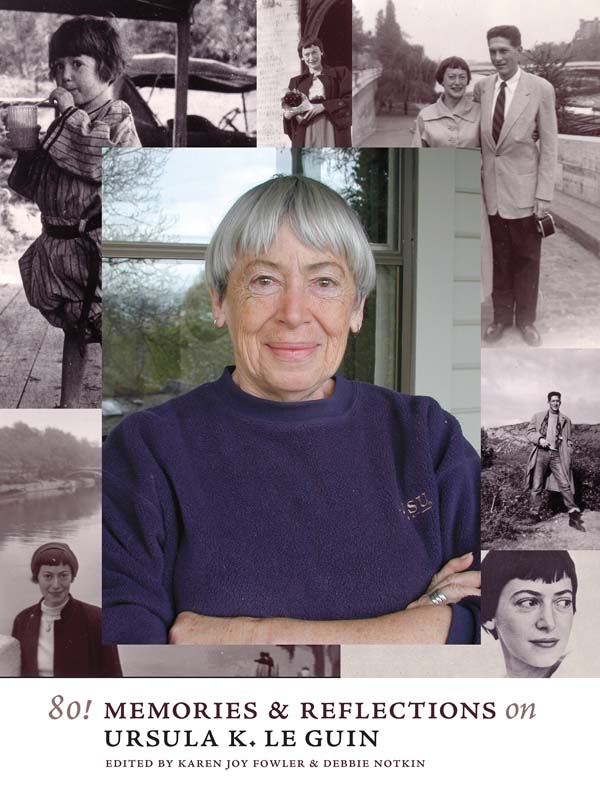
The Ursula LeGuin Festschrift, produced last year for her 80th birthday in an edition of one, will be coming out in print for the rest of us October 21, which happens to be Ursula LeGuin’s 81st birthday.

You can pre-order (at a 25% discount) here.

Contributions include fiction from John Kessel, Andrea Hairston, Sheree Renee Thomas, Ama Patterson, and Pan Morigan, and essays and poetry from Richard Chwedyk, Debbie Notkin, Eileen Gunn, Kim Stanley Robinson, Lynn Alden Kendall, Brian Attebery, Gwyneth Jones, Vonda N. McIntyre, Karen Joy Fowler, MJ Hardman, Ellean Eades, Paul Preuss, Molly Gloss, Sarah LeFanu, Victoria McManus, Jed Hartman, Ellen Kushner, Pat Murphy, Nancy Kress, Jo Walton, Una McCormack, Julie Phillips, Patrick O’Leary, Eleanor Arnason, Deirdre Byrne, Suzette Haden Elgin, Lisa Tuttle, Judith Barrington, Nisi Shawl, Elisabeth Vonarburg, and Sandra Kasturi.

Posted in promo, sf/f | Comments Off on LeGuin Festschrift

How Many Sex Scenes?

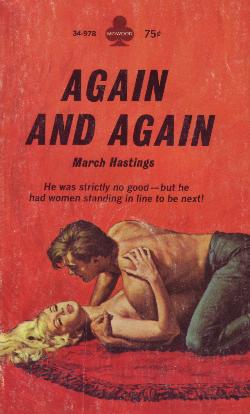
I recently read a contemporay romance and got into a brief discussion about the sex scenes.

I’d been perfectly comfortable with the amount of sex that was shown. The story focused on the two characters’ relationship issues and issues that were them versus society; basically, Love Against the Odds. So far as sex went, they didn’t really have any issues. They were physically compatible from the moment they met, and didn’t have much trouble affirming their love physically. They were shown kissing, they were shown in bed with fades-to-black. It was clear they were getting along fine so far as sex was concerned. I was okay with not knowing explicitly what they were doing.

Another reader, who’d also liked the book, wanted at least one sex scene to be slightly more explicit, suggesting that the sex scenes ought to match the emotional intensity of the rest of the book, which is quite long and definitely weighted on the emotional side of the characters’ relationship. I can see that, too. Balance isn’t a bad thing.

However, I think it’s also okay not to have explicit sex scenes in a romance novel. This book was marketed as a romance, not an erotic romance. Enough of the characters’ erotic relationship was shown, I feel, for the reader to have the necessary information about it. I think it worked…but I can also see the other reader’s point. The book could have been much richer had the couple’s problems in their public lives been reflected in their private lives, with commentary in both directions.

However, perhaps the book I’m imagining would have been another book entirely. After all, it’s not my book I thinking about. It’s someone else’s book. My book would have been different in many ways.

Have you read books that you thought didn’t show enough sex? What made you feel that way?

Posted in erotica, reading, romance novels | 13 Comments

The Best Part of Marketing

I’m not as dedicated to marketing my books as many advisors recommend, but I invest some effort because I can’t resist the idea that I can find more readers. In particular, I hope to find readers who have never heard of me and who wouldn’t necessarily search for a Harlequin Spice novel; readers who might not even know the Spice line exists. Specifically, I felt I had to market because I thought my books might appeal to a segment of speculative fiction readers, who wouldn’t necessarily encounter Harlequin’s marketing.

There is one thing I really like about marketing. It’s when, unexpectedly, my little rubber balls thrown out into the aether bounce back. The best part is when I actually hear from someone, and they tell me they’re interested in my novels because they saw one of my blog posts or follow me on Twitter or picked up one of the postcards or bookmarks I left in the Goody Room at RWA. It’s empowering to realize something I’ve done has made a difference.

For instance, I recently received a message from someone who friended me on Facebook, based on one of those postcards. I met several people at the RWA Conference who knew me from Twitter.

When I hear back from someone, and they sound interested, I don’t feel so much like I’ve been pelting the universe with me, me, me. Marketing feels more like a conversation to me, then. It feels less obtrusive. This realization helped me to make up my mind about revamping my website (I’m in the process of getting a quote on that, with the aim of having it fixed up in November sometime).

And I feel like I’ve accomplished something real.

Posted in business of writing | 5 Comments

Pirate Linkgasm

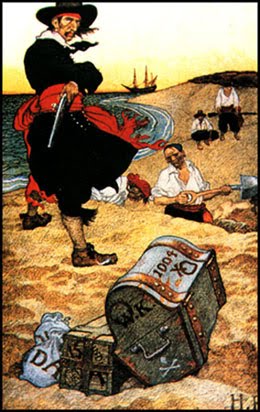
Before I wrote The Duke and the Pirate Queen, I didn’t realize quite how many websites existed about pirates, especially pirates from the 1600s through around 1720, particularly in the Caribbean. That’s the most common idea most people have of pirates, based on movies and novels such as Treasure Island.

Because I was writing a fantasy, I was able to use a mixture of ideas about “classic” pirates mingled with elements from nineteenth-century naval adventure novels and books about the pirates of Japan. In the course of all that, I found some fun websites.

The Port Royal Archives, which includes research papers, maps, and other documents.

The Queen Anne’s Revenge Archaeological Project.

Maritime Museum of the Atlantic in Nova Scotia.

No Quarter Given, the website of a pirate magazine.

The New St. Augustine Pirate & Treasure Museum is set to open in November, 2010.

Posted in links, pirates | Comments Off on Pirate Linkgasm

Wilfred Wilson Gibson, "Breakfast"

Breakfast

We ate our breakfast lying on our backs,
Because the shells were screeching overhead.
I bet a rasher to a loaf of bread
That Hull United would beat Halifax
When Jimmy Strainthorpe played full-back instead
Of Billy Bradford. Ginger raised his head
And cursed, and took the bet; and dropt back dead.
We ate our breakfast lying on our backs,
Because the shells were screeching overhead.

–Wilfred Wilson Gibson

Posted in gibson, wwi poetry | Tagged | Comments Off on Wilfred Wilson Gibson, "Breakfast"