Edward Shillito, "Hardness of Heart"

Hardness of Heart

In the first watch no death but made us mourn;
Now tearless eyes run down the daily roll,
Whose names are written in the book of death;
For sealed are now the springs of tears, as when
The tropic sun makes dry the torrent’s course
After the rains. They are too many now
For mortal eyes to weep, and none can see
But God alone the Thing itself and live.
We look to seaward, and behold a cry!
To skyward, and they fall as stricken birds
On autumn fields; and earth cries out its toll,
From the Great River to the world’s end–toll
Of dead, and maimed and lost; we dare not stay;
Tears are not endless and we have no more.

–Edward Shillito (1872-1948)

Posted in shillito, wwi poetry | Comments Off on Edward Shillito, "Hardness of Heart"

Laurence Binyon, "Ypres"


Ypres

She was a city of patience; of proud name,
Dimmed by neglecting Time; of beauty and loss;
Of acquiescence in the creeping moss.
But on a sudden fierce destruction came
Tigerishly pouncing: thunderbolt and flame
Showered on her streets, to shatter them and toss
Her ancient towers to ashes. Riven across,
She rose, dead, into never-dying fame.
White against heavens of storm, a ghost, she is known
To the world’s ends. The myriads of the brave
Sleep round her. Desolately glorified,
She, moon-like, draws her own far-moving tide
Of sorrow and memory; toward her, each alone,
Glide the dark dreams that seek an English grave.

–Laurence Binyon

Posted in binyon, wwi poetry | Comments Off on Laurence Binyon, "Ypres"

Researching the 1970s – Gwynne Garfinkle Guest Post

Please welcome my guest, Gwynne Garfinkle!

#

Researching the Jo Book

I recently completed the second draft of a novel about a soap opera actress in mid-1970s New York City who’s haunted by the ghost of her best friend who died protesting the Vietnam War. (The working title of the book is Some Misplaced Joan of Arc, but through the writing process I’ve mostly referred to it as “the Jo book.”) I already knew a lot about soap operas and the ’60s-’70s anti-war movement before I began writing, and I’m not sure I realized just how much research I would need to do.

I was ten years old in 1975, and in some respects I remember the time period very well. Yet it is in many ways a different world (not to mention the fact that I spent that time in Los Angeles, not New York). When I was writing a scene in which my protagonist Jo goes to see the newly released Dog Day Afternoon, I assumed she could go to her neighborhood movie house–but research revealed that the film only screened in one (now defunct) Manhattan movie theater when it first opened: Cinema 1. A friend of mine with access to newspaper archives even found me a New York Times ad for Dog Day Afternoon that included showtimes! Cinema Treasures, an online guide to classic movie theaters, provided a lot of info on Cinema 1.

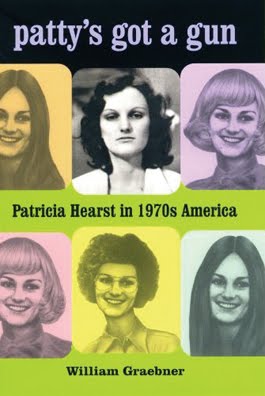
A number of historical events are referenced in my novel, notably the arrest and trial of Patty Hearst. The book Patty’s Got a Gun: Patricia Hearst in 1970s America and the documentary film Guerrilla – The Taking of Patty Hearst were excellent resources on the media’s portrayal of the Hearst case. Again, my friend with access to newspaper archives helped me with specific news items, and I was amazed to learn that the New York Times headline for Patty Hearst’s guilty verdict was: “MISS HEARST IS CONVICTED ON BANK ROBBERY CHARGES.” I made frequent use of The Vanderbilt Television News Archive, which contains detailed descriptions of U.S. national network news broadcasts–including commercials–going back to 1968.
For information about the movement against the Vietnam War, as well as other political activism of the ’60s-’70s, Cathy Wilkerson’s Flying Close to the Sun: My Life and Times as a Weatherman and Dan Berger’s Outlaws of America: The Weather Underground and the Politics of Solidarity were useful, as were the documentaries Rebels With a Cause and The Weather Underground.

As for the soap opera aspect of my novel, 1970s daytime dramas were produced in a very different way than they are today. Fortunately my friends Lara Parker (who played Angelique on Dark Shadows) and Rory Metcalf (who wrote for Ryan’s Hope) answered my questions, as did Peter White, who played Linc on All My Children at just the time period of my novel. I also consulted biographies of soap opera actors and soap opera reference books, as well as Eight Years in Another World (a wonderful memoir by former Another World head writer Harding Lemay) and We Love Soaps, a great source of interviews and archival material.

A number of soap opera actresses have penned soap opera murder mysteries, from which I gleaned some behind-the-scenes information amid the dropping corpses. Books in this little subgenre include Louise Shaffer’s All My Suspects and Eileen Davidson’s Death in Daytime and Dial Emmy for Murder.

The other sources I used for Jo book research are too numerous to mention, but a few highlights include a 1976 NYC TV Guide, the 1975-76 Trans World Getaway Guide to NYC, the Mr. Pop Culture week by week archives, and a webpage of ’70s toiletries advertisements, Stuck in the 70s. Sometimes a tiny, half-forgotten detail, like Love’s Baby Soft or Gee, Your Hair Smells Terrific, can help bring a scene–and the time period of a novel–to life.

Gwynne Garfinkle lives in Los Angeles. Her fiction and poetry have appeared in Strange Horizons, Goblin Fruit, Aberrant Dreams, Space & Time, and the Clockwork Jungle Book issue of Shimmer. She is represented by Diana Fox of Fox Literary.

#

Thanks, Gwynne!

Posted in guest, historical fiction, research, television | Comments Off on Researching the 1970s – Gwynne Garfinkle Guest Post

WWI slang

Speaking Freely: A Guided Tour Of American English From Plymouth Rock To Silicon Valley. Stuart Berg Flexner and Anne H. Soukhanov, Oxford University Press, 1997.

p. 82 “The use of obscenity and scatology…increased greatly during World War I and became prolific during World War II. The use of the cursing modifier fucking, for damned, first reached epidemic proportions with British soldiers during World War I, by which time they were also using fuck arse (for a contemptible person, which American troops translated into fuck ass), fuck me gently (literally “don’t take advantage of me too much, don’t cheat me too blatantly”), fuck ’em all, and make a fuck up of (“bungle, ruin”).”

p. 84 “Shithead is known from 1915…By 1918 S.O.L. was a common abbreviation for the older shit out of luck…In World War I the old rural term shithouse became a popular soldier’s word for latrine, while shit alley was a particularly dangerous battlefield or position while shit pan alley was a military hospital (a pun on the 1914 Tin Pan Alley).”

p. 86 “Son of a bitch was used so often by World War I American soldiers as an expletive or intensive that Frenchmen called them “les sommobiches.” The abbreviation S.O.B. also appeared during World War I.”

p. 146
Basket case, 1919, a quadruple amputee, originally British Army slang, later coming to mean mental, not physical, incapacity.”

Chow, which had been a slang word for food since 1856, became common in World War I, along with chowhound.”

Dud…By 1919 it had broadened to mean anything that did not meet expectations.”

“By the end of the war…to goldbrick meant to shirk.”

Shell shock, 1915, originally a British coinage, found wide use by Americans even though the official military term was battle fatigue.”

Posted in research, wwi | 2 Comments

Making Time

“I have to find time to write.”

I don’t think that’s true. You don’t find time. You make time. You take it. You take it for yourself.

If you want to write, you have to choose time during which you will write.

You have to give things up in order to make time to write. If you don’t already have writing time in your schedule, then what activity is filling your schedule? Your dayjob? Childcare? Housecleaning? Doing things for other people? Socializing? Regardless, there’s a point where something has to give.

You can say it’s easy for me. I don’t have any children, I don’t have a spouse who makes demands on my time. But, if I did have those people in my life, I would still need time for me. All of us need time for ourselves, to be ourselves. I am rarely more myself than when I’m writing. When that time is hard to locate, I get ruthless.

If I put off doing the laundry this week, will I still have enough clothes to wear to the dayjob? Will my friend forgive me if I can’t go out to dinner with her this weekend? Will the volunteer effort fail completely for lack of my presence?

I choose. When I need to write, I make time to write.

Posted in business of writing, writing | 5 Comments

Writing Marathons

I’ve learned three things from writing marathons:

1. I can trust my basic prose level to sound okay on first draft, without me paying too much attention to it as it flows out. I need to save my concentration for keeping the whole story in mind. Doing paper edits before the marathon helps a lot on thinking about the story’s shape; so do the comments I get from my workshop on the partial. Making notes after those comments and edits, on specifically what I need to include before the novel’s end, also helps a lot. The notes can be lather, rinse, repeat at each stage of the writing process.

2. Breaks are necessary for me, even in a marathon, even if the breaks are only standing up after an hour or so to put away part of a load of laundry. That’s one kind of break. The other is finishing a large section, then taking a think-break and making notes on the next section, so I don’t have to waste time flailing when I sit back down again to write. I can enforce my think-breaks by, for example, trapping myself downstairs waiting for my laundry to finish, with no entertainment but the notebook and pen.

3. I can write a lot in a short period if I need to, but never as much as I wish I could. I have to remind myself not to have wildly unrealistic expectations; it helps to know what I’ve managed to accomplish in the past.

Posted in writing, writing process | 2 Comments

Contraception in World War One

A History of Contraception: From Antiquity to the Present Day. Angus McLaren. Basil Blackwell Ltd., 1990.

p. 183-184 “Bentham declared in 1797 that population could be controlled not by a ‘prohibitory act’ or a ‘dead letter’ but by ‘a sponge’, indicating that a range of contraceptives was already known to the late eighteenth-century, middle-class readers of the Annals Of Agriculture. Carlile, in the first book published in England on birth control–Every Woman’s Book: Or What Is Love (1826)–described the woman’s use of a sponge, the man’s employment of a baudruche or ‘glove’ and partial or complete withdrawal.”

Marie Stopes published Married Love in 1918, which eventually sold over a million copies. She published Wise Parenthood later in 1918. She opened her clinic in 1921.

“In Europe [condoms] were still being made of animal skins and silk into the twentieth century; French propagandists provided information on how housewives could make condoms or baudruches from intenstines purchased at butcher shops…by the 1850s relatively cheap rubber condoms were available in the United States, A.M. Mauriceau offering to sell them at $5.00 a dozen.”

19th century: condoms were too expensive for many people, and were prone to bursting. Also associated with disease and prostitution.

p. 184-185 “The invention of the diaphragm did represent a significant innovation in fertility control.” 1882: “a soft rubber shield.” Expensive, and had to be fitted by a physician. Douching after intercourse was recommended, though it was less effective than coitus interruptus.

Spermicides in the form of powders or jellies began to be developed at the turn of the century. Soluble quinine pessary in use in the 1880s. Women also made their own pessaries from cocoa butter or glycerine.

Latter decades of 19th century both useful and dubious contraceptives and abortifacients could be bought by mail or in barber shops, rubber goods stores, and pharmacies. Salesmen went door-to-door in some neighborhoods.

p. 217 Margaret Sanger founded the American Birth Control League in 1916. Opened her clinic in 1923.

p. 186 “nineteenth century Europeans’ first means of limiting births was..simply abstaining from intercourse.” Upper classes could have separate beds and/or bedrooms for husband and wife. People married later at end of 19th century. Rhythm method also followed by some, once idea of fertile periods discovered; unfortunately, the truth of a woman’s cycle was not discovered for a long time. Extended nursing another method of limiting births.

p. 195 “Holy Mother we believe / Without sin thou didst conceive: / Holy Mother, so believing, / Let us sin without conceiving.” (Alexandre Boutique)

Posted in erotica, research, wwi | 2 Comments

e.e. cummings, "the bigness of cannon "

the bigness of cannon
is skilful,

but i have seen
death’s clever enormous voice
which hides in a fragility
of poppies….

i say that sometimes
on these long talkative animals
are laid fists of huger silence.

I have seen all the silence
full of vivid noiseless boys

at Roupy
i have seen
between barrages,

the night utter ripe unspeaking girls.

–e.e. cummings, Tulips & Chimneys (1922 Manuscript)

Posted in cummings, wwi poetry | Comments Off on e.e. cummings, "the bigness of cannon "

Siegfried Sassoon, "The Hawthorn Tree"


The Hawthorn Tree

Not much to me is yonder lane
Where I go every day;
But when there’s been a shower of rain
And hedge-birds whistle gay,
I know my lad that’s out in France
With fearsome things to see
Would give his eyes for just one glance
At our white hawthorn tree.

. . . .

Not much to me is yonder lane
Where he so longs to tread:
But when there’s been a shower of rain
I think I’ll never weep again
Until I’ve heard he’s dead.

–Siegfried Sassoon

Posted in sassoon, wwi poetry | Comments Off on Siegfried Sassoon, "The Hawthorn Tree"

Saskia Walker – Guest Post

Please welcome my guest, Saskia Walker!

#

When I started out on my writing journey I used to fret about how the fantasy or paranormal elements of a story would mesh with the more everyday aspects. As writers we want our stories to flow seamlessly for the reader, and for them to accept what is way beyond the norm alongside the more rational elements.

This is a skill that my hostess has, in spades! In Victoria’s novel, The Duchess, Her Maid, The Groom and Their Lover, I found I accepted the more unusual aspects of the society she portrayed because the writing was so solid overall. For example, Victoria describes the Duchy palace, its furniture, art works, the costumes and surroundings, in such vivid detail that I readily accepted the more unconventional things that happen within this society. That is skilled world building.
A few years ago I took an online workshop by best-selling paranormal romance author Angela Knight. Angela was talking about how to give your paranormal characters life and make them leap off the page. When she had a question and answer session, I raised my concern about making the fantasy elements mesh, so that they are instantly acceptable to the reader. Her response was to research and write the real-world elements solidly. For example, if your hero is a police officer who is secretly a werewolf, it’s his everyday police world you need to get right, and the reader will go with the rest because she/he will be so grounded in the character and the story.

That notion began to sink in for me, and I was able to look at the issue from a different viewpoint. It also meant I worried a bit less and focused on getting the groundwork right instead! I think I’m getting there, at least I hope so.

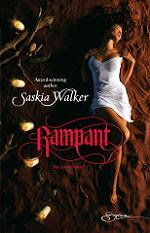
In my latest novel-length publication, Rampant, I had a lot of genre cross over to deal with, and it set up a number of “believability” challenges as a result. The story draws on the history of witchcraft in Scotland, and the very real persecution of those who were ousted as witches. The story is divided between a contemporary setting and a historical one, and in both settings several of the characters are secretly practising witchcraft. The rich paranormal folklore of Scotland and the history of persecution was something I was able to draw upon, as was my love of the natural world and the area I chose to set the story in, the East Neuk of Fife. What I had to mesh with that was my own world building, in particular, the magic.

To close, here’s an excerpt from a scene set in the historical world of Rampant. In this part of the book it was important to get the period and setting right, as well as the atmosphere of suspicion and persecution, in order to ground my story and give it weight. See what you think.

#
The master is leading me into the forest. He waylaid me as I was on my way to pick summer berries and ordered me to leave my basket and to follow him here instead. His mood is not good. With one hand locked around my wrist he drags me alongside him, his handsome mouth tightly closed.

“Ewan, what is it? Whatever is the matter?”

He does not reply.

We follow the path to the place where the coven meet, but the brethren are not here with us now. It is just the two of us, and the master is like a stranger to me. His head is bare, his hat who knows where, and his necktie is askew. His hair is uncombed, and he looks as if he has barely slept.

Beneath the trees the scent is high for it rained heavily in the night, an early summer storm, and whilst it is fresh down by the harbor, up here in the trees the musky smell of damp undergrowth fills the air. The ground is muddy and the path is damp and slippery beneath my boots, sending me skittering on the path.

He does not look back, does not seem to notice. Why is he bringing me here now, and why does he not speak? My heart beats hard in my chest, for I have a dreadful bad feeling about this.

“Speak with me,” I plead, “tell me what it is that you need. I promise I will do whatever you want, if only would look my way and speak to me.”

Still he does not answer. Instead, he drags me even faster across the ground, intent on some purpose known only to himself. I can barely keep up, my footsteps stumbling in his wake, my skirts snagging on brambles. Then I see our own place up ahead, the clearing where our coven meets. The circles of rocks mark the five points where we have set our fires, and the earth is burnt from our rituals.

He stops walking and pulls me up short in front of him, strong hands wrapped round my wrists. I have to stand on my toes and stretch, for he seems determined that I look him directly in the eye.

“Feel my ire,” he urges, “know it in your soul.”

I do feel it, I see it and I feel it, a churning vat of pain that he wishes to share with me. Betrayal, there is betrayal there too, amidst the rage in his expression.
“I see it, my beloved master, but I do not understand.”

“I thought you had more sense, Annabel McGraw. You are fickle, as unruly as a bored child. I scorn you for wasting precious time, for inviting trouble upon the coven by dallying with villagers when you should be honing your skills.” He kicks half burnt logs out of his way before he pushes me down in the ashes.

My body hits the ground, my spirit fast feeling what he wants me to know—humility, shame. He is showing me how he could break me. That I could be as easily fated by him as a woodland creature or a captured bird that he would sacrifice for some greater purpose.

Clumsily I sprawl, charred wood and rocky earth rough beneath my back, my left leg twisted beneath me. As his chosen woman amongst the coven, I can think of no greater shame that he could bestow upon me.

I try to rise up on my hands, my emotions unsteady and my thoughts running this way and that as I try to understand his actions. I resent him for this. “Why do you try to shame me this way?”

He drops to his knees beside me and shoves me to the ground with his hand hard against my chest. I cry out when the rocks and stones dig into my back. His eyes blaze and his lips are drawn back from his teeth. His anger is overwhelming. I feel it pumping violently from the hand he has splayed at the base of my throat where the skin is bare. His palm is so hot it makes me squirm for fear of being branded by him, a demon’s mark that I know he has the power to bestow. And yet it makes me lusty, too, for he is so handsome when his immense magical power burns in his eyes this way.

“You have been foolish, risking our secret, risking so much for a roll with an oaf of a fisherman.”

Was that it? That he is jealous of Irvine? I cannot fathom it at first, for he takes lovers where he chooses and it has not bothered him when I have done the same. But I am delighted, too, and I begin to see how I can turn this.

“Why do you do this?” he demands. “Is it not enough that together we could own all of the magic in Scotland?” He closes his fist around the air in front of my face, and I see the immense light that glows from within it.

I watch, secretly delighted by his actions. I am almost gleeful that his need for me has driven him to express himself in forbidden magical enchantments. He opens his fist and the light swirls out into the atmosphere, sparkling with colors, before darting away into the trees…

If you’d like to read another excerpt from Rampant, you can do so here.
#

Thanks, Saskia! (Also, I am blushing because you liked The Duchess, etc. Thank you so much!)

Posted in erotica, guest, historical fiction | 2 Comments