Off to Montreal for Worldcon

Today, my friend Charlotte and I are flying to Montreal for several days of sightseeing before we attend Worldcon.

It’s a first trip to the city for both of us, and there are quite a few things we hope to see, not to mention visiting a whole list of great restaurants.

The Biodome sounds marvelous, and I am dying to see the ring-tailed lemurs that are there temporarily. They also have penguins!

We will probably spend a lot of time in the old city historic district, as well.

Finally, I don’t think we can miss the Museum of Fine Arts. I’m especially looking forward to seeing exhibits of African art and glass sculptures. There is also exhibition space devoted to Napoleon, of consuming interest to me as a fan of romances set during the Napoleonic Wars.

Posted in conferences, travel | 3 Comments

Edmund Blunden, "Premature Rejoicing"


Premature Rejoicing

What’s that over there?
Thiepval Wood.

Take a steady look at it; it’ll do you good.
Here, these glasses will help you. See any flowers?
There sleeps Titania (correct–the Wood is ours);
There sleeps Titania in a deep dugout,
Waking, she wonders what all the din’s about,
And smiles through her tears, and looks ahead ten years,
And sees the Wood again, and her usual Grenadiers,

All in green,
Music in the moon;

The burnt rubbish you’ve just seen
Won’t beat the Fairy Queen;

All the same, it’s a shade too soon
For you to scribble rhymes
In your army book
About those times;
Take another look;

That’s where the difficulty is, over there.

–Edmund Blunden

Posted in blunden, wwi poetry | Tagged | Comments Off on Edmund Blunden, "Premature Rejoicing"

Edmund Blunden, "Thiepval Wood"

Thiepval Wood

The tired air groans as the heavies swing over, the river-hollows boom;
The shell-fountains leap from the swamps, and with wildfire and fume
The shoulder of the chalkdown convulses.
Then the jabbering echoes stampede in the slatting wood,
Ember-black the gibbet trees like bones or thorns protrude
From the poisonous smoke–past all impulses.
To them these silvery dews can never again be dear,
Nor the blue javelin-flame of the thunderous noons strike fear.

–Edmund Blunden

Posted in blunden, wwi poetry | Tagged | Comments Off on Edmund Blunden, "Thiepval Wood"

Erotic Journeys and Bodice Rippers

I’ve been thinking more on the reasons some books are categorized as erotica and some as romance when the number or frequency of sex scenes, and the “heat level” thereof, is very similar. I don’t believe the degree of explicit language is always a factor; styles in prose language vary by author and, I think, by what’s in style at the moment.

One difference that came to mind is that in erotica, the reader is meant to invest in the main character (usually a woman, at least in the erotica I read). She can have multiple partners, and might or might not end up in a committed relationship. The point of the story isn’t finding a perfect relationship, it’s the heroine discovering her selfhood and being fulfilled.

Romance novels focus on a single pairing. The reader invests in the pair; even when the two characters are apart, their actions and thoughts tie into the relationship plot. Action plot is secondary to the relationship plot. Their individuality as characters is important because of how their individual traits contribute to or detract from the relationship. The point of the story is the relationship pair being fulfilled.

I also think the two types of journeys aren’t mutually exclusive. An erotic novel can also be a romance. A romance novel can include erotica; in fact, I think erotica in romance-marketed-as-romance used to be more common than it is today, perhaps because now there is more freedom to publish erotica for women as erotica.

I am wondering if the earliest epic “bodice ripper” romances of the 1970s might be more tinged with erotica than today’s romances. The plot could follow a single heroine through various relationships, for example an unsuitable or abusive marriage that later led to her relationship with the novel’s hero; or a relationship with the hero that might begin as unhealthy and gradually become more fulfilling. I recently read Anita Mills’ Autumn Rain, published in 1994, which I believe is a later example of this subgenre; though the hero appears in early scenes, and there is a kiss between him and the heroine, there is no emotional connection between them, and he soon goes overseas to fight Napoleon. Until the last third of the book, the story revolves around the heroine alone and her relationships with her controlling, elderly husband and his grandson. The novel is about her rather than her relationship with the hero, and even when their relationship begins, her romantic journey and her erotic journey (the hero takes her virginity) are intertwined.

Opinions? Comments?

Related posts:
Preliminary Thoughts on Two Types of Erotic Novel.

Defining Erotic Romance, Romance, and Erotica.

Posted in erotica, genre, romance novels | 7 Comments

The Research Book Dilemma

My name is Victoria, and I am a book hoarder. If I were still an impecunious graduate student, the lack of funds to buy books would be a constant pain, but as an adult with a job, my struggle is more with not buying books. It’s all so interesting, you see. And even if I can’t read the books right now, well, what if I broke my leg? And was bedridden? I would need some books to keep my spirits up, right?

Now that I’m a published novelist, I’m even worse about book-buying. The thing is, books can count as research. They can be used to spark ideas and to provide realistic detail for my stories. And they’re tax-deductible!

Sometimes, early in a novel, I don’t know exactly what research materials I will need. I might realize several chapters in that I need to know, for example, how much a coat would cost in 1914, or what a British grenade looked like. It helps to have books on hand so I don’t have to stop writing for a trip to the library or onto the internet (though I also accumulate questions for future internet research). Also, reading the books sparks my thinking on plot and character, in directions that never would have occurred to me if I hadn’t encountered a stray historical fact.

But the real reason to buy research books is that I love them. I love having lots of them, and knowing I can take them off the shelf and read them whenever I want, even if that happens to be at three o’clock in the morning when libraries are closed. Not to mention the comfort of being able to read while curled up under a blanket with a cat, something that’s generally frowned upon in libraries and even bookstores that feature coffee shops.

Libraries do have their uses. Much as I’d like to, I can’t afford all the books I want or need. Libraries have given me priceless experiences like handling books actually published in the period I’m writing, and provide easy access to invaluable material like microfiched newspapers and magazines. Sometimes I only need a single essay from a book, and prefer to borrow it from the library rather than buy it. But I don’t think I could function nearly as well as a writer without my own stash of books. Besides the value of what they contain, to me they feel like talismans.

Related posts:
Reading for the Writer.
Synergy in Writing and Research.
WWI: A CBS News Production.

Posted in historical fiction, research, wwi | Comments Off on The Research Book Dilemma

Cecilia Tan Guest Post – "Why Writing Romance and Erotica Is Like Being Good in Bed"

Please welcome my guest, Cecilia Tan!

#

Why Writing Romance and Erotica Is Like Being Good in Bed
by Cecilia Tan

I was debating with a friend recently on what the “real” difference is between “literary” fiction and “commercial” fiction. What’s the difference between a literary novel that has a love story in it and a romance novel that is well written in a literary style? We know the publisher markets them differently, but at some inherent level are they different?

It occurred to me that they might be, and that the difference might be exactly the difference between making love with someone like a rock star who is into themselves, and with someone who is into you.

We call literary fiction “high art” whereas genre fiction is seen as pop art at best, hack work at worst. Why? It seems to me that all the things we consider high art are supposed to be “pure” somehow, and free of the influence of the intended audience. A master painter or sculptor or composer is somehow supposed to reach deep inside them for the art that is unique to them and produce a masterpiece without sullying themselves worrying about things like “writing to market.” We can argue later about whether this vacuum ever really exists and whether any of the great painters or composers actually produced their greatest work that way. But the impression that literary writers sit alone somewhere thinking deep thoughts (perhaps aided by consumption of alcohol) persists.

Meanwhile we hack writers who bang out romance, fantasy, mystery, et cetera are supposedly trying to please our voracious audience.

Wait a second. Why is that bad? How is it less artful for me to craft a story, characters, and plot that is satisfying for the reader than it is for me to craft one that is satisfying to myself as an artist? Is the endeavor any less creative? Does it take less of my brainpower or less of my craft? I would argue that it doesn’t. I can pull off the literary fireworks. I can write a story in backwards chronology. I can create prose poetry. I can use the ten dollar words, the high syntax, and cite the influence of various literary giants in my work.

I can do all that and please my readers, too. Ultimately I do not want people reading my books to be having an experience akin to having sex with a rock star where it is all about me and what a virtuoso I am, but to feel that they are receiving satisfying attention from me. They can trust me to give them what they need, to tease them a little, perhaps with an edge of kink, but to always give them what they want in the end. This applies just as well to my romances as my literary erotica. Whether I adopt the noirish feel of a thriller for Mind Games, the chick-lit tone for The Hot Streak, or provide adult readers with everything that was missing from Harry Potter in Magic University, I’m a very giving author.

And I can’t see that being a bad thing.

CECILIA TAN is the author of the newly launched erotic fantasy from Ravenous Romance “The Siren and the Sword,” (Book One in the Magic University series), the baseball-themed romance The Hot Streak, and the erotic paranormal suspense novel Mind Games, also from Ravenous. She is the editorial director of Circlet Press, erotic science fiction and fantasy, and also the author of Black Feathers, White Flames, The Velderet, and Telepaths Don’t Need Safewords. Visit her at http://blog.ceciliatan.com/ to find out more.

Posted in erotica, genre, guest | 4 Comments

The Book of Awesome

Today I bring you The Book of Awesome.

The Book of Awesome is why you should have friends. A short while ago, I was bemoaning the fact that I had read the Hornblower books and the Aubrey-Maturin books, and was writing a sea adventure, but didn’t really understand how sailing ships actually worked.

Sherwood Smith, whom I’ve known online for several years, said, “You need Seamanship in the Age of Sail: An Account of the Shiphandling of the Sailing Man-Of-War 1600-1860, Based on Contemporary Sources by John Harland.” Despite having read Sherwood’s book Inda when it came out, I had completely forgotten that the book included sea adventure, thus I had not approached her for help with research. However, my complaint about my problem brought her to my rescue, and I was able to obtain The Book of Awesome.

How awesome is The Book of Awesome? So awesome, I cannot tell you. I am speechless in the face of its awesomeness. In fact, it is so awesome and gives such detail that at times I wish I could spend a few months studying it in detail. Or maybe years.

The Book of Awesome tells you the names of all the parts of the ship and the various sails, often in many different European languages. It tells you how those sails can be worked, and what they look like under different conditions, and how they would be adjusted for those conditions, and why this was done. It has diagrams. I cannot stress enough how totally awesome this book is. I particularly love that it was written by a man who lives in a town that is totally landlocked (though the illustrator had experience with working sailing ships).

It’s a perfect book for a giant research geek like me. Because actually, The Book of Awesome is way too awesome for my needs. I imagine some readers of my sea adventure/pirate book will enjoy the ship geekery, but some won’t notice it at all, and others will wonder why I have to talk about ships so much. I can’t include so much detail that the novel starts to be about ships and not about the characters. But it doesn’t matter. The research part of it is for me.

I love my Book of Awesome.

Stop by tomorrow for my guest, Cecilia Tan, who’ll be posting on “Why Writing Romance and Erotica is Like Being Good in Bed.”

Posted in pirates, research | Comments Off on The Book of Awesome

It’s a bird, it’s a plane, it’s Ultra-Brother!

Why does the coolest brother in the romance series usually turn out to be such a dud?

I began to make a list of all the series of historical novels featuring brothers as heroes, but then realized that would be an entire essay in itself; also, I didn’t really want to put any particular author on the spot. But romance readers know the kind of series I mean.
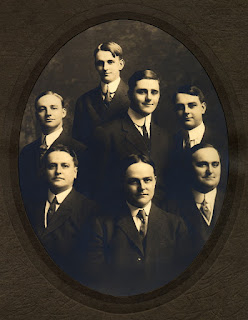
There are brothers, usually a minimum of three, sometimes up to five or six. All of them are gorgeous and talented and rich. They might look a lot alike, or they might look really different due to taking after different parents or being half-siblings or whatever, but regardless, they’re all gorgeous. And they’re all unmarried.

Inevitably, one of the brothers is cooler than the rest. Usually, he’s the eldest, and also the most stoic or emotionally distant, and often fearfully unpredictable. If there’s a title, like Duke or Marquess or whatever, he’s the one who holds it. He’s almost inevitably the one of the brothers with the most power, and often, that power has opposed him to his brothers and their romantic interests throughout the series, and/or he’s served as a deus ex machine in the plots. Usually, he has Angst of some kind, or a Dark Past, possibly Secret, possibly Terrible, and his Angst and Power gives him a glare that could melt titanium.

All quail before the Mighty Ultra-Brother. Everyone’s dying to know what sort of woman will Win His Heart and Bring Him To His Knees. And his story is nearly always saved for last.
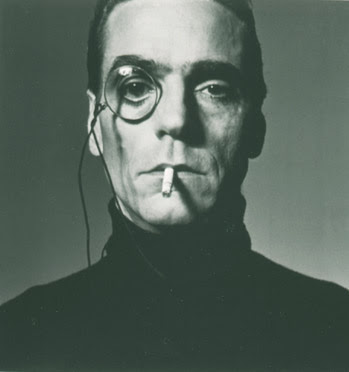
This makes sense, dramatically. He’s done interesting, contrary things throughout the series. The reader wants more of him. The anticipation for his book becomes nearly unbearable. If his book comes out in hardcover, readers agonize over whether they should buy it immediately or suffer until the paperback comes out.

For me, almost inevitably, that book fails to live up to the hype.

Once the Ultra- Brother is the hero of his own book, the reader sees inside him, and his mystery is gone. Now that he’s the hero instead of a secondary and possibly antagonistic character, he’s required to operate between narrower bounds; often his Dark Past turns out not to be so dark after all, or he overcomes it and is able to hug his brothers and make funny noises at their babies. The advantage of his character is scoured away by his new role.

Also, romance novels are not single-character affairs. The heroine needs space and agency of her own, and she’s operating at a disadvantage because often she doesn’t have previous appearances in prior books (the more books there are, the worse this can be). She might also be disadvantaged by the reader, who over all that time came up with their own ideas on what the perfect heroine should be. The “real” heroine might not match up. And, really, is anyone good enough for the Ultra-Brother?

Some series begin with the Ultra-Brother, which I think is marginally better—he can then, often, continue to be interesting by maintaining an antagonist role for the rest of the series. I’m beginning to prefer that option.

What do you think?

Related post: Normative Heterosexuality and the Alpha Male Fantasy.

Posted in genre, reading, romance novels | 2 Comments

Siegfried Sassoon, "Their Frailty"

Their Frailty

He’s got a Blighty wound. He’s safe; and then
War’s fine and bold and bright.
She can forget the doomed and prisoned men
Who agonize and fight.

He’s back in France. She loathes the listless strain
And peril of his plight,
Beseeching Heaven to send him home again,
She prays for peace each night.

Husbands and sons and lovers; everywhere
They die; War bleeds us white
Mothers and wives and sweethearts, –they don’t care
So long as He’s all right.

–Siegfried Sassoon, Counter-Attack and Other Poems, 1918

Posted in sassoon, wwi poetry | Comments Off on Siegfried Sassoon, "Their Frailty"

Moonlight Mistress excerpt – the opening

This is the opening section of Moonlight Mistress, out December 2009 from Harlequin Spice.

#

There were no trains to Strasbourg.

The hand lettered sign on the station wall might be wrong, or something might have changed. Lucilla Daglish clutched her single carpetbag more closely to her skirts, to more efficiently protect her scientific glassware from the anxious crowd, but also for reassurance. People jostled against her on all sides, all of them speaking in high-pitched, anxious tones that blurred into a babble conveying nothing but fear. Two different babies wailed, and a larger child screeched between gulping sobs. A fat man, reeking of stale pipe smoke, elbowed her sharply in the kidney as he pushed his way behind her.

Mentally, Lucilla cursed herself as she tried to explain her problem to the ticket agent. Had the man in the booth needed to know about titration or some other element of practicing chemistry, she could have explained to him at great length. However, her more basic conversational German was lacking. Perhaps she had misunderstood his meaning, or he had misunderstood hers. Perhaps her fear had led her to misspeak.

Summoning different German vocabulary, she phrased her question again. She was an Englishwoman. She wished to travel to Paris via Strasbourg. She had a ticket. Here was her ticket. Here were her papers, proving her nationality.

No, it was the Gnädige Frau who did not understand. There were no trains to Strasbourg. There were no trains at all. Germany had declared war on Russia. There would be no trains until further orders were received.

“I am not at war!” Lucilla exclaimed, in English, knowing the agent would not understand her frustrated outpourings. “Why can I not travel out of this country? Surely you have no use for me here?”

Read more at my website.

#

c. Victoria Janssen 2009

Pre-order on Amazon.com.

More excerpts.

More Snippet Saturday at the following blogs:

Beth Williamson
Cynthia Eden
Elisabeth Naughton
Eliza Gayle
Jaci Burton
Jody Wallace
Kelly Maher
Lacey Savage
Lauren Dane
Marissa Scott
McKenna Jeffries
Michelle Pillow
Moira Rogers
Sasha White
Shelley Munro
Sylvia Day
Taige Crenshaw
TJ Michaels
Vivian Arend

Posted in free read, moonlight mistress, promo | Comments Off on Moonlight Mistress excerpt – the opening