Making the Paranormal Real: Boundaries and Consequences

This post was originally written for Midnight Moon Cafe.

I was a reader and writer of science fiction and fantasy long before I read romance, and in many ways my reading tastes still reflect that early influence. I tend to favor paranormal romances that have dense worldbuilding that makes sense to me and holds up to questioning. I think, in general, that’s a good thing, because anything that can contribute to the realistic/true feel of a story means the reader is less likely to be thrown out of their imagination and into the cold. True, a paranormal romance must focus on the relationship between hero and heroine, but their conflicts can seem much more real if the world in which they live is fully realized. In urban fantasy, which often tends to series format, a well-developed world is even more necessary, and should grow more complex over time, so the readers (and writer) don’t become bored.

To me, one of the keys to creating a world that seems real and layered is to ensure that the world has boundaries. And that when those boundaries are trespassed, there are consequences.

It doesn’t matter if the paranormal character is “traditional” (vampire, werewolf, ghost) or a creature you’ve created. As with any other character, you have to decide what they want and why they can’t have it. Those issues can be tied tightly into the paranormal aspects of both the character and her world. Barriers to achieving their goals might be supernatural or magical as well. For example, what if the hero can only live in sunlight and the heroine can only live in the dark? Those limitations instantly generate an external barrier that yields conflict, which yields plot. There’s a reason the “he’s a vampire, she’s a vampire hunter” setup is so popular!

I think the more integral the paranormal elements are to the characters and their problems, the richer the story can be. If their problems are “normal” problems, then why make the characters paranormal at all?

Characters with paranormal boundaries to cross means the stakes (wooden ones, even!) can be even higher for them. A vampire’s failure might mean not only death, but eternal torment. A werewolf might not merely lose her boyfriend, she might accidentally eat him. The consequences can significantly ramp up the story’s tension. Overcoming them can result in a more intense payoff at the story’s end.

Finally, boundaries and their consequences are important as turning points in the plot. The characters might have a single significant problem to overcome at the book’s climax. Leading up to that, the characters can face subsidiary problems, all of them related to the paranormal worldbuilding elements. First, the hero is freed from the tree where he’s been imprisoned. Second, the heroine demands payment for freeing him – he must pay her a portion of his soul. He doesn’t remember they were once lovers and she gave him part of her soul; he refuses. Third, the heroine begins to die because the hero hasn’t complied. Each boundary causes a problem for the characters, and they must find a way to cross it – or avoid crossing it – and survive the consequences.

Related Posts:
Paranormal Appropriation.
Choosing Your Paranormal Creature.
Why Werewolves?

Posted in genre, paranormal, writing craft | 4 Comments

Occupied Lands in World War One

The novel I’m working on now, a sequel to The Moonlight Mistress, focuses on the main werewolf characters from that novel and their marriage of convenience. Tanneken, the female werewolf, was working as a spy in the previous novel, so I decided to make her activities central to the plot.
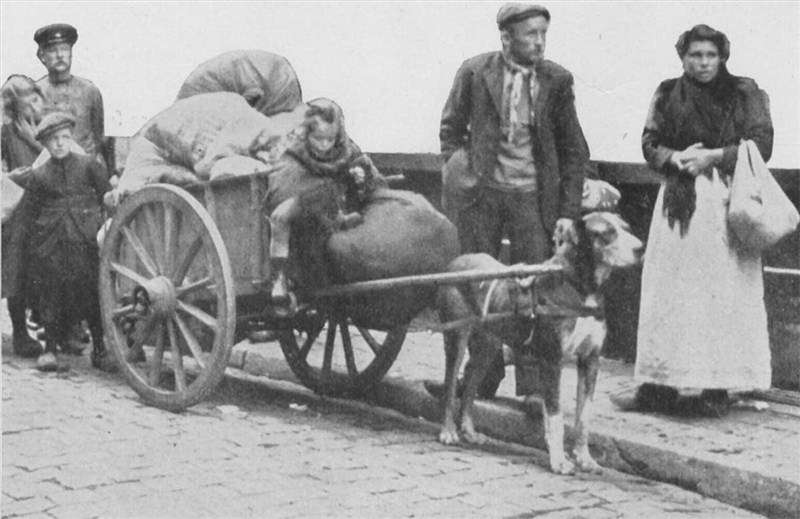
These are the books I’ve used so far. I recommend them all highly.

I mentioned Tammy Proctor’s Female Intelligence: Women and Espionage in the First World War in an earlier post. I extensively used this book’s bibliography to locate other sources, among them those listed below. The most useful thing I learned from it was how the underground spy networks in Belgium were organized, and some specific stories about women who worked in intelligence-gathering, and their fates.

Scraps of Paper: German Proclamations in Belgium and France reproduces actual posters and provides translations. Another of my books referenced this one, so I didn’t need the material for the most part, but the coolness factor was important here. Primary source documents, or close equivalents, are great for giving me a feel for a period.

The Long Silence: Civilian Life under the German Occupation of Northern France, 1914-1918 is the most useful book I found. The author, Helen McPhail, points out that it’s not a thorough academic study, but there was more than enough information for my purposes. I got a really good feel for what life was like in occupied Northern France, as well as the various problems and subterfuges of the people living there. I’m hoping the information in this book will help me to vividly describe the place and time without directly copying actual events.
Related Posts:
Synergy in Writing and Research

Research Books Whee!

Posted in research, werewolves, wwi | Comments Off on Occupied Lands in World War One

Carl Sandburg, "Among the Red Guns"

Among the Red Guns

After waking at dawn one morning when the wind sang low among dry leaves in an elm

Among the red guns,
In the hearts of soldiers
Running free blood
In the long, long campaign:
Dreams go on.

Among the leather saddles,
In the heads of soldiers
Heavy in the wracks and kills
Of all straight fighting:
Dreams go on.

Among the hot muzzles,
In the hands of soldiers
Brought from flesh-folds of women–
Soft amid the blood and crying–
In all your hearts and heads
Among the guns and saddles and muzzles:

Dreams,
Dreams go on,
Out of the dead on their backs,
Broken and no use any more:
Dreams of the way and the end go on.

–Carl Sandburg

Posted in sandburg, wwi poetry | Comments Off on Carl Sandburg, "Among the Red Guns"

Edgell Rickword, "War and Peace"

War and Peace

In sodden trenches I have heard men speak,
Though numb and wretched, wise and witty things;
And loved them for the stubbornness that clings
Longest to laughter when Death’s pulleys creak;

And seeing cool nurses move on tireless feet
To do abominable things with grace,
Deemed them sweet sisters in that haunted place
Where, with child’s voices, strong men howl or bleat.

Yet now those men lay stubborn courage by,
Riding dull-eyed and silent in the train
To old men’s stools; or sell gay-coloured socks
And listen fearfully for Death; so I
Love the low-laughing girls, who now again
Go daintily, in thin and flowery frocks.

–Edgell Rickword

Posted in rickword, wwi poetry | Comments Off on Edgell Rickword, "War and Peace"

The Bashful Hero

I wish more romance novels featured bashful heroes.

I’ve never been a huge fan of the romance novel hero who’s physically large and good at everything and gorgeous to boot. Except, I don’t mind that combination of traits if the hero is bashful about being good at everything, or embarrassed because he’s so tall, or just interesting in some way. To me, there’s no point in reading about someone who’s perfect. I want to read about characters who are vulnerable. If they’re not vulnerable, why should I care what happens to them? Why should I care if they have a happy ending?

Laura Kinsale excels at the damaged hero (as she does at so many things). Many of her heroes have dramatic flaws–fear of heights, Post-Traumatic Stress Disoder, vertigo–that make their stories intriguing because you, as reader, don’t know what to expect. Their flaws instantly give more scope to the conflict, create more possibilities.

Not every writer can carry off flaws that are so dramatic without going over the top. But smaller flaws–like being bashful–can be exceptionally appealing when paired with more traditional hero qualities.

Unexpected qualities also get me interested. Imagine a dragonkiller. Then imagine a dragonkiller whose real interest is science and the breeding of pigs, and who wished he hadn’t killed the dragon at all, as in Barbara Hambly’s Dragonsbane. Isn’t that more interesting?

Who’s your favorite unusual hero? And why?

Related Posts:
Normative Heterosexuality and the Alpha Male Fantasy.

Wacky Story Elements and Laura Kinsale.

Posted in reading, romance novels | 11 Comments

Sex for the Oppositional

I’m sure I’ve seen another discussion, somewhere on the Internet at somewhen, a discussion of villains and sex. If I could remember where or when, I would hunt it up and post the links for your reading pleasure. But since I can’t, I’ll just ramble in my usual fashion.

The villain of a story doesn’t necessarily need to be Evil. They usually have more depth if they’re like everyone else, and don’t think of themselves as bad. There are villains in romance novels, and in erotica. Often, if the villian has sex, it’s not ordinary sex. It’s evil sex. Or cruel sex. Or sex that just isn’t very good.

Is that fair? No, it is not.

Villains–or perhaps we should call them “Oppositional Characters”–need love more than the main pairing who are, after all, guaranteed a happy ending most of the time.

I know you’re asking, “What can I do? How can I help these poor, lonely characters?”

You don’t need to invite them into your home, or even donate money. Simply give them a chance! Or at the very least, a nice new sex toy that they and their partners will enjoy. Let these characters find a little tenderness as they strive to destroy the protagonist’s happiness, or the world. Remember, Oppositional Characters need love, too.

Posted in erotica, romance novels, writing | 5 Comments

Less Is Enough

There’s a reason stories aren’t made up of eighty percent description. It’s because there has to be room for the reader.

Reading is a collaborative exercise, between the writer and the reader. The writer has a shape or picture (or insert preferred visualization here) in her mind. She approximates that shape with words, intending to communicate them to readers. (Does any writer ever think their prose matches their mental story exactly?)

Readers read the words the writer chose, bringing to them their own memories, opinions, and interpretations. What the reader “sees” will never be exactly what the writer “saw” in her head, or even what another reader “sees.”

That’s where the fun begins.

Writers and readers have to treat the different stories they hear as a feature, not a bug. We’re not telepaths who can send our mental shapes into the minds of others (at least I’m not! I don’t know about you). If writers try too hard to force their impressions on readers, it’s like locking their minds in a cage. Isn’t it better to leave some room for the reader’s version?

Related Post: What happens in the reader’s mind.

Posted in reading, writing craft | 2 Comments

Conflict

This is one of those posts where I’m writing about something obvious, but writing about it helps me to internalize it.

You can’t have a story without plot, and you can’t have a plot without conflict.

Conflict is wanting what you can’t have. Barriers between you and what you want mean you have to make choices, either to face the issue or flee from it, or find that third decision which is something else (what I call the Reed Richards choice). Those choices have outcomes. The outcomes might not be getting what you want; the outcomes might be more barriers. And so on, and so forth, until at last a problem must be solved or something explodes. (Like skits on The Muppet Show, which would end with either an explosion or a digestion.)

Barriers can be of many sorts, some of them in combination. They might be exterior: there’s a tornado, or someone dies, or the car breaks down, or the heroine is wounded and can’t make the rendezvous. Barriers might be interior: the heroine swore she would never, ever marry, or she can’t marry the hero because of his religion.

Some characters will get what they want. Some characters won’t. Conflict can also result in compromise, or in changing your mind about that thing you wanted so badly at the beginning of the story. If there aren’t any decisions, the story can never end.

If no one has any conflicts, and no one makes any decisions, why should the reader care?

Related Post:
Maintaining Sexual and Romantic Tension.

Posted in writing craft | Comments Off on Conflict

Wordles for my novels!

I made some Wordles. Actually, I did this before, but I didn’t save them. Click to see a larger version – you’ll be sent to the main site. It’s an application that transforms a large chunk of text (in this case, a novel) into a cluster of the most common words. Larger words appear more often in the text. You can then play with the layout to some extent, mainly the orientation of the words, the overall shape of the cloud, and the colors.


Wordle: The Duchess, Her Maid, The Groom & Their Lover

Wordle: The Moonlight Mistress

Wordle: The Duke & The Pirate Queen

Posted in links, moonlight mistress, the duchess, the duke | 4 Comments

Siegfried Sassoon, "Editorial Impressions"

Editorial Impressions

He seemed so certain ‘all was going well’,
As he discussed the glorious time he’d had
While visiting the trenches.

‘One can tell
You’ve gathered big impressions!’ grinned the lad
Who’d been severely wounded in the back
In some wiped-out impossible Attack.
‘Impressions? Yes, most vivid! I am writing
A little book called Europe on the Rack,
Based on notes made while witnessing the fighting.
I hope I’ve caught the feeling of “the Line,”
And the amazing spirit of the troops.
By Jove, those flying-chaps of ours are fine!
I watched one daring beggar looping loops,
Soaring and diving like some bird of prey.
And through it all I felt that splendour shine
Which makes us win.’

The soldier sipped his wine.
‘Ah, yes, but it’s the Press that leads the way!’

–Siegfried Sassoon, Counter-Attack and Other Poems, 1918

Posted in sassoon, wwi poetry | Comments Off on Siegfried Sassoon, "Editorial Impressions"