Julian Grenfell, “Into Battle”

Into Battle

The naked earth is warm with Spring,
And with green grass and bursting trees
Leans to the sun’s gaze glorying,
And quivers in the sunny breeze;
And Life is Colour and Warmth and Light,
And a striving evermore for these;
And he is dead who will not fight;
And who dies fighting has increase.

The fighting man shall from the sun
Take warmth, and life from the glowing earth;
Speed with the light-foot winds to run,
And with the trees to newer birth;
And find, when fighting shall be done,
Great rest, and fullness after dearth.

All the bright company of Heaven
Hold him in their high comradeship,
The Dog-Star, and the Sisters Seven,
Orion’s Belt and sworded hip.

The woodland trees that stand together,
They stand to him each one a friend;
They gently speak in the windy weather;
They guide to valley and ridges’ end.

The kestrel hovering by day,
And the little owls that call by night,
Bid him be swift and keen as they,
As keen of ear, as swift of sight.

The blackbird sings to him, “Brother, brother,
If this be the last song you shall sing,
Sing well, for you may not sing another;
Brother, sing.”

In dreary, doubtful, waiting hours,
Before the brazen frenzy starts,
The horses show him nobler powers;
O patient eyes, courageous hearts!

And when the burning moment breaks,
And all things else are out of mind,
And only Joy-of-Battle takes
Him by the throat, and makes him blind,

Through joy and blindness he shall know,
Not caring much to know, that still
Nor lead nor steel shall reach him, so
That it be not the Destined Will.

The thundering line of battle stands,
And in the air Death moans and sings;
But Day shall clasp him with strong hands,
And Night shall fold him in soft wings.

— Julian Grenfell
Flanders, April, 1915

Posted in wwi poetry | Tagged | Comments Off on Julian Grenfell, “Into Battle”

Moonlight Mistress excerpt – First Meeting with the Villain

In this scene, the two werewolves Tanneken and Ashby meet their captor, Herr Kauz, for the first time (Tanneken has met him before the novel begins, but this is the reader’s introduction to him). When describing Herr Kauz, I call him a traditional Evil Scientist.

#

Tanneken woke in a cage, together with Ashby. Crouched next to her, both of them still naked, he looked more alert than she felt, probably because his larger form lent him more resistance to Kauz’ sedative gas. A hot electric light illuminated them alone, throwing the rest of the room into deepest shadow. Just at the edge of the shadow, Kauz sat on a plain wooden chair, rolling a rattan cane between his palms.

Her urge to snarl stopped before it reached her throat, as fear slammed into her unexpected and vicious as a blow. She had thought she’d forgotten, crushed her memories, but his unexpected appearance, her helpless at his will, was too much like it had been before, and her carefully built defenses crumbled.

Ashby laid a hand on the middle of her back, spreading his fingers wide over her spine. The touch was hotter than the light, tingling out to the ends of her fingers and toes. She sat up quickly, throwing off his hand, and summoned her most arrogant stare to aim at the old man outside the cage.

“Cowardly son of pox-ridden incest,” she said. “Come closer, and I will give you all that you deserve.”

Ashby said nothing. She could sense him near her, tension singing through his limbs. When she glanced at him, he settled back onto his heels, his hands loose at his sides rather than concealing his genitals. He smiled. “Like what you see, Herr Kauz?”

Kauz used his cane to lever himself from the chair, then stalked a step closer, then another. Tanneken willed herself not to cringe away. Suddenly, he whipped the cane against the bars with a mighty rattling clang.

#

c. Victoria Janssen 2009

Pre-order on Amazon.com.

More excerpts.

More villain scenes!

Leah Braemel
Shelley Munro
Anya Bast
Cynthia Eden
SJ Day
Jaci Burton
Michelle Pillow
Juliana Stone
Moira Rogers
Sacha White
TJ Michaels
Lacey Savage
McKenna Jeffries
Jody Wallace
Eliza Gayle
Kelly Maher
Vivian Arend
Taige Crenshaw
Beth Williamson

Posted in free read, moonlight mistress, promo, werewolves | 2 Comments

Top Ten Reasons to Attend a Writing/Reading Conference

Top Ten Reasons to Attend a Writing/Reading Conference

1. To see your friends!

2. To make new friends. Sometimes this is called “networking,” but really, that sounds like something robots do. And there’s no point in “networking” if you’re not also having a good time with it.

3. To get away from home, which is full of housecleaning and books you haven’t read and things you haven’t done, so your mind has enough clear space to think.

4. To fill your mind with thoughts about writing, and your mouth with talking about it. See numbers one and two and three.

5. To experience sleep-deprivation, so you can portray it realistically in fiction.

6. To find out if you’re an under-packer or an over-packer, and if you’re the sort of person who carries things like miniature sewing kits and three kinds of stomach medication.

7. To be appalled by the cost of meals in hotel restaurants.

8. To be so busy listening and talking and interacting that you forget to be self-conscious and can just be.

9. To meet the one person who’s read your book and loved it and wants to tell you about it.

10. To remember why you love genre fiction.

Related post: WisCon 2009.

Posted in conferences, writing | Comments Off on Top Ten Reasons to Attend a Writing/Reading Conference

Romancing the Beast

Paranormal romance almost always features the hero as a paranormal being and the heroine as an ordinary human. How does this resonate with gender relations and power relationships in our society? Is it a way of expressing women seeing men as another species? And does it all come down to fairy tales?

I’m going to ramble on these ideas for a bit, and hopefully I will shake some ideas loose that I can think on further.

Kresley Cole’s books, for example Wicked Deeds on a Winter’s Nightare among the exceptions–in her Immortals After Dark series so far, usually both hero and heroine are paranormal beings.

However, for the most part, a paranormal romance follows a human woman, usually one who is “ordinary” or “normal,” as she encounters for the first time a paranormal world running parallel to her own. In this new world, she’s suddenly in peril, and she must rely on her Beastly Rescuer (whether vampire, werewolf, or magical warrior) for her safety. Along the way, she provides something to the Beast that is missing from his life, as he provides something that is missing in hers, and they fall in love.

This is the most basic version of the paranormal romance. It resembles the structure of many historical and category romances, as well, only replacing the top-lofty duke or marquis with a vampire, or the foreign billionaire with an alpha werewolf. In all cases, the hero is of a type the heroine has never before encountered. Often he’s more forceful than she would like, more domineering, more arrogant. The plot forces her into his world, and with his help, she learns to live there and to both mitigate and tolerate his masculine and/or paranormal dominance because, after all, he’s more powerful than she is. She finds happiness in his world. If she had never left home, she would never have found happiness.

I wonder what it is about this fantasy that’s so enduring, and so forgiving of sub-genre? Is it really the Cinderella story? Cinderella is raised to wealth and privilege through the prince’s eyes. We don’t know for sure that’s she beautiful, only that she’s got endurance to withstand her stepmother and stepsisters. We do know that it’s the prince’s notice that drags her into a new world. If she hadn’t attended the ball, he would never have known she existed. Is there also an element of moving into a new stage of your life?

Cinderella chose to attend the ball. Her action led to her happiness. In most versions of Beauty and the Beast, the beauty is sent to the beast as payment for her father’s debt, just as in some paranormals the heroine falls into danger because her ancestry pre-disposes her to danger: she might be a werewolf’s biologically-destined mate, or be the daughter of paranormals who fled from another dimension. However, once captive to the beast, the beauty acts on her own to get to know the beast, to see through his beastly exterior and into his emotional soul. The beast resists her intrusion, but gradually gives in.

Are paranormals Beauty and the Beast or Cinderella? Or both? Or neither? Or simply the fairy tales for the modern world?

Related Posts:
Normative Heterosexuality and the Alpha Male Fantasy.

Why I Don’t Like Vampires.

Types of Paranormal Romance.

Posted in genre, paranormal, romance novels | 8 Comments

Paranormal Appropriation

There are a lot of paranormal romances and urban fantasies on the market, and certain mythological creatures–vampires and werewolves, for example–tend to be used a lot. For that reason, I can understand why writers look a little farther for inspiration, and hunt for mythologies that haven’t been used as much in the romance genre.

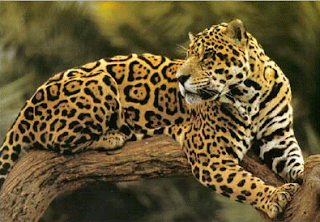
However, often, to me, the borrowing feels like stealing. I’m particularly thinking of occasions when an author uses mythology or folktales from, say, Central America or China or India or Africa, and uses that research in tandem with characters who are all white. Why should, say, shapechanging jaguars change into white men, when jaguars are native to the Americas and white people are not? Wouldn’t the jaguars change into Native Americans, or mixed-race people who are part Native American? If not, why not? If it’s presented to the reader with no explanation, has the writer thought through the implications of choosing to make a jaguar shapechanger white? How will readers respond to the choice, consciously or perhaps more importantly, unconsciously? What is the meaning of that choice for the excluded people? And if non-white people are not present as the hero or heroine, are they included in the story in other roles? Are they characterized with the same depth as the white characters?
It’s not as if it’s forbidden to have a non-white hero or heroine. In fact, the urban fantasy I’ve read (I have by no means read it all) is more racially diverse than straightforward romance. (Some of this might be due to self-selection.) Paranormal romance is a little less diverse than urban fantasy, based on my extremely unscientific sampling, but still it’s rare to find either a hero or heroine who is non-white.

White were-jaguars bother me because it feels as if the non-white people don’t exist, and worse, as if they’ve been deliberately excluded. Excised. Edited out. Sometimes the non-white characters are there, but in a subservient role, and that, too, is disturbing in the way it mirrors real-world racial and class issues without attempting to subvert or confront or even mention them.

It feels to me, true or not, that this exclusion and suppression has been done for the author’s comfort and convenience, as if they don’t want to bother researching the mythology in depth, and don’t want to learn about the other culture; the author may not have “intended” to do so, but by not thinking about the issue, the result is exactly the same. I’m left with the impression that an author has absconded with the “cool parts” and used them however they liked, at the same time giving their hero or heroine an “exotic” cachet which they have not earned and which they might even be exhibiting in an insulting manner. I can only imagine this feeling is much worse if you see your own culture being taken.

There are examples that I find hopeful. I love that in Marjorie Liu’s Dirk and Steele series, the shapechanging cheetah from my favorite of her books, Shadow Touch is African, and gets his own story told in The Last Twilight. An African man can change into an African animal, and he is one of the main characters with an active role in the story. It seems logical, but how often does that happen in paranormal romance novels? Nalini Singh and Eileen Wilks are also among those writers who have included non-white characters.

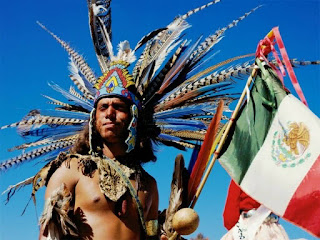
As a side note, how often do writers treat other cultures as if they are dead and in the past, when they are not? I don’t think anyone today worships the Ancient Egyptian gods, but plenty of Egyptians are still around. The descendants of Aztecs and Mayans and Incans live everywhere, even though their empires are fallen. Native Americans have living cultures. They aren’t figures in historical dioramas, to be played with like dolls. They are people.
I’m grossly oversimplifying many issues here. There’s no way to reduce cultural appropriation, cultural imperialism, and racism down to one blog post. I still think it’s important to think and speak about these issues, in genre and otherwise. Writers, I think, have a responsibility to think about the implications of their writing, and how their writing about these issues will come across to readers.

My voice, though, isn’t the important one here. Here is some further reading that I found helpful.

Here are two essays by author Vandana Singh, Some Thoughts on Writing (Or Not Writing) The Other and As Others See Us.

Appropriate Cultural Appropriation by Nisi Shawl and Writing the Other: A Practical Guide by Nisi Shawl and Cynthia Ward.

Who Can Tell Your Stories? and Resources for American Indian Research at Debbie Reese’s excellent blog, American Indians in Children’s Literature.

Shame by Pam Noles.

Describing Characters of Color in Writing by N.K. Jemisin.

An essay on racism by the late Octavia Butler.

Race and Science Fiction at Ramblings of An African Geek.

A humorous article on How To Write About Africa by Binyavanga Wainaina.

White Privilege: Unpacking the Invisible Knapsack by Peggy McIntosh.

Related Posts: Feminism in the Tang Dynasty by Jeannie Lin. Writing African-American Romance by Evangeline Adams. Types of Paranormal Romance.

Posted in genre, paranormal | 8 Comments

World War One Recruitment Posters


I love looking at the material culture of the First World War as well as reading the rhetoric of the period. These recruitment posters are a good example of how men were convinced to enlist in the armed forces. Guilt and comraderie seem to have been used in equal measure.

This is an Australian poster–note the soldier’s “digger” hat and the ghostly figures of men dressed as athletes and ranchers in the background.

Here’s a Canadian poster. Kaiser is emphasized, as if at any moment the Kaiser planned to invade Canada, perhaps to increase the sense of threat to a country that had an ocean separating them from all Fronts of the war. The famous poem “In Flanders Fields” was written by Canadian surgeon John McCrae.

During World War One, Ireland was still ruled by England, and home rule had been delayed by the war. Many Irish served in the British army already, and more joined up in the hope that it would further the cause of independence from England. At the Somme, the 36th Ulster Division suffered 5,500 casualties, while being the only division to achieve their objective on the first day of battle.

A now-iconic symbol for American recruitment.

Posted in research, wwi | 4 Comments

Normative Heterosexuality and the Alpha Male Fantasy

Normative(Adjective): of or establishing a norm or standard.


Romance novels feature vast numbers of heroes who are so-called “alpha” males – usually taken to mean men who are better-looking and stronger than other men, with more dominant personalities, and usually some other advantage as well, such as high social rank, large amounts of money, or superpowers. They are usually coded as more protective of women as well, and that protection is linked to strong possessiveness. Love for the alpha romance hero is often tightly bound up with possession of the heroine, ownership of her sexuality, and protection of her from other males or other outside threats. By the end of the story, this potentially stalkerish behavior is usually mitigated somewhat; the heroine has insisted she retain her career, or that he let her know before he duels with enemies, or that she will keep her own money separate from his vast fortune. However, in many cases, the mitigation feels like a token to me.

I’m not a big fan of the Alpha Hero.

I know. Bad romance reader, no biscuit. Alpha Heroes are the very backbone of the genre, they go all the way back to Gilgamesh, they are all that is right and proper in the world of gender relations, women are meant to be swept off their feet by men and if the men don’t do that then they’re not really men. The alpha male is normal. Not!

To me, it all goes back to false ideas of gender roles drawn from the old “men hunt, women nurture” stereotypes that are just that: stereotypes, that bear little resemblance to real life. I feel the societal emphasis on assigning men to the role of provider can actively be harmful–who wants to be thought of solely as a dispenser of money or food? Just because those stereotypes exist does not mean that we are obligated to operate by those rules, even in, and especially in, our fantasies. And I wish that the published fantasies available to us, as readers, offered more variety. We should be able to consider options other than the normative.

That’s what my thinking on this comes down to: our fantasies. Not men, but how we fantasize about them, and what those fantasies do for us. Romance novels embody fantasies of love, of sexuality, of gender roles. It’s important to me to note that things we enjoy in fantasy are not the same as things we want in real life (“forced seduction,” anyone?). Liking the fantasy of the alpha male is not a bad thing. However, I can’t buy into it, no matter how I try. Oh, I enjoy Dukes of Slut and Navy SEALs, but unless those characters show profound vulnerability at some point, and respect for women as people and not just as possessions, for me the fantasy dissipates. However, many people love the alpha male and don’t want to read a romance without him.

So why is this particular fantasy so popular? Is it, perhaps, less about the alpha male hero than about the heroine, and her need to be cared for and protected even to the point of violence? The heroine/reader’s need to feel special, the only person who can Tame the Beast? Or do we, the readers, actually see ourselves as the alpha males in the fantasies we read? Both? Neither? And how do more familial fantasies fit into our lives? How are the Secret Baby and the Single Parent romances important to women?

I’m sure there’s no one answer. But I plan to keep thinking about these issues.

Related Posts:

Why I Don’t Like Vampires.

Romancing the Beast.

Female/Female Romance.

It’s a Bird, It’s a Plane, It’s Ultra-Brother!

Posted in genre, reading, romance novels | 13 Comments

Edmund Blunden, "Concert Party: Busseboom"


Concert Party: Busseboom

The stage was set, the house was packed,
The famous troop began;
Our laughter thundered, act by act;
Time light as sunbeams ran.

Dance sprang and spun and neared and fled,
Jest chirped at gayest pitch,
Rhythm dazzled, action sped
Most comically rich.

With generals and lame privates both
Such charms worked wonders, till
The show was over – lagging loth
We faced the sunset chill;
And standing on the sandy way,
With the cracked church peering past,
We heard another matinée,
We heard the maniac blast

Of barrage south by Saint Eloi,
And the red lights flaming there
Called madness: Come, my bonny boy,
And dance to the latest air.

To this new concert, white we stood;
Cold certainty held our breath;
While men in tunnels below Larch Wood
Were kicking men to death.

–Edmund Blunden

Posted in blunden, wwi poetry | Tagged | Comments Off on Edmund Blunden, "Concert Party: Busseboom"

Moonlight Mistress excerpt – Food

Welcome to Snippets Saturday!

While driving from Germany to France, Lucilla Daglish asks Pascal Fournier about his first sexual experience.

#

Pascal paused, as if remembering. “The widow Jacques stood behind a table that was dusted with flour. She wore an apron, decorated with flowers, and a cap over her hair, of the same fabric. She didn’t wear these things in the front of the bakery. It is hard to explain. It was as if I saw her in a negligee, to see her in these items that she wore for baking in her own place, where none saw her.”

“I understand,” Lucilla said, remembering the first time she’d seen a man other than her father or brother in shirtsleeves.

“She asked after my studies, and told me that she herself had left her home in Picardy to marry Monsieur Jacques when she was just sixteen, and she had never regretted this decision. She did not think I would regret it, either.”

“Did you?”

“No. She was the first person who had told me this.” …

“Tell me what happened next,” Lucilla said.

“She asked me for help in removing her apron. The knot was too tight.”

“You believed her?”

“I did,” Pascal said. “I did not see myself as she did. I went to help her.” He paused. “She smelled of baking bread. Her nape was bare. I wanted to lean closer and lick it, perhaps even bite. I could see myself bent over her. I had never had such a desire before. I had to look away, but I could still smell her. When I touched the knot of her apron, I also touched her skin. It was hot and damp, from the heat of the ovens. As I untied the knot, I could not help but touch her with my fingertips, again and again.”

#

c. Victoria Janssen 2009

Pre-order on Amazon.com.

More excerpts.

My blog post on food in fiction.

Read more food excerpts at these blogs:

Cynthia Eden
Lauren Dane
McKenna Jeffries
Michelle M Pillow
Moira Rogers
Sylvia Day
TJ Michaels
Taige Crenshaw
Vivian Arend
Marissa Scott
Maura Anderson
Shelley Munro
Jody Wallace
Eliza Gayle
Kelly Maher
Lacey Savage
Mark Henry
Shelli Stevens

Posted in free read, moonlight mistress, promo | 2 Comments

Writers Never Run Out of Blog Topics

Since I’ve begun this blog, I’ve started to notice more and more bloggers who complain that they don’t have anything about which to blog.

My first thought is always, “then don’t blog,” but of course that isn’t a good answer if you’re blogging because you’ve set yourself a goal, or because you promised to write a guest post for someone, or some other reason that makes blogging feel more like a necessity than something fun.

For the record, I think blogging is fun. I wouldn’t bother, otherwise. I’ve been blogging since I opened a LiveJournal account in the summer of 2001, though that journal is much more personal than this one, and encompasses a wider range of topics. I’ve made over 4,000 posts (not all of them are public). (Admittedly, some of those posts are just statements of the previous night’s wordcount.)

Here are my thoughts on what to do when you can’t think what to write in your blog. Some are less serious than others. Some of my suggestions that aren’t terribly serious can actually be treated as serious suggestions, and might result in interesting posts. Also, these topics can be used more than once. Your answers will change over time, as I’ve noticed from looking back at how I wrote about writing before and after I first sold, and as I gained more confidence as a writer.

1. What are you working on? How do you feel about it? Are you attempting anything new with this project? Is the new thing difficult for you? What made you attempt the new thing?

2. What inspires you? What do you do when you are having trouble starting a project? (See how this one ties into having trouble blogging?) What keeps you going while you write? How do you make it through to the end of a project?

3. Pick a specific issue of writing craft and describe how you handle it, the parts that are easy for you and the parts you haven’t yet mastered.

4. Where are you now? Where is that, in comparison to where you were six months ago? A year? Five years? Ten? How have your goals changed?

5. Write about books or writers that have influenced you, either through reading or through direct contact. Who are your mentors? Who are your mentors whom you’ve never met? What book do you wish you’d written? What book do you wish you could write that isn’t quite the book you wish you’d written?

6. And now for something completely different: spend a day or a week or a month writing about your research trip to Grand Rapids or Paris or Nairobi. Write about stories your family told. Write about strange experiences you’ve had.

7. Tell your own story. Most writers have blogged about their path to publication, often more than once. Find a new angle. How did others help you achieve that goal? What happened after your first sales? What do you wish you’d done differently?

8. Query your audience. You don’t have to ask them about writing or reading. Ask them if you should henna your hair. Ask them what their favorite food is. Ask them what they want you to blog about. And answer the question yourself, as well.

9. Picspam! Choose a selection of pictures, and write about them. They might have a common theme, as when I post World War One research photos, or you might make the connections yourself. Write your thoughts. Write some facts. Write a story.

10. Invite guests. Your friends have unexpected knowledge or talents. Show them off.

More suggestions?

Related post: 5 Blogging Inspirations.

Posted in blogs, promo, writing | 6 Comments