Five Tips for Writing Erotica

Needless to say these aren’t the only five things to keep in mind when writing erotica. And these five things aren’t always going to be applicable. They can be useful on many occasions, however.

1. You don’t need to show every twitch.

Concentrate on gestures that embody the most sensuality and emotion in the tone you’re going for, and choose words to match. Obviously, this will vary according to the story and the characters. For instance, if you want to portray a building romantic relationship, you might focus more on eyes and faces and tender gestures. Alternatively, there could be body positions that indicate power relationships, more violent verbs, etc.

2. Word choice matters.

Some words, and I don’t mean words for genitalia, stand out more than others. If you’re going to use one of those, make sure it’s in a place you want to emphasize. Read the line aloud to see how it falls.

3. Sentence structure matters.

There are a lot of things going on in a sex scene. The reader is trying to parse her mental picture of the setting, characterization clues, emotional cues, etc.. Make sure to point the reader towards the erotic elements in every possible aspect, so they aren’t lost in the shuffle of limbs flying around, extraneous thoughts about England, etc.. Don’t suddenly forget this is meant to be erotic.

4. Eschew perfection.

Perfection is boring. Perfect sex is boring. Remember that scene in the first Iron Man movie, in which Tony Stark and Christine Everhart fell off the bed?

5. Eschew patterns.

Don’t always follow the same pattern in sex scenes. For example, 1) kiss; 2) caress breasts; 3) intercourse. Mix it up, lots and lots. Add, subtract, change stuff around (especially if you write a lot of sex scenes). The unexpected is hot.

Need more? Check out my Writing (Erotic) Short fiction FAQ or my For Writers page. Size Does Matter might help. Or try some of these books: How to Write a Dirty Story: Reading, Writing, and Publishing Erotica by Susie Bright; Be a Sex-Writing Strumpet by Stacia Kane; or The Joy of Writing Sex: A Guide for Fiction Writers by Elizabeth Benedict.

The erotica I’ve written is listed on this page.

Posted in erotica, writing craft | 2 Comments

“At Carnoy,” Siegfried Sassoon

At Carnoy

Down in the hollow there’s the whole Brigade
Camped in four groups: through twilight falling slow
I hear a sound of mouth-organs, ill-played,
And murmur of voices, gruff, confused, and low.
Crouched among thistle-tufts I’ve watched the glow
Of a blurred orange sunset flare and fade;
And I’m content. To-morrow we must go
To take some cursèd Wood … O world God made!

July 3rd, 1916.

–Siegfried Sassoon, The Old Huntsman and Other Poems, 1918

Posted in sassoon, wwi poetry | Comments Off on “At Carnoy,” Siegfried Sassoon

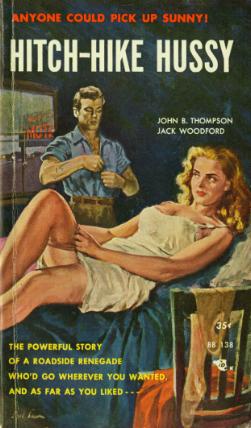
Erotic Book Covers of the Past


Posted in erotica, images | Tagged | Comments Off on Erotic Book Covers of the Past

Size Does Matter

The piece I’m currently writing is meant to be about 15,000 words. It’s been an interesting experience so far. I’m learning a lot about writing at this length.

You see, I have written many short stories, almost all of them less than 6000 words, most of them in the 1500-3000 word range. I have written novels, in the 80,000-100,000 word range. I have a draft lying around for a piece of about 20,000 words, that is condensed from parts of a novel draft and is in very rough shape. And then there is the current project: 15,000 words.

The good thing is that I’m writing from scratch; unlike that unfinished 20K piece, I’m not trying to compress a large story into a small box, which has its own issues. It’s true that the original concept for this 15K story was to be a novel, the synopsis from which I’m working was condensed from that novel synopsis; however, I hadn’t actually written any of the novel, so it was easier to think about making it shorter.

An important fact about me: I don’t comprehend most things about writing until I actually sit down and write. I learn by doing.

It turns out, I misjudged how much story I can fit into 15K. I tend to get overcomplicated with my plots; I have yet to bite off less than I can chew. When writing the abbreviated synopsis, I didn’t quite realize that; I still felt like 15K was long. It isn’t.

The story’s structure is complicated by its being erotica. There must be sex scenes, and those scenes need to be fairly long and detailed. The story, per contract, needs to be weighted more towards the erotica side than the adventure story side. Fitting sex scenes into the story is no problem; they are a major part of the plot, after all; but of course they eat wordcount, leaving less for the scenes of character introduction and (hopefully) exciting non-sex action. Not that this is a new problem in writing erotica. I’m just saying it here to remind myself I’ve run into this issue before.

As I write and get a better idea for the length I have to work with, I’ve figured out several applicable techniques. First, the judicious use of telling rather than showing. Second, making the showing count (some of that is going to happen in revisions; I tend to meander more in draft). Third, eliminating extraneous characters whom you foolishly included in the synopsis (oops). Fourth, skipping the journeys (as in, the time they spend walking to Mordor) and jumping into the destination, as close to when things happen as possible; this means I have to make sure to establish setting clearly and quickly, with each change of scene.

If I follow my usual pattern, I’m going to write several things at about this length in a row, as I try to master the form. I’m looking forward to it!

If you have any tips for writing at this length, or things that bug you about stories you’ve read at this length, please feel free to comment!

Posted in erotica, short fiction, writing craft, writing process | Comments Off on Size Does Matter

Women of the Mean Streets and Hottest Villains

In case you missed them, my guest posts from last week:

at Heroes and Heartbreakers about the Top 5 Villains I Wish Were Heroes;

and at The Criminal Element, Fresh Meat: Women of the Mean Streets, an anthology of lesbian noir from Bold Strokes Books.

Also, I don’t think I ever linked this Criminal Element post from June here: History Down Under: Kerry Greenwood’s Phryne Fisher series.

And now for something completely different (not written by me). Ms. Magazine on White Cowboys and Alien Indians.

Posted in links, mystery | Comments Off on Women of the Mean Streets and Hottest Villains

“The Four Brothers,” Sandburg

The Four Brothers

Notes for War Songs (November, 1917)

Make war songs out of these;
Make chants that repeat and weave.
Make rhythms up to the ragtime chatter of the machine guns;
Make slow-booming psalms up to the boom of the big guns.
Make a marching song of swinging arms and swinging legs,
Going along,
Going along,
On the roads from San Antonio to Athens, from Seattle to Bagdad—
The boys and men in winding lines of khaki, the circling squares of bayonet points.

Cowpunchers, cornhuskers, shopmen, ready in khaki;
Ballplayers, lumberjacks, ironworkers, ready in khaki;
A million, ten million, singing, “I am ready.”
This the sun looks on between two seaboards,
In the land of Lincoln, in the land of Grant and Lee.

I heard one say, “I am ready to be killed.”
I heard another say, “I am ready to be killed.”
O sunburned clear-eyed boys!
I stand on sidewalks and you go by with drums and guns and bugles,
You—and the flag!
And my heart tightens, a fist of something feels my throat
When you go by,
You on the kaiser hunt, you and your faces saying, “I am ready to be killed.”

They are hunting death,
Death for the one-armed mastoid kaiser.
They are after a Hohenzollern head:
There is no man-hunt of men remembered like this.

The four big brothers are out to kill.
France, Russia, Britain, America—
The four republics are sworn brothers to kill the kaiser.

Yes, this is the great man-hunt;
And the sun has never seen till now
Such a line of toothed and tusked man-killers,
In the blue of the upper sky,
In the green of the undersea,
In the red of winter dawns.

Eating to kill,
Sleeping to kill,
Asked by their mothers to kill,
Wished by four-fifths of the world to kill—
To cut the kaiser’s throat,
To hack the kaiser’s head,
To hang the kaiser on a high-horizon gibbet.

And is it nothing else than this?
Three times ten million men thirsting the blood
Of a half-cracked one-armed child of the German kings?
Three times ten million men asking the blood
Of a child born with his head wrong-shaped,
The blood of rotted kings in his veins?
If this were all, O God,I would go to the far timbers
And look on the gray wolves
Tearing the throats of moose:
I would ask a wilder drunk of blood.

Look! It is four brothers in joined hands together.
The people of bleeding France,
The people of bleeding Russia,
The people of Britain, the people of America—
These are the four brothers, these are the four republics.

At first I said it in anger as one who clenches his fist in wrath to fling his knuckles into the face of some one taunting;
Now I say it calmly as one who has thought it over and over again at night, among the mountains, by the seacombers in storm.
I say now, by God, only fighters to-day will save the world, nothing but fighters will keep alive the names of those who left red prints of bleeding feet at Valley Forge in Christmas snow.
On the cross of Jesus, the sword of Napoleon, the skull of Shakespeare, the pen of Tom Jefferson, the ashes of Abraham Lincoln, or any sign of the red and running life poured out by the mothers of the world,
By the God of morning glories climbing blue the doors of quiet homes, by the God of tall hollyhocks laughing glad to children in peaceful valleys, by the God of new mothers wishing peace to sit at windows nursing babies,
I swear only reckless men, ready to throw away their lives by hunger, deprivation, desperate clinging to a single purpose imperturbable and undaunted, men with the primitive guts of rebellion,
Only fighters gaunt with the red brand of labor’s sorrow on their brows and labor’s terrible pride in their blood, men with souls asking danger—only these will save and keep the four big brothers.

Good-night is the word, good-night to the kings, to the czars,
Good-night to the kaiser.
The breakdown and the fade-away begins.
The shadow of a great broom, ready to sweep out the trash, is here.

One finger is raised that counts the czar,
The ghost who beckoned men who come no more—
The czar gone to the winds on God’s great dustpan,
The czar a pinch of nothing,
The last of the gibbering Romanoffs.

Out and good-night—
The ghosts of the summer palaces
And the ghosts of the winter palaces!
Out and out, good-night to the kings, the czars, the kaisers.

Another finger will speak,
And the kaiser, the ghost who gestures a hundred million sleeping-waking ghosts,
The kaiser will go onto God’s great dustpan—
The last of the gibbering Hohenzollerns.
Look! God pities this trash, God waits with a broom and a dustpan,
God knows a finger will speak and count them out.

It is written in the stars;
It is spoken on the walls;
It clicks in the fire-white zigzag of the Atlantic wireless;
It mutters in the bastions of thousand-mile continents;
It sings in a whistle on the midnight winds from Walla Walla to Mesopotamia:
Out and good-night.

The millions slow in khaki,
The millions learning Turkey in the Straw and John Brown’s Body,
The millions remembering windrows of dead at Gettysburg, Chickamauga, and Spottsylvania Court House,
The millions dreaming of the morning star of Appomattox,
The millions easy and calm with guns and steel, planes and prows:
There is a hammering, drumming hell to come.
The killing gangs are on the way.

God takes one year for a job.
God takes ten years or a million.
God knows when a doom is written.
God knows this job will be done and the words spoken:
Out and good-night.
The red tubes will run,
And the great price be paid,
And the homes empty,
And the wives wishing,
And the mothers wishing.

There is only one way now, only the way of the red tubes and the great price.

Well…Maybe the morning sun is a five-cent yellow balloon,
And the evening stars the joke of a God gone crazy.
Maybe the mothers of the world,
And the life that pours from their torsal folds—
Maybe it’s all a lie sworn by liars,
And a God with a cackling laughter says:
“I, the Almighty God,
I have made all this,
I have made it for kaisers, czars, and kings.”

Three times ten million men say: No.
Three times ten million men say:
God is a God of the People.
And the God who made the world
And fixed the morning sun,
And flung the evening stars,
And shaped the baby hands of life,
This is the God of the Four Brothers;
This is the God of bleeding France and bleeding Russia;
This is the God of the people of Britain and America.

The graves from the Irish Sea to the Caucasus peaks are ten times a million.
The stubs and stumps of arms and legs, the eyesockets empty, the cripples, ten times a million.
The crimson thumb-print of this anathema is on the door panels of a hundred million homes.
Cows gone, mothers on sick-beds, children cry a hunger and no milk comes in the noon-time or at night.
The death-yells of it all, the torn throats of men in ditches calling for water, the shadows and the hacking lungs in dugouts, the steel paws that clutch and squeeze a scarlet drain day by day—the storm of it is hell.
But look! child! the storm is blowing for a clean air.

Look! the four brothers march
And hurl their big shoulders
And swear the job shall be done.

Out of the wild finger-writing north and south, east and west, over the blood-crossed, blood-dusty ball of earth,
Out of it all a God who knows is sweeping clean,
Out of it all a God who sees and pierces through, is breaking and cleaning out an old thousand years, is making ready for a new thousand years.
The four brothers shall be five and more.

Under the chimneys of the winter time the children of the world shall sing new songs.
Among the rocking restless cradles the mothers of the world shall sing new sleepy-time songs.

–Carl Sandburg, Cornhuskers, 1918

Posted in sandburg, wwi poetry | Comments Off on “The Four Brothers,” Sandburg

Thoughts on Cowboys and Aliens

This post contains spoilers. Also ranting about stuff that irritated me, and getting far too intellectual, and probably getting incoherent along the way.

I saw Cowboys and Aliens earlier this week, and though on some levels I enjoyed it (beautifully choreographed violence, Daniel Craig’s exceptional physique and the liberal display thereof) on many other, thoughtful, levels, I disliked it. Deep engagement is what I want in a movie, both visual and emotional, everything on a larger scale because of the larger screen. I felt this movie had plenty of spectacle but no real emotion, plus it bothered me with some of its sociopolitical implications.

Possibly my expectations were too high. The filmmakers no doubt wanted to make a cheesetastic blockbuster in which Things Blew Up Real Good. Emotional conflict/depth is apparently not required for that. But without emotional connection, I feel there’s no point. Worse, the shallow images of Hollywood insta-romance made me feel as if I had been condescended to. “Let’s give the girls something besides those shots of Daniel Craig with his shirt off!”

I read the original graphic novel sometime ago. I didn’t think it was Great Art, Now Sullied By Hollywood; the original story had many of the same problems as the movie. I don’t plan to discuss the graphic novel much in this review, however, other than to note that its two main female characters were at least more active. In the movie, those two were combined into one, and the green one became a white woman. Anybody surprised?

Other things I don’t plan to discuss much: the actual historicity of this film (Hel-lo, Collared and Buttoned Shirts of the Future!); accuracy of the portrayed Chiricahua culture about which I do not know anything relevant (that guy to the right is a Chiricahua Apache named Bakeitzogie); or why Clancy Brown’s characters never seem to survive to the end of a movie. However, if you do want the joy of nitpicking the history, go check out veejane’s awesome post. I’ll wait.

What I’d like to talk about is the overwhelming, err, thrust of the film. It was all about Dick. Who is Dick? Dick is…when every important character is male, except for one, because one active female character is “female characters.” When hunting and killing is constantly privileged over everything else and violence is the only solution to a problem, and those things are equated with The Only Correct Way to Be a Man. When action is substituted for emotion. And when there is a very long, very big rocketship buried deep in mother earth, pillaging its people with creepy wavy tentacles and sucking up its golden nectar. No, wait, that’s hentai. This is a Dick Flick. Anyway.

Much as I appreciated the male pulchritude on display throughout, I didn’t like anybody in this film, except Ned, and that wasn’t because Ned was a guy I would normally have admired–for one thing, he was deluded in his hero-worship of his emotionally stunted foster “father”–but because Adam Beach, who played him, to me was the only character who consistently demonstrated some sort of human connection with other humans, in that very misguided attachment. (I think that might actually be a result of Beach’s acting ability and emotive power rather than anything in the script.)

The lack of connection, across all of the characters, destroyed the movie for me. The entire plot was about overpowering, taking, using, when movies I love tend to feature disparate people learning to work together, even form a new family. True, in this movie the humans do end up working together: townies, cowboys, Chiricahua Apache, and bandits; but I didn’t get any sense of emotional connections being formed, or social change about to happen. They bonded together to attack the aliens and kill them…with rifles, spears, long sticks of dynamite. Even the round alien bracelet that could shoot down an alien ship had to be clasped around a muscular, extended arm before it could fire.

All that was…okay. It’s hardly a new thing for me to go to see a movie and conclude it’s a Dick Flick. Almost all movies are: financed by men, made by men, starring men and, shockingly, aimed at a male audience. It was the pretense that annoyed me most, the pretense that there was more to this movie than Dick. For instance, in the movie’s epilogue, some of the characters are shown to have learned a few rote lessons about family by killing a bunch of aliens. I felt like I was supposed to be happy about this – “aww, how sweet!” I wasn’t. None of those character changes convinced me they would be lasting, because I hadn’t seen enough of the characters before that point to register a change.

A fair amount of (alleged) characterization was given to Harrison Ford’s character, Woodrow Dolarhyde, and Ford did a good job of acting what he was given, at least in the individual scenes. In my opinion, though, what he was given did not hang together from scene to scene in a way that made sense emotionally (or, possibly, at all). I never felt I understood or empathized with his character, or cared about him in the least. I wasn’t even sure what the moviemakers wanted me to feel, though I suspect I was supposed to admire his manly behavior. I didn’t. Despite his being played by Harrison Ford. If Harrison Ford couldn’t make me like that character, or at least like watching him…. I would have been more satisfied if Dolarhyde had been simply a villain. That would have felt less manipulative and half-baked.

The two main male characters, Jake Lonergan (Daniel Craig) and Dolarhyde, both led by violence and neither one was a nice guy. I would have been okay with their characterizations revolving around that. That would have felt true. Instead, “romance” was ineffectually smeared here and there, as if a toddler was applying makeup. Was that supposed to pretty up the film for female viewers?

Lonergan was a successful bandit before being abducted by the aliens and losing his memory; Dolarhyde ruled his cattle empire with a cruel hand. Neither is shown to be capable of a significant relationship. Dolarhyde’s wife is never mentioned; I presumed she was dead. His relationship with his biological son, based on power rather than affection, is demonstrably not working. Lonergan apparently left banditry after he fell in love with a prostitute, but the movie fails when it tries to relate their relationship; she is only a ghost, with only a couple of lines. There’s no real indication of the depth of their romance and how it changed (or didn’t change) Lonergan’s life. Without knowing how he changed in the past, it was difficult to see how he might change in the future. Lonergan’s subsequent “romance” with Ella Swenson (Olivia Wilde) is evanescent, a collection of movie-romance cues rather than actual emotional connection. They do not have one significant conversation that is not related to overcoming the aliens.

Given that Ella is an alien, who’s taken a form similar to Lonergan’s dead love, I could buy that she is actually manipulating him through the illusion of romance so he will do what she wants. But the movie doesn’t give any indication of that. Their relationship just looks like standard Hollywood movie insta-attraction.

Then there are the invading aliens. In the graphic novel, the aliens talked. One of the two female characters was the same sort of alien who was trying to help the humans out, rather than a different species as in the movie (if I remember correctly). In the movie, the aliens were monsters. They didn’t speak, even with subtitles; they only growled and snarled. They sprang out at odd moments to make the viewers jump in their seat. They vivisected humans to find out how they worked and, in case the viewer didn’t get how awful this was, Lonergan finds a pile of spectacles and pocket watches that have been stolen from the dead humans for their gold content, in what seemed like a fairly direct reference to the Holocaust. (I squirmed. That one visual felt really inappropriate to me.) The aliens were there to be an enemy, and to be killed without remorse.

The humans were there to kill. Killing became the apotheosis of their character development. Nobody seemed to feel any conflict over this. That’s not an ethical complaint, not wholly. It’s my complaint because lack of conflict is boring. Again, I felt condescended to, because this huge expensive movie was expecting me to be satisfied with mere shallow spectacle.

The filmakers should have just gone with the violence. Daniel Craig’s Lonergan, seemingly effortlessly, projected lethality and moved as if violence equals art. He was beautiful to watch, but brutal. If the filmakers had simply embraced this brutality, that might have worked better than trying to give him a gooey center that felt false to me. It’s possible he gives up killing at the end of the movie (there are flowers and a hummingbird! …yeah) but…maybe not. He’s awfully good at being violent. He left his criminal life for a woman, but in his one scene with her, he’s just stolen to provide for her, and is angry when she rejects the money. Not much of a reformation, and it turns out to be only a step on his road to further violence.

The one child character, Emmett Taggart, achieves his character change (if it counts) by stabbing an alien that is attacking him. Doc (Sam Rockwell) begins the movie as a frustrated man who has little self-confidence and can’t believe in his wife’s love for him; however, once he learns to shoot and blows an alien’s brains out with a shotgun, he’s empowered. Ned achieves his goal, Dolarhyde’s acknowledgement, through dying violently on his behalf. And the one female character who has an active role, Ella, sacrifices herself to destroy the alien ship.

The thing that bothered me most, I think, is the way the movie tried to remove ethical considerations from the violence; there could have been so much more conflict, so much more depth, but those things were squashed at every turn.

The humans are forced to defend themselves from monsters. They aren’t allowed to agonize. Even the peaceful Doc has no qualms about going after the aliens, to rescue his wife. Without ethical conflict, I just didn’t care about the outcome. I was unable to emotionally invest in it.

Overall, despite all the explosions and monsters leaping out at me, that lack made the whole movie feel hollow. Hollywood, don’t condescend to me. If you’re not going to make art with your whole heart, with truth? Don’t make it at all.

Posted in movies, sf/f, western | Tagged | 2 Comments

A Readercon View from Outside

Art in Paradise: Klingon-Free, an article about this year’s Readercon at the Valley Advocate.

“The scene was small-scale in its charm, nothing but a corner of the Burlington Marriott with ballrooms, most of them host to panels discussing things that sounded more like grad school seminars than SF fan freakouts. They had names like “Animal or Alien: How Body Structure Shapes Mind”; “The Pseudo-Religiosity of Teleological SF”; and “Feeling Very Post-Slipstream.””

Posted in conferences | Tagged | Comments Off on A Readercon View from Outside

Critique From Outside Your Comfort Zone

Monday, I post about critiquing outside my comfort zone, about a critique I’d done for a close friend. Here’s her side of the story.

But Mostly, I Just Remember Feeling Terror
by Lorrie Kim

I hadn’t felt this kind of writing terror since I quit grad school. After a lifetime of clinging to the safety of nonfiction, I’d written a fan work with traces of fiction in it, a Tarot reading of the relationship between two characters from a series. My beta reader, a fellow fan, had suggested running it past “a fresh set of eyes,” so I took Victoria Janssen to lunch and begged her to take a look.

I’d chosen carefully. Victoria has been writing fanfiction since it was stapled together and mailed in brown packages, so she’s internalized every common-sense rule (that I was probably murdering).
She’s been writing pro fiction for almost as long, so she’s become unsentimental about writing mechanics. She’s not in the fandom for which I was writing. And she’s really, really nice to me.

So my terror didn’t have to do with her. It was all about old stuff from my formative years. Oooooooold stuff.

We removed the curled wrappers from our straws and stirred our Thai iced drinks. I asked, “Have you ever gotten feedback so devastating that you stopped writing that piece?”

VJ, firmly: “Yes. Do you want some of this fried tofu?”

Me: “Sure, a little. Have you ever gotten feedback that made you feel like it wasn’t only a bad piece but it showed the world that you’re bad as a person?”

VJ, slowly and definitely: “Yes.”

Me, wide-eyed: “What did you do then?”

VJ: “I put it away for 24 hours until I got some emotional distance, then re-read their comments.”

I was awed. I mean, really. Twenty-four hours? Not, say, eight months?

Me: “Has it ever been just that the person is horrible and they’re wrong?”

VJ: “No. I don’t tend to get those people to read.”

Our green curry chicken came. I looked down at my plate and rattled off what I hoped she could do for me.

“I just want it to be all right. I just want you to check it for obvious glaring errors. The kind of thing that will give me away as someone who doesn’t know what she’s doing. Or that will be painfully unoriginal and make people complain that I write the same thing every time. I’m terrified to hear that the basic premise is irreparably flawed and I have to reformulate the entire piece and I’ve made twenty-five gruesome newbie mistakes and I’m the only person in the world who can’t see them while everyone else is laughing and I cannot in good conscience unleash this piece of crap on the public and…” I can’t remember the rest.

“I’m more likely to say something like ‘This sentence could be tighter,'” she commented mildly.

I exhaled, probably aloud.

“I’m worried you want this to be perfect,” she said. “Like glinting-off-the-teeth perfect.”

Huh. Is that how it sounds when I speak from my terror?

I said no, I just wanted it to be in the “okay” category. When I read fanfiction, there’s the “Brilliant! Life-changing!” category, which obviously wasn’t relevant to me. There’s the category that gives ammunition to those who deride fanfiction. And then there’s the vast middle, not always well-written but with some good or interesting quality that makes me pleased to have spent time reading the story instead of watching TV. I thought — I hoped — that this was a broad enough target for me to dare aim for it. Without people laughing at me for my presumption.

I gave examples of the kind of giveaway error I wanted to avoid.

Years ago, when Victoria and I shared an apartment, we watched figure skating tapes every day while she worked on her Master’s thesis about quilting and I made hundreds of quilts. So when we saw a sophisticated quilt block honoring figure skater Brian Boitano, we could identify the designer instantly as a casual, not serious, skating viewer: the design was a star, and the star rotated to the right.*

This example reminded Victoria of a huge publicity uproar over a paper towel commercial in which the “quilted” paper towels were shown being “quilted” by little old ladies somehow using…knitting needles.

Little old quilters from all over the country were enraged at the condescension and started a protest campaign. In large numbers. Mobs of them. The company hastily issued a new commercial with real quilting.

In both cases, the errors were committed by people who had no idea they had done anything wrong. You either know this kind of thing or you don’t. And I didn’t want to commit the fanfiction equivalent of Boitano rotating to the right or quilters using knitting needles. I wanted to show respect. And dodge ridicule.

I think that got across what kind of help I wanted. I think.

We finished eating. I paid.

I sent five e-mails that afternoon asking when she’d have comments for me. We agreed I’d call her at 9 PM. I called and she asked me how my kids were doing. Trying desperately to be polite, I answered. She asked follow-up questions about them. I gave up and yelped, “Are you tryingto be mean to me?”

So she started with some sort of introductory comment. I barked, “What do I have to do. Just tell me.” The words came out like bullets.

I think (hope) she was amused. [VJ: I was, a little, but mostly I was sorry I hadn’t realized she was that stressed.] (This was a piece for an online fan festival. Not even like I was getting paid for it. Probably no one would die if I wrote it imperfectly.)

She zeroed in on one section she described as having been written in “tight third person.” Huh? What’s that?

She carefully broke down what she was saying so I could understand. She gave examples of possible alternate wordings and what kinds of effects they might create. She explained her feelings of disappointment when she read one passage and told me what wording she’d been hoping to read. I tried to keep my defensiveness to myself. I felt like I had become an automatic nailgun with a broken catch, shooting nails of defensiveness unstoppably and just trying not to hit anybody.

This got worse when Victoria complimented some aspect of my writing. I tried to keep my mouth shut so I wouldn’t scream, sobbing, “Stop mocking me! Surely it is not necessary to mock me.”

She gave me her comments. We hung up. I put my kids to bed. I peeped cautiously at her suggestions and ended up implementing every single one.

*Figure skaters have a dominant direction when turning, the way almost everyone is left-handed or right-handed. Most skaters, including Brian Boitano, turn to the left. I didn’t notice this phenomenon or understand its importance until I’d watched quite a bit of figure skating. After I’d been a skating fan for a couple of years, I understood that skating observers note dominant direction for everything from identifying jump takeoffs (left toepick? That was a toe loop — if you rotate to the left, that is) to calculating difficulty in step sequences (a skater who does many turns in their non-dominant direction has just done something difficult and deserves more points). I’d had no idea about any of this when I started to watch. I’d just liked the sport because it moved me.

Posted in guest, writing process | Tagged | Comments Off on Critique From Outside Your Comfort Zone

Critiquing Outside The Comfort Zone

Last week, a friend of mine asked me to do an unusual critique. I’m glad I took her up on it.

This friend, though not a fiction writer, is a professional in nonfiction and has worked as an editor. She’s done reading for me in the past, and provided me with a lot of valuable insights. So, even though I doubted I had anything useful to say about her project, I decided to give it a try.

Her project was a gift for someone else. At their request, she had written essentially a literary criticism essay using characters in action, blending the meanings of tarot cards with interpretations of the original novel’s text. It also included extrapolations of scenes that did not appear in the original text (fanfiction), only written not as story but as a sort of nonfictional hypertext. The piece was written partly as an essay, partly as (almost) fiction. You could call it a hybrid piece of writing, or an intersectional one. Or you could just say, “What?” because I have confused you…anyway, it made sense when I read it. Complicated sense.

Fictional events from the text were explored and extrapolated in a semi-fictional style, interspersed with relevant information on the tarot cards she’d chosen and images of those cards. The piece wasn’t fiction, but it had some of the aspects of fiction. That was one of the things she wanted me to critique.

It turned out I did have something to say. After admiring the way she’d linked appropriate references from the text to specific tarot cards, I went through it again and focused on voice. The writer’s nonfiction voice is very strong and flexible and unique. In most of the segments, I recognized her voice. I suspect I would have recognized it even if I weren’t already familiar with her writing. However, in one section, her voice was not as strong. She’d leaned more heavily towards fiction in that section; her own voice had been mostly subsumed into a tight third person fictional pov. As a fiction writer, that really stood out to me.

It turned out that section had given her a lot of trouble. She’d started out in first person that wasn’t working for what she wanted to accomplish and had spent a lot of time shifting the point of view. I think my comments helped her focus on how she wanted to edit that section. Besides that, her piece gave me a lot to think about for my own writing.

Once again, it’s been proven to me how stepping outside your comfort zone–in reading, in critiquing–can be a real benefit to thinking about your writing in different ways.

Posted in writing, writing craft | Tagged , | 2 Comments