
Alison Tyler interviewed me about fairy tales and my story in her Spice anthology, Alison’s Wonderland

And the cover of my December 2010 Spice release, The Duke & the Pirate Queen
Alison Tyler interviewed me about fairy tales and my story in her Spice anthology, Alison’s Wonderland
And the cover of my December 2010 Spice release, The Duke & the Pirate Queen
It’s been a while since I had a Linkgasm! Today’s is concerned with the business side of writing.
io9 on “5 Ways The Google Book Settlement Will Change The Future of Reading.”
Kristine Kathryn Rusch, who’s written in a range of genres, has created an in-depth Freelancer’s Survival Guide that all writers, full-time or not, ought to visit and browse.
Courtney Milan, romance author, crafted a program to generate bookstore links for a range of online vendors.
Looking for new ways to publicize your blog posts? Why not participate in a Blog Carnival?
Associated Content allows you to: “create original content (articles, videos, images or audio) on any topic you choose…earn money every time your content is viewed…establish your expertise by applying to our Featured Contributor program.” A friend of mine has been writing restaurant and concert reviews for AC for a little over a month, and recommended the site to me.
Finally, just in case you’ve never tried Icerocket, it’s a useful search engine for blogs and for Twitter, sometimes catching items that Google does not.
The May/December romance is one thing. The May/Ten Centuries Back romance is quite another.
It’s always disturbed me a little that vampire heroes in romance are so often much older than their heroines. When the heroine is not only not immortal but young for a human, it’s even harder to convince me that they could have anything in common. Perhaps that’s why writers sometimes rely on strong sexual attraction between the two (sometimes natural, sometimes superntural or “fated”), or on plot reasons that require the two characters to be together, such as only she has the necessary scientific/psychic/genetic abilities to save the world and is thus forced to tie herself to an ancient vampire who thinks swing music is “dynamite.”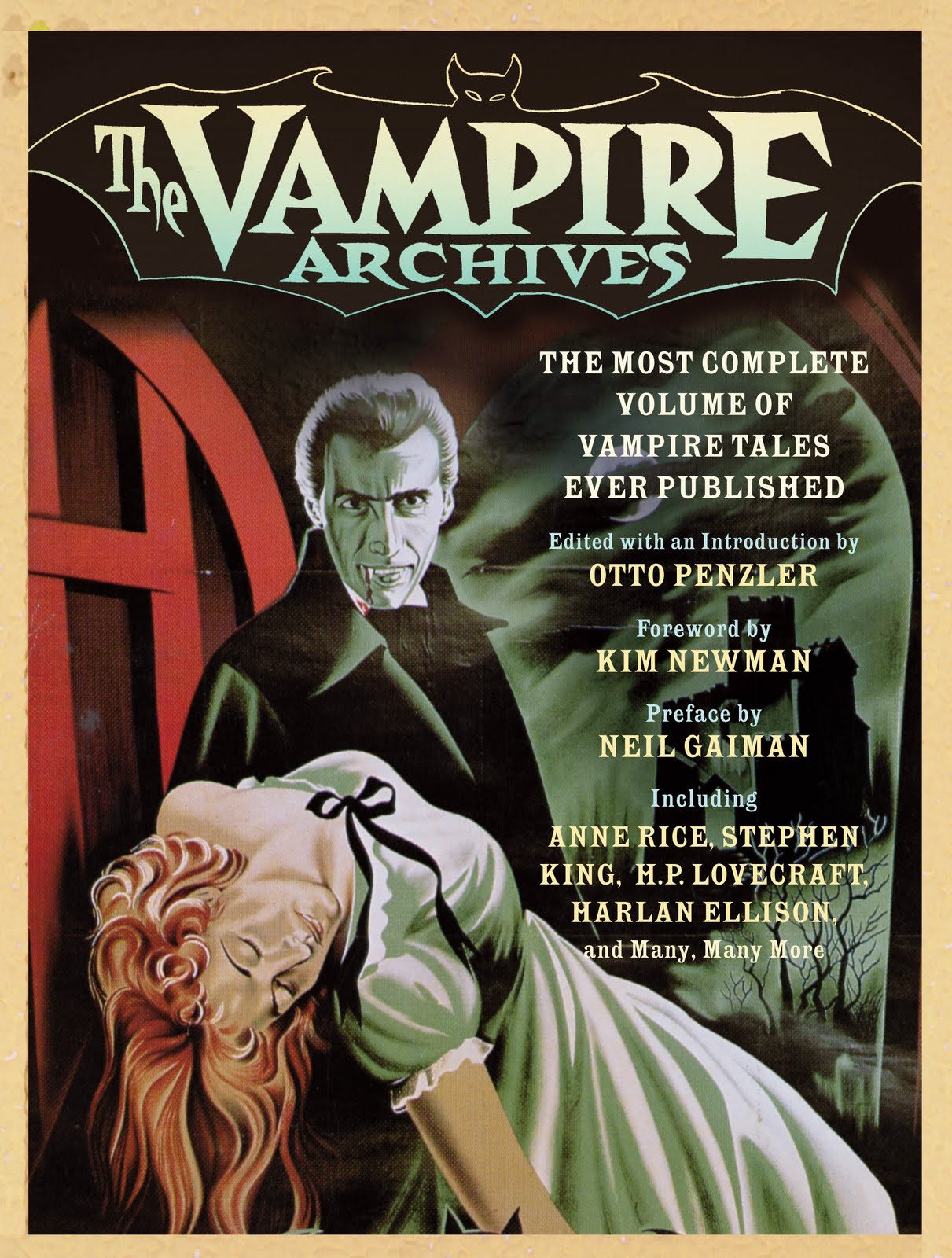
There are advantages to the forced relationship; for one thing, it automatically introduces tension into both the relationship and the plot.
It’s the innocent heroine/jaded vampire who instantly fall in love, no questions asked, who, to me, fail the possibilities. They’re not doomed to fail; but to me they do fail because it’s very, very rare that the writer actually shows me why they like each other and why they belong together. Isn’t the whole point of a romance to see the romance developing? To watch the hero and heroine overcome their differences?
True, it’s very difficult to imagine what centuries or millennia of experience can do to a person, but it’s our job as writers to do that imagining. At the least, we can look at relationships in real life where one partner is much older than the other, and see what we can learn from that and apply to our writing.
Or just once, I’d like to see a vampire romance hero fall for a woman who’s at least in her fifties or sixties. Or how about a futuristic human who’s two hundred years old?
Please welcome my guest, Anna Katherine!
#
Roll Your Own
One of the biggest issues with writing any paranormal beastie is the need to bring something new to the table. With everybody writing about vampires these days, why should someone want to read about yours? Let’s say you want to make your vampires stand out from the pack by being different from your everyday Count Dracula stereotype. Where do you start?
Well, there are lots of cultures out there with their own versions of vampires (one of my favorites is the Bulgarian vamp, which has only one nostril). You can add a lot of originality to your work by just exploring new (to you) folklore.
But what if you don’t want to go the Western vamp route or the “borrowing from elsewhere” route? What if you want to make something all your own?
So let’s say you want to make up something new and shiny. Problem number one with that is: If you make up something that has nothing in common with a vampire, what makes it a vampire? Why isn’t it called a Thubmert?
(The secret answer to this is, there is no reason why you can’t call something a vampire. “Vampire” is just a word we made up. Maybe in other universes, “vampires” are what people call post-it notes. You’re an author; you can use whatever words you like. But authors don’t write in a vacuum, and eventually you’re going to have to do a major bit of hand-waving to get your reading audience to follow along with those sorts of shenanigans.)
Let’s say that if you want to call something a vampire, you need some recognizable vampiric traits to build off on. Right off the top of my head, I can think of: Dead, drinks blood, pointy teeth, drive to create more vampires, can’t go in sunlight, a stake through the heart kills them.
The next step is to twist these traits around — make them mean different things, or take them a step further than tradition normally does. Some examples:
Ladies and gents: My vampires are academics.
Keeping vampires (or other mythological creatures) fresh — but familiar — is a tough row to hoe, but you’ll be amazed by what you can come up with using a twist of thought and a little reductio ad absurdum logic. Have fun!
Note: I can’t recommend enough the use of motif indexes for writing research (mine’s the Stith Thompson Motif-Index of Folk-Literature, but others include Aarne’s The Types of the Folktale and Uther’s recent The Types of International Folktales). Vampires are tale type E251: “Vampire: Corpse which comes from grave at night and sucks blood”, but there are a ton of little details and stories to follow up on in there.
#
Thanks so much!
I would love to see vampire heroes and heroines who are more vulnerable, even, than ordinary humans. I know most readers don’t want to see that, but I do. Vulnerability is what draws me to a character. I want them to be in trouble so I can become involved as they struggle to get out of trouble.
The vampire novels I enjoy aren’t any different. If the vampire is all-powerful, I can’t get interested in him or her as a protagonist. A protagonist without flaw is…not a protagonist, not the way I think about it.
It’s easy enough to include vampire vulnerabilities such as sunlight burning them, deathlike sleep during the day, or susceptibility to yummy buttered garlic bread. Being able to subsist only on blood is an exceptionally good one–all the best vampire books have the vampire in danger of starving unless fed willingly by his or her unwilling best friend or random stranger. (Like that scene in a Buffy the Vampire Slayer episode in which Buffy has to offer her blood to Angel so he won’t die from poison.)
I don’t think it’s enough to just mention those vulnerabilities. I think, as a writer, you have to show them, and their effects. As a reader, knowing the vulnerability exists is one thing; experiencing it through the character is much more vivid.
And I think that, whatever magical physical weaknesses the vampire character has, they should be matched by emotional weaknesses. Emotional weaknesses are what we, as humans, can really understand. The vampire who hates what he is, or can’t resist drinking from his beloved even though it leads to future doom, or merely gets depressed because he’s outlived all his friends–that’s the vampire I want to read about.
Decoration Day, renamed Memorial Day beginning in 1882, was first celebrated in the United States following the Civil War; it commemorates U.S. men and women who died while in the military. One of the most famous parts of Memorial Day, however, arose during World War One.
The practice of red poppies on Memorial Day originated in 1918 with Moina Michael, who was inspired by Canadian John McCrae’s famous poem, “In Flanders Fields” (1915). The tradition spread from the United States to France via Anne Guerin, who poineered the selling of poppies, real or facsimile, as a way to raise money for various causes to benefit veterans and the victims of war. Through her advocacy, the sale of poppies for charitable causes spread to The United Kingdom, Canada, New Zealand and Australia.
White poppies are sometimes worn in this context, and symbolize looking forward to peace, rather than back at sacrifice.
Cramped in that Funnelled Hole
Cramped in that funnelled hole, they watched the dawn
Open a jagged rim around; a yawn
Of death’s jaws, which had all but swallowed them
Stuck in the bottom of his throat of phlegm.
They were in one of many mouths of Hell
Not seen of seers in visions, only felt
As teeth of traps; when bones and the dead are smelt
Under the mud where long ago they fell
Mixed with the sour sharp odour of the shell.
–Wilfred Owen (1893 – 1918)
These are some of the more visually interesting booths I saw at BEA 2010.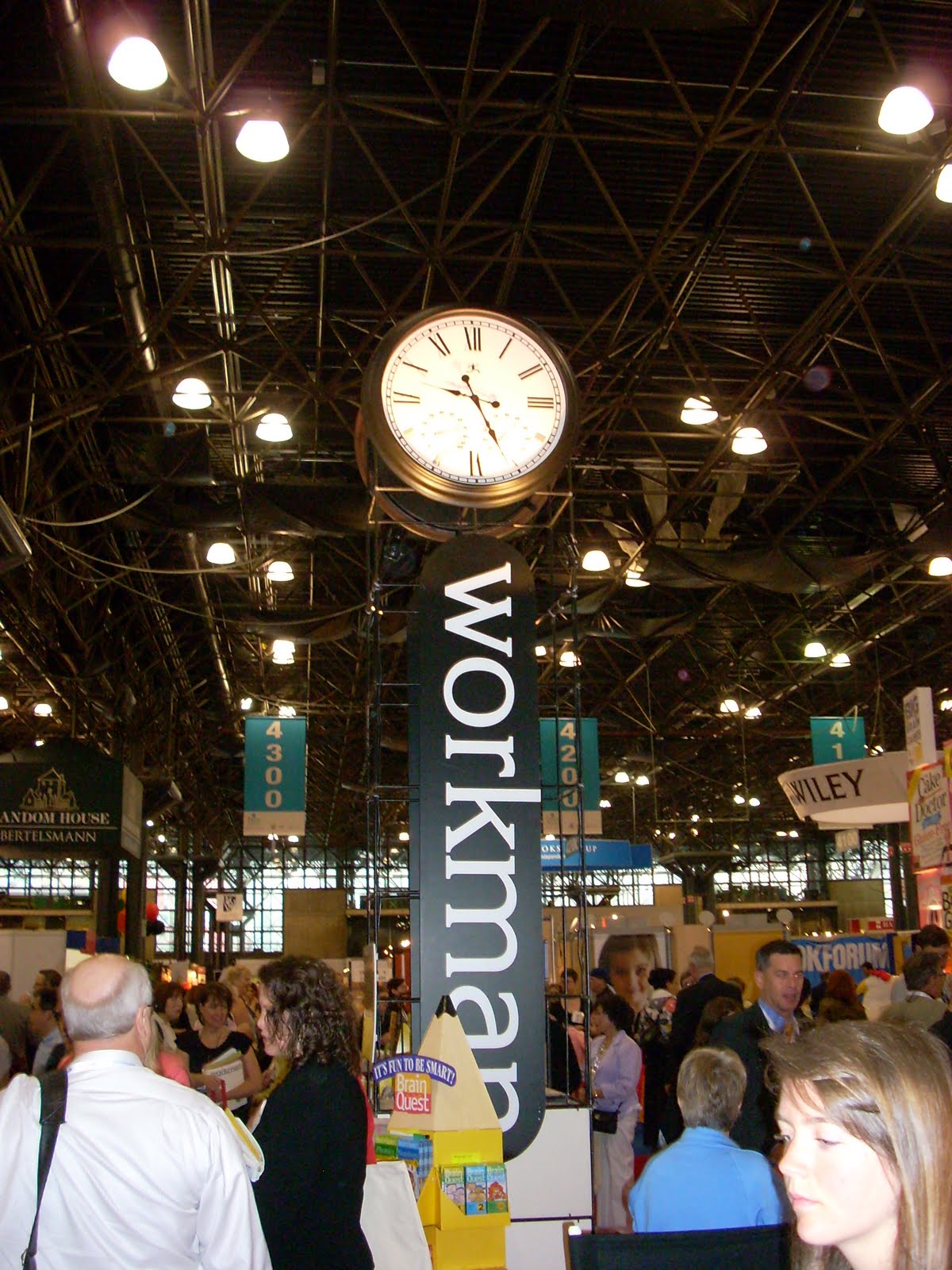
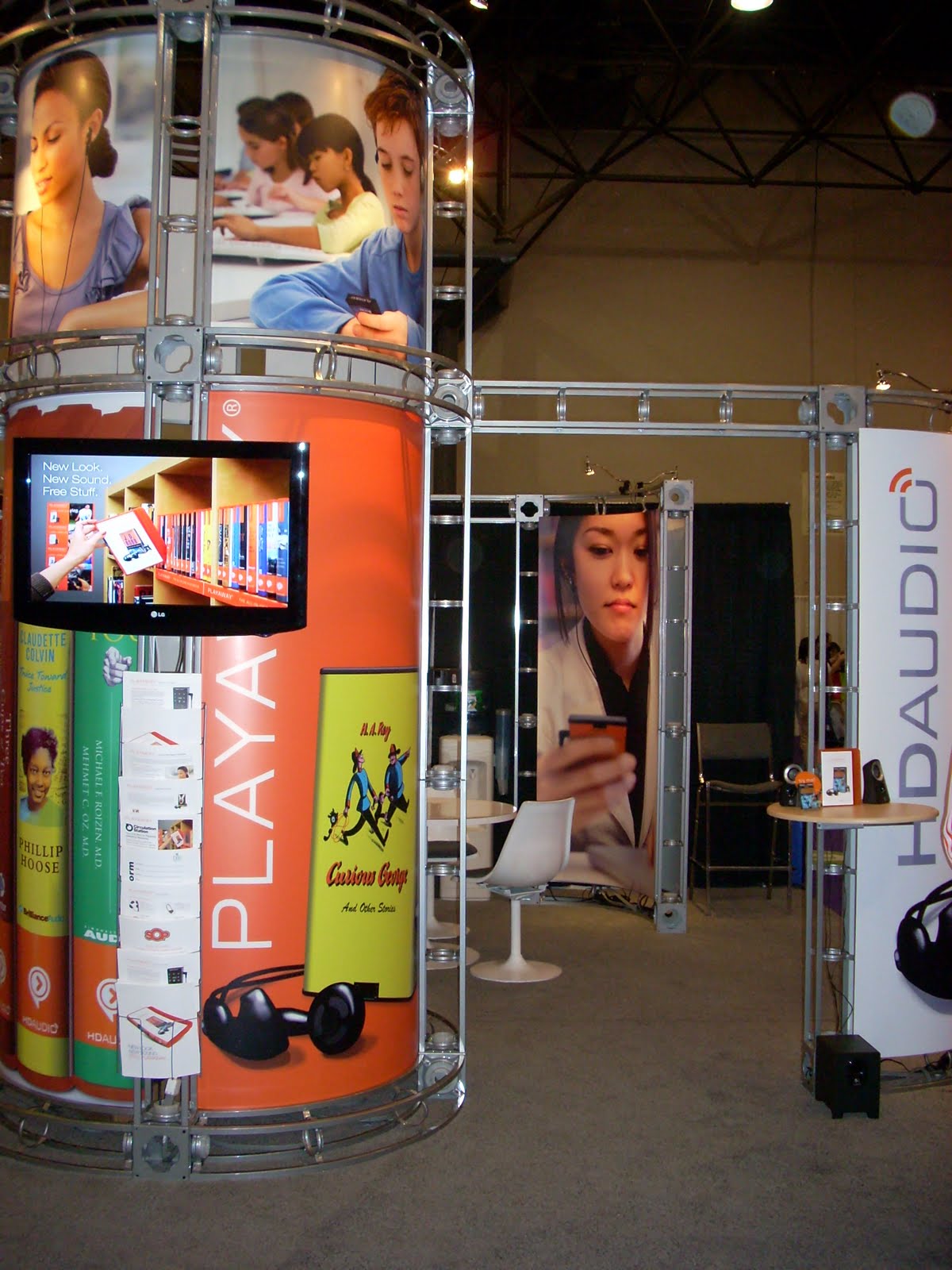
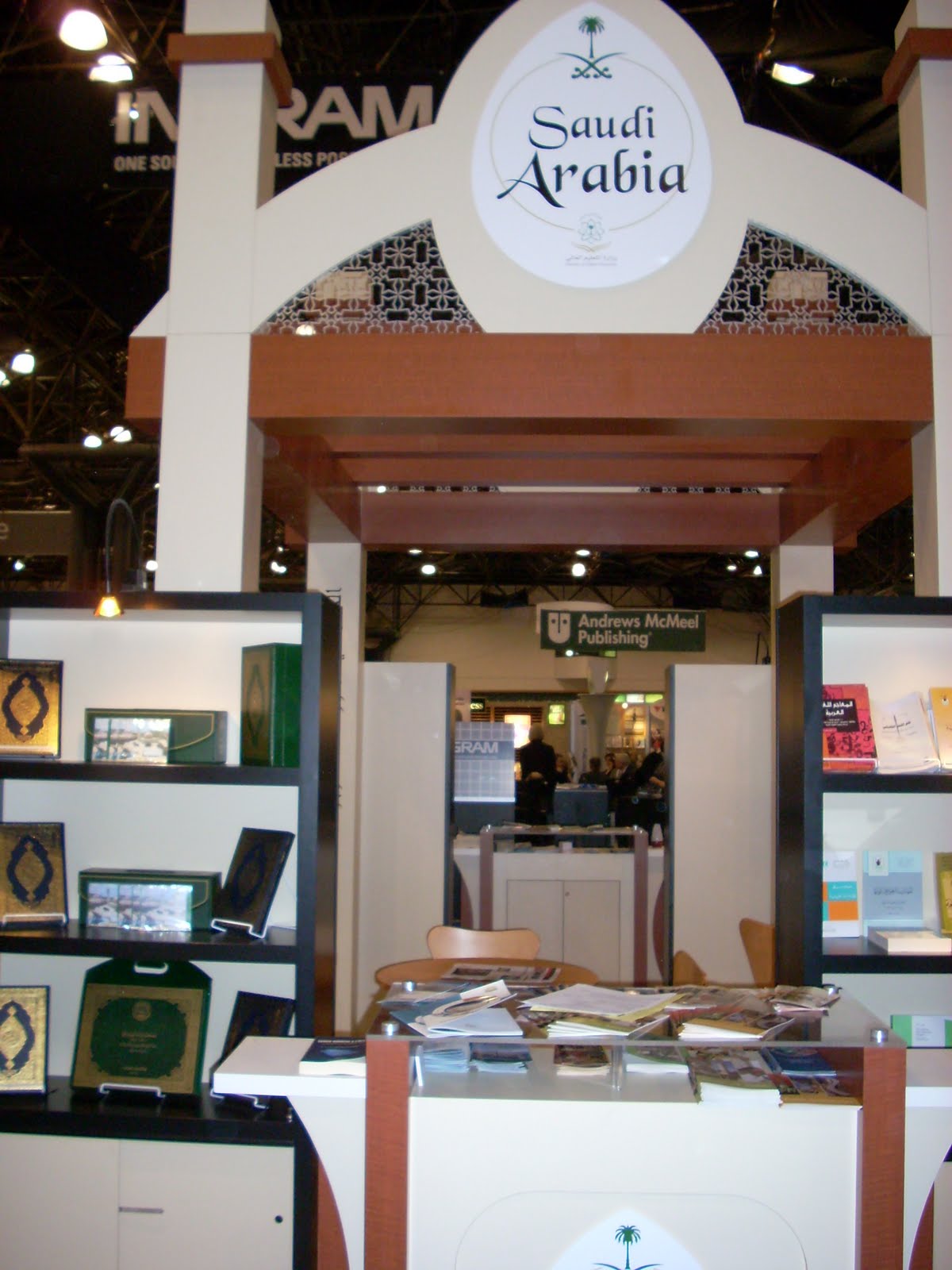
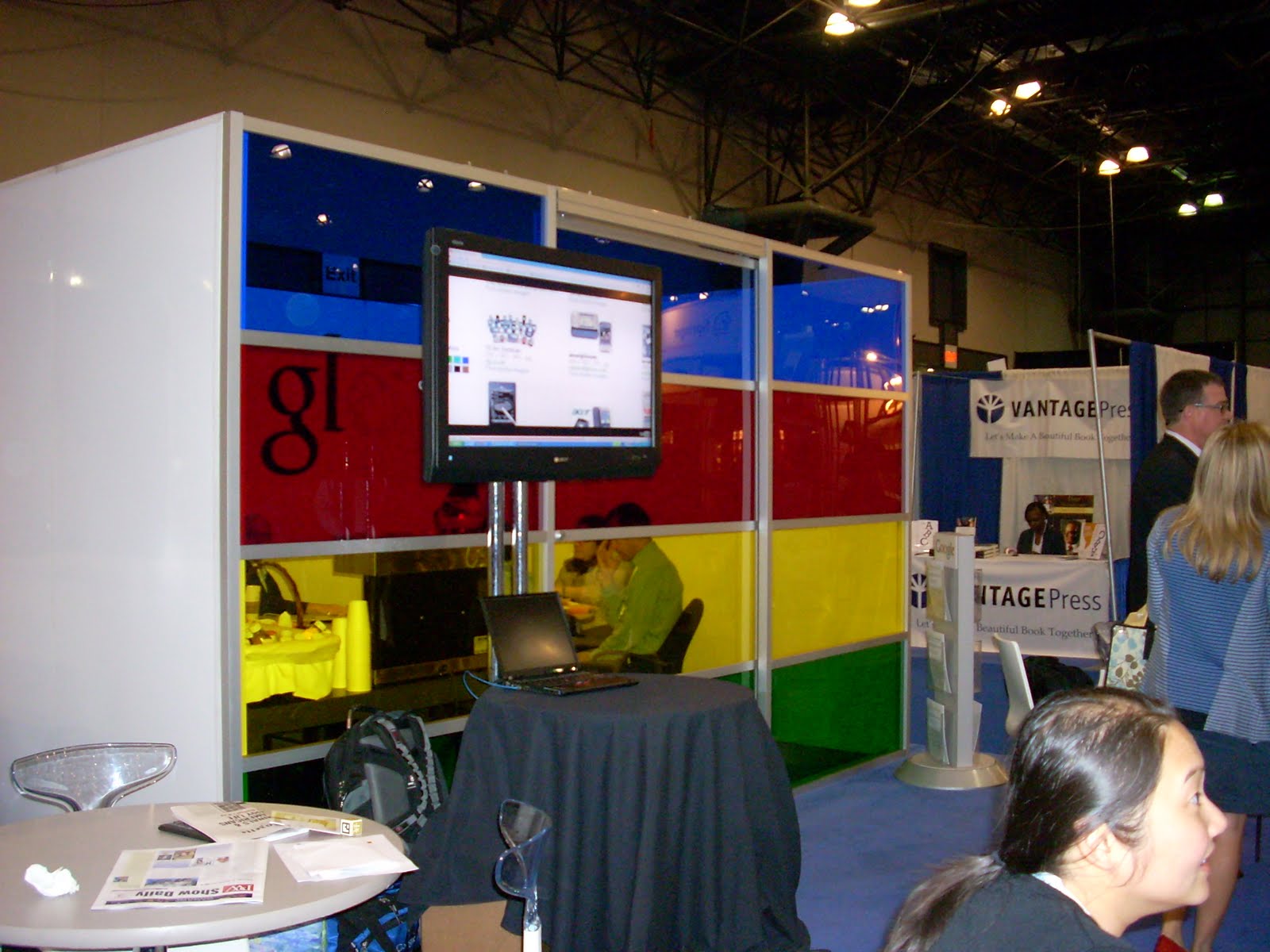
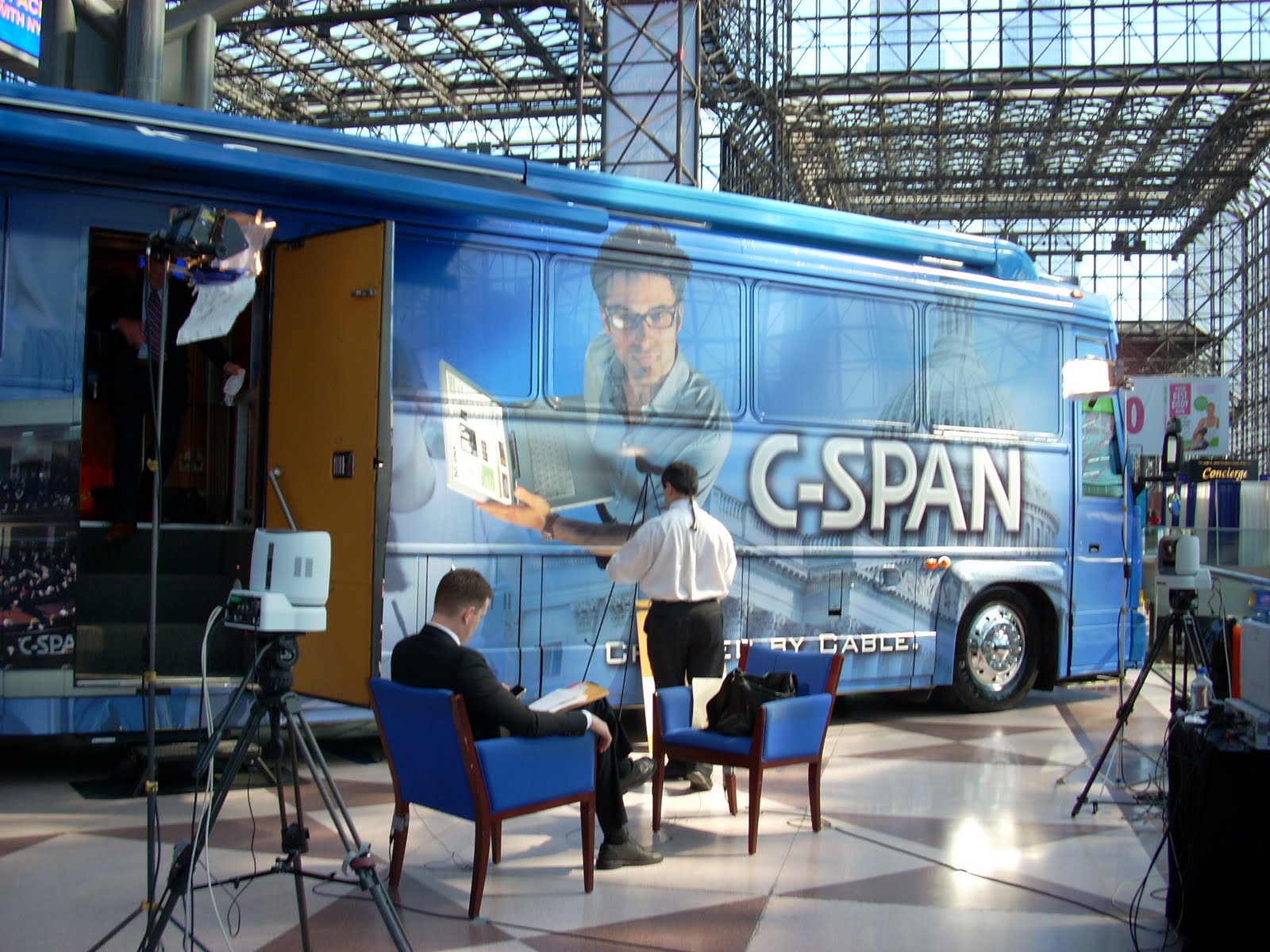
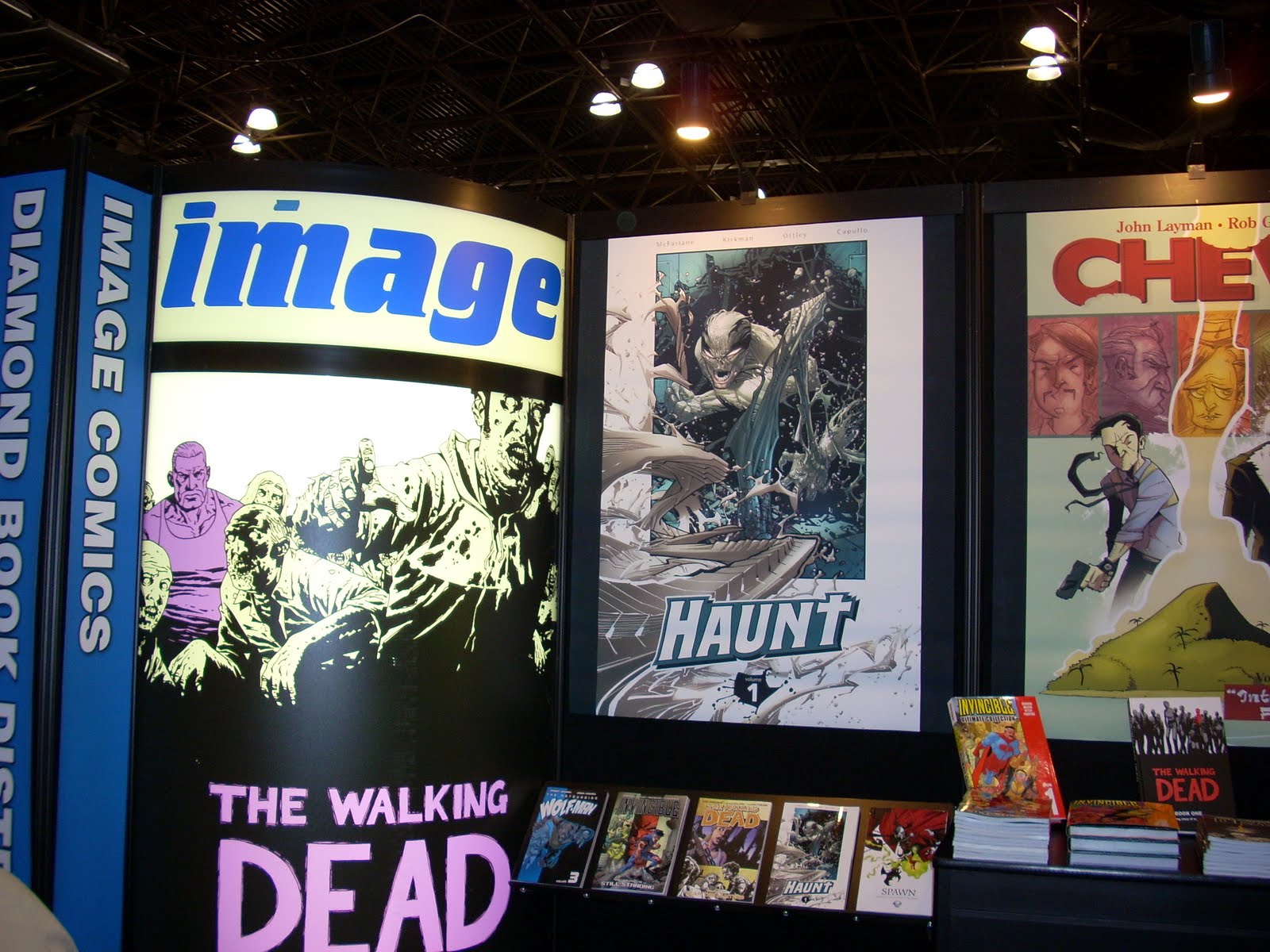
More photos I took at BookExpo America 2010.
Osprey Books! I used many titles from their “Men-at-Arms” series for World War One research. I, umm, visited them twice. A sales and marketing person found me (and my uses for their books) quite amusing, I think. Since their main audience is usually wargamers and historical reenactors.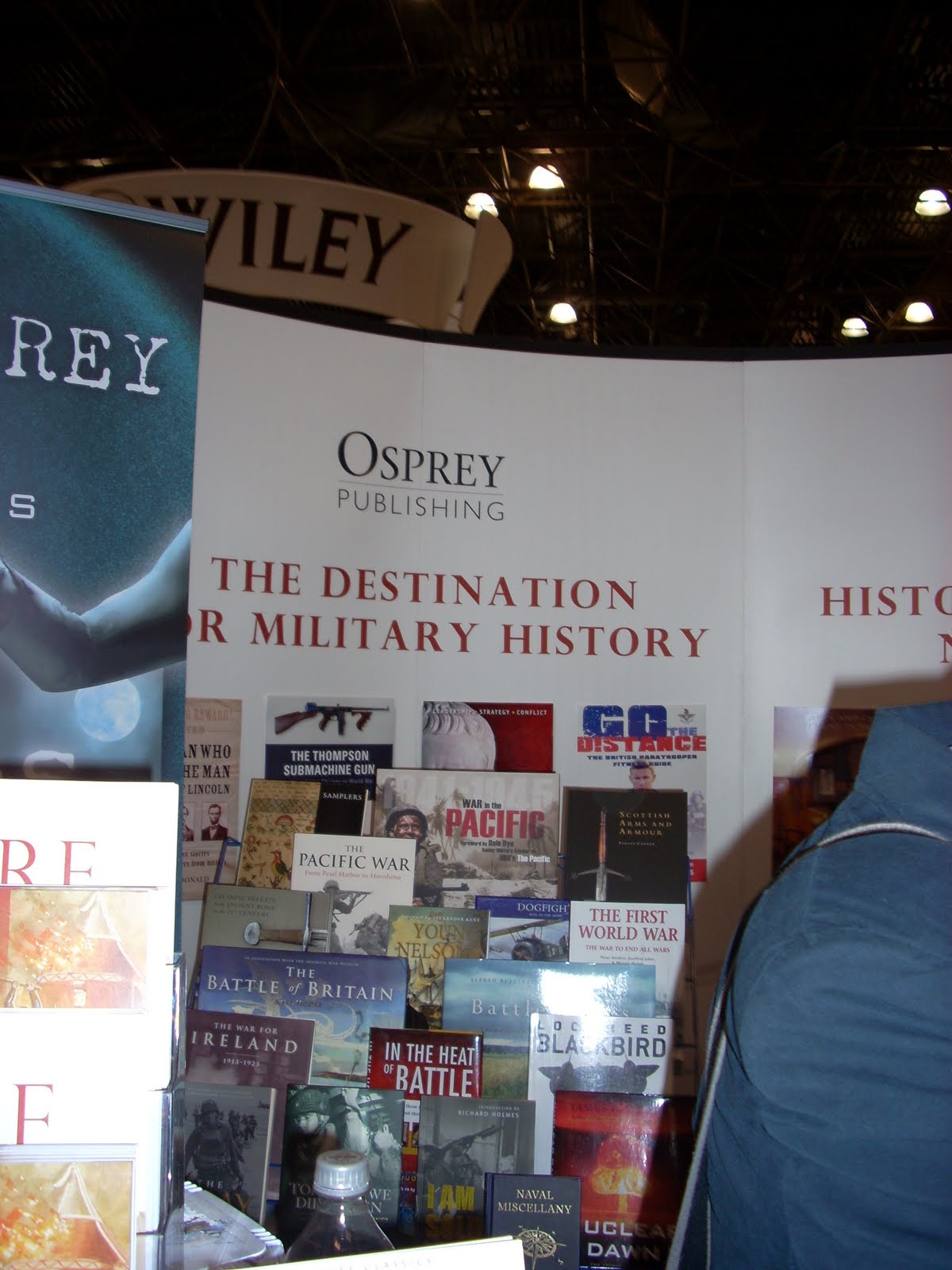
Upcoming books from Small Beer Press. The Kathe Koja historical is out in October. It’s set in a brothel. I’m also looking forward to the collection of Karen Joy Fowler’s newer stories.
Cleis Press. I sold my first story to a Cleis anthology.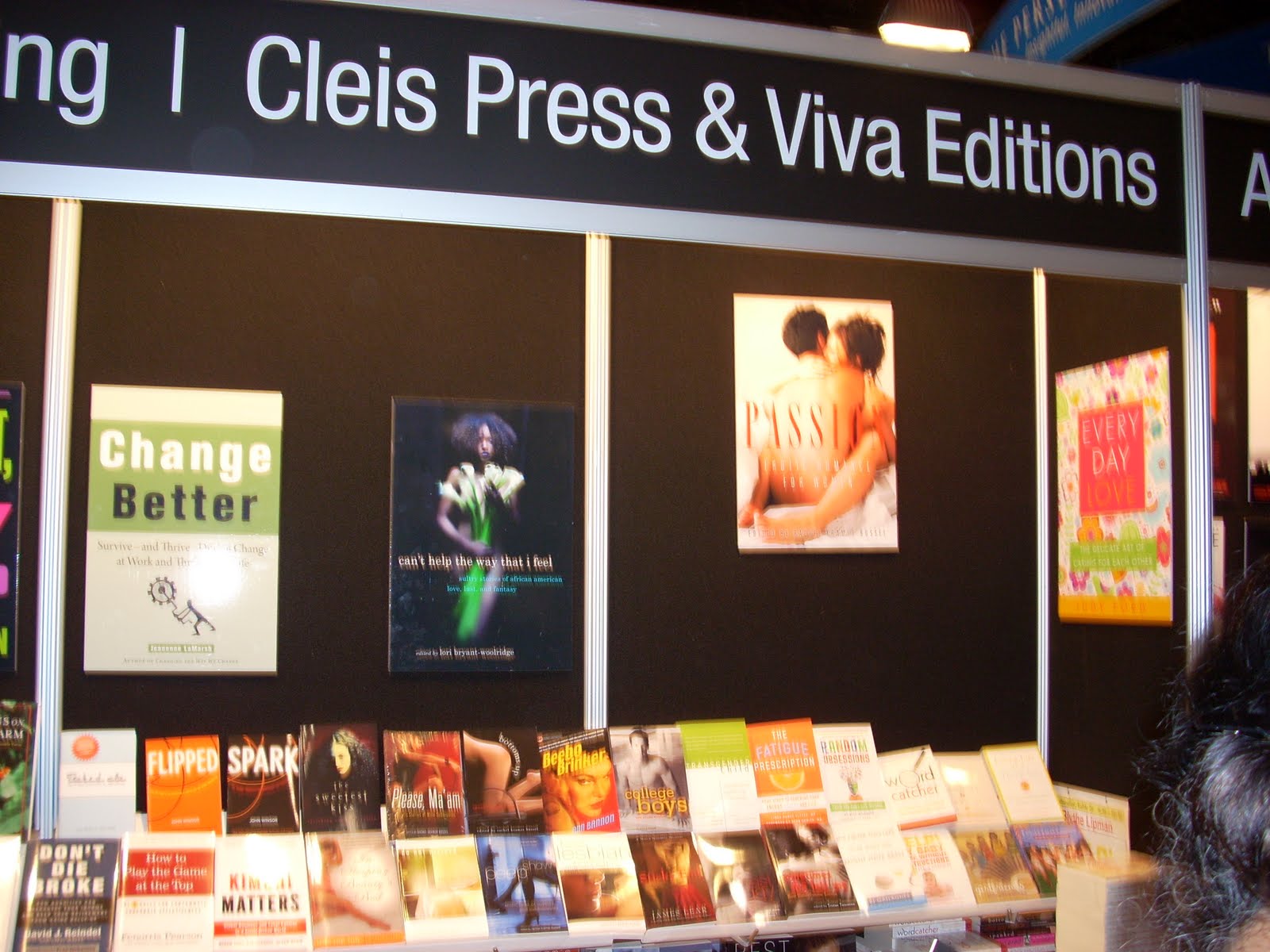
Today I had the happiness of introducing people to each other because they ought to have known one another already but didn’t. (I think I got those tenses right…I’m really tired!) I first met up with erotica writer Sacchi Green, whom I met many years ago at a reading for Best Lesbian Erotica, in which we both had stories. We wandered the floor and I got to see things from a different perspective: she owns two stores, that sell some books but also a lot of subsidiary items such as stuffed animals, magnetic poetry, and novelties. I got to see a little of how her buying decisions were made and learn how those companies (such as Folkmanis, makers of stuffed animals and puppets) operate. We had an early lunch and I introduced Sacchi to Meredith Schwartz; both of them have edited erotic anthologies, and both write erotica as well. Later, I introduced Sacchi to a publishing friend who lives near her, and who’s actually been to her store; they’d never managed to meet before.
After leaving Sacchi, I met with my agent for a drink and then wandered the floor for a while with friend Cecilia Tan; we went together to visit a mutual friend, Keith DeCandido, who was signing comics. I hadn’t realized some of Cecilia’s books that were coming out in print this fall actually had a display! So we walked over to the Red Wheel booth and I took pictures of her with them (you can see one in the previous post).
Now, I’m off to dinner with some local friends. It’s been a fun conference!