"Water Music" free read!

I’ve put a new, downloadable free read up on my website. It’s my first published story from December 2000, lesbian erotica titled “Water Music.”

You can download it here.

When I participated in a reading for this anthology, at Bluestockings in New York City, not only did I meet other writers whom I still correspond with today, I was also privileged to see my story interpreted in American Sign Language. The interpreter told me she’d spent the day practicing the stories in a coffee shop, hoping desperately all the while that no one sitting nearby could understand what she was saying.

Posted in erotica, free read | Comments Off on "Water Music" free read!

Line Editing, Up Close and Personal

I spent a large portion of the month of April revising The Duke and the Pirate Queen; some of the revisions responded to my editor’s comments, some responded to a workshop critique, and some came from my fevered brain.

I thought it would be interesting to share some of the line edits I made in the manuscript.

Original version:
Imena was far more devious than he’d predicted.
Revised version:
Imena was delightfully devious.

Original version:
…he could hear feet above, pattering on the main deck, distant shouting, the loud creaking of wood and rope and the snap of sail.
Revised version:
…he could hear feet pattering on the main deck above, distant shouting, the loud creaking of wood, the heavy hum of rope, and the snap of sail.

Original version:
Maxime stopped him from closing the door with a hand on Chetri’s shoulder.
Revised version:
Maxime grasped Chetri’s shoulder to stop him from closing the door.

Original version:
Gently, he dislodged Maxime’s hand from his shoulder and stepped back.
Revised version:
Gently, he dislodged Maxime’s hand and stepped back.

Original version:
She hadn’t thought it was like her to brood, but in the cold dark hours of the morning, her past decisions surged and receded in her mind like surf.
Revised version:
In the cold dark hours of the morning, her past decisions surged and receded in her mind like surf.

Original version:
He turned his head and kissed in the vicinity of her ankle, dragging his mouth along her shin and nibbling with the edges of his teeth…He curled one hand around her calf and slowly slid upwards, seeking the top of her stocking.
Revised version:
He turned his head and kissed in the vicinity of her ankle, dragging his mouth upwards and nibbling with the edges of his teeth…He curled one hand around her calf and slowly slid up to her thigh, seeking the top of her stocking.

Original version:
Sunlight only occasionally filtered down through the trees, but when it did, the heat was trapped, and she felt it more powerfully with her clothing on. Sweat had begun to trickle down her back, mingling with tiny fragments of bark from her tree-climbing and the slightly sticky residue from The Knife’s insect repelling balm.
Revised version:
Sunlight filtered down through the trees where the heat was trapped. She felt it more powerfully with her clothing on. Sweat had begun to trickle down her back, mingling with tiny fragments of bark from her tree-climbing and the sticky residue from The Knife’s insect repelling balm.

Posted in the duke, writing craft, writing process | 2 Comments

Dialogue Tricks

This post was originally written for Lauren Dane’s Writerly Wednesday.

The first time I tried to write a novel (the one I started over and over and over again), I workshopped it with a very small group of friends. One wrote journalistic nonfiction, one was writing, essentially, memoir, and one was a published poet and writer of mainstream literary fiction. As you can imagine, I learned all sorts of useful things from these other writers, despite them being well outside my genre.

One of the things the poet said to me has stuck for all these years. She told me, and I paraphrase, that dialogue is one of the most essential methods of characterization. No two characters should speak alike.

There’s an exercise one can do, which involves taking a piece of one’s story and stripping out everything but the dialogue – all the names, all the tags, all the physical business, even the order of the sentences that provides clues – and then seeing if you can tell which character is saying what.

So in that first novel, I decided I would tackle this craft issue. I did it with what I considered to be a trick. Not that using tricks is bad. And eventually they start to sink into your skin and you no longer notice you’re using them, and they’re not really tricks any more.

My trick was simple: to assign each character one notable feature for their speech that would work with their personality. One character was in a position of power and confident about it. She tended to ramble when she spoke, assuming everyone would want to listen to her, and mostly spoke in statements. A second character was diffident and frightened. He was careful never to ask anyone a question for fear of appearing weak; he would often turn his questions into statements. A third character was speaking what was to her a foreign language, so her phrasing reflected that; also, since one of her main character traits was her anger at her situation, that too affected her speech patterns.

First character: “Here, put this on. It’s freezing in here, we should have shut the window. Ziya collected clothes for you yesterday. And there’re a couple of extra quilts in the closet if you need them.”

Second character: “If I do not deviate, I am safe.”

Third character: “You are giving up. Foolish. You are free. Not shut up in their labs.”

I don’t make those decisions so mechanically any more, but it’s good to know that if I need to, I can go back to the trick.

Posted in writing craft | 4 Comments

What Does the Reader Need To Know?

Research is fun. Fun. Fun.

However, research for the writer’s sake isn’t always needed for the reader’s sake. I get questions about this a lot.

The writer may need to know the mechanics of a specific task. For example, in 1901 in New Jersey, where does ice come from? How often does the ice man deliver? What does the heroine do with the ice after it’s brought to her house? The reader, however, doesn’t need every detail. The reader only needs what’s relevant to the story.

If the key plot element is that the heroine is out of ice, the reader might need to know why (the ice man only delivers once every two weeks because the heroine’s too poor to buy more, and the minister came to visit the day before the delivery). If the key plot element is needing ice to put on an injury, the reader might only need to know that the ice is kept in a box in the cellar, perhaps with some sawdust clinging to it to give the detail distinction.

Details are a good reason to research. When you’re writing, it helps a lot to have details already in your mind, ready to slide into the story when needed: a woman in colonial America tested the temperature of her baking oven by how it felt against her hand; a dolphin’s skin (and maybe that of a mermaid’s tail) feels cool and rubbery; the smell of a fired musket lingers. The trick is not to include every detail.

It’s usually better to explain less rather than more. Some things your reader will know already. To be really obvious, the reader knows that when it rains, things get wet. The writer doesn’t need to tell them about cloud formation, weather prediction, and global warming. She only needs to let them know that Susie’s clothing gets soaked and Joel offers to wrap her in his dry coat.

Posted in research, writing craft | 7 Comments

Top 5 Violent Hot Space Opera Babes

And now for something completely different.

Sometimes, you just need to watch some women blow things up.

Today I’m going to recommend some violent and also hot space opera babes. Traditionally, these are done as top fives, so that’s what I did.

1. Princess Leia, Star Wars. Like, duh. I think she was the hottest in her bounty hunter costume in Return of the Jedi. Quote: “I don’t know where you get your delusions, laser brain.”

2. Aeryn Sun, Farscape. Not only hot, but tough. Much more a warrior than her eventual paramour, scientist John Crichton. She even gives birth in the middle of a firefight. Quote: “Shooting makes me feel better.”

3. Dayna Mellanby, Blake’s 7. A brilliant creator of weaponry as well as user of same. Also, hot. Quote: “Without danger, there’s no pleasure.”

4. Starbuck, Battlestar Galactica. The female one. Okay, so I haven’t watched the later seasons yet. But in the earlier seasons, she is amazingly hot and also a total rake. I would buy her in any historical romance. Especially hot in her military undershirt. Quote: “Me in a dress is a once in a lifetime opportunity.”

5. Ellen Ripley, Aliens. The second movie is the best. Hard, gritty, nonstop, and she makes the hard decisions. Especially hot when shooting evil aliens. Quote: “I say we take off and nuke the entire site from orbit. That’s the only way to be sure.”

Posted in movies, sf/f, television | 4 Comments

"Nation, Race, and Empire," George Robb

British Culture and the First World War by George Robb.

Chapter One, “Nation, Race, and Empire”
During WWI, “Nationalism attempted to focus conflict outward–against a German foe inevitably constructed as a degenerate, barbaric ‘throwback’…As successful as such ideas were in garnering support for the war effort, they created problems of their own since ‘the nation,’ as defined, clearly could not accommodate the diverse citizenry of Britain itself, let alone its vast, diverse Empire,” p. 5.
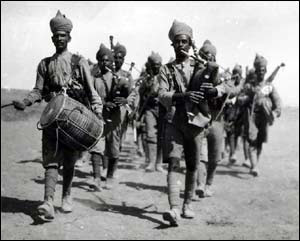
“For contemporaries, the Great War represented not merely a national, but a ‘racial’ struggle. After all, since the nineteenth century, the concepts of ‘nation’ and ‘race’ had bled into each other. Victorian anthropologists and ethnographers had formulated racial hierarchies which placed Europeans on a higher plane of evolutionary development than Asians or Africans, but within Europe itself there was further jockeying for position…The English, Germans, Irish…were all understood to be separate races unto themselves, who possessed innate mental qualities…that were carried in the blood and revealed in the lineaments of the face,” p. 7.

“Britain’s military and imperial competition with Germany was bound up with post-Darwinian anxieties of racial degeneration and ‘the survival of the fittest’,” p. 7.

“Eugenics, the psuedo-science of heredity and selective breeding, had gained tremendous influence among British intellectuals in the generation before the war. As such it lent a spurious scientific authority to racial and class hierarchies and reinforced social Darwinist notions of an inevitable struggle between the races…it is not surprising that British society became saturated with Germanophobia,” p. 8.

“…the line between anti-German sentiment and hatred of all foreigners was easily erased,” p. 9.

Against attacks on foreigners: see Westminster Gazette and Manchester Guardian. Inciting attacks: John Bull, East London Observer. Sympathetic to rioters against foreigners: Evening News, Daily Mail.

British colonies
“Unequal, even racist, treatment of imperial soldiers who fought and died for a British victory increased colonized people’s resentment of the Empire. Likewise, Britain’s authoritarian rule over its colonies proved difficult to reconcile with the claim that it was defending democracy and the rights of small nations like Belgium. The Empire called upon subject peoples to defend the institutions of their subjugation. That so many of them were willing to do so highlights the complexities of imperial relationships,” p. 11.

p. 12
Germany pre-war population 68 million, fielded 13 million troops
Britain pre-war population 45 million, fielded 6 million troops; plus 1 million Indians; 500,000 Canadians; 300,000 Australians; 100,000 New Zealanders; 80,000 [white] South Africans. “In addition, hundreds of thousands of Indians, Africans, Chinese, and West Indians served in military labor units outside their nations.”

“Germany, however, delighted in pointing out that the defender of Belgium was the oppressor of Ireland and India,” p. 13.

p. 15 Extensive propaganda to promote idea of loyal colonists.

Dominions: Canada, Australia, etc.. Dependencies: India, African colonies, West Indies.

“The white colonial elite also opposed blacks joining the Army, fearing it would give them aspirations above their station and lead to the erosion of racial boundaries,” p. 21. There was a segregated West Indian regiment.
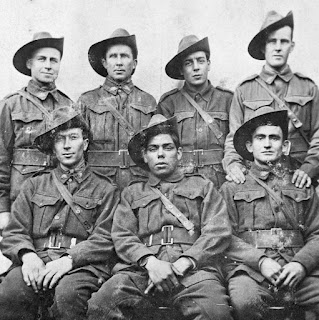
By 1915 some 138,000 Indian soldiers on Western front–by end of 1915, withdrawn from France and relocated to Middle East, pp 22-23.

Irish rebellion, the Easter Rising, occurred during WWI.

“…imperial subjects who worked and fought for British victory were unlikely to simply resume their old ‘subject’ status once the war was over,” p. 29. Postwar riots involving immigrants in Britain.

“Of course, colonized peoples hardly needed to take part in the war to experience racism, but their wartime service proved crucial in convincing many of them that no amount of devotion to their British governors would grant them the racial status apparently necessary for full citizenship in the Empire. Perhaps the war’s greatest tragedy was its tendency to promote an exclusive concept of ‘Britishness’, narrowly defined along ethnic and racial lines, rahter than an inclusive ‘Britishness’ based on a common citizenship of shared rights and responsibilities,” p. 31.

Posted in research, wwi | Comments Off on "Nation, Race, and Empire," George Robb

Geoffrey Dearmer, “The Turkish Trench Dog”

The Turkish Trench Dog

Night held me as I crawled and scrambled near
The Turkish lines. Above, the mocking stars
Silvered the curving parapet, and clear
Cloud-latticed beams o’erflecked the land with bars;
I, crouching, lay between
Tense-listening armies peering through the night,
Twin giants bound by tentacles unseen.
Here in dim-shadowed light
I saw him, as a sudden movement turned
His eyes towards me, glowing eyes that burned
A moment ere his snuffling muzzle found
My trail; and then as serpents mesmerise
He chained me with those unrelenting eyes,
That muscle-sliding rhythm, knit and bound
In spare-limbed symmetry, those perfect jaws
And soft-approaching pitter-patter paws.
Nearer and nearer like a wolf he crept–
That moment had my swift revolver leapt–
But terror seized me, terror born of shame
Brought flooding revelation. For he came
As one who offers comradeship deserved,
An open ally of the human race,
And sniffling at my prostrate form unnerved
He licked my face!

–Geoffrey Dearmer (1893-1996)

#
Today is ANZAC Day.

Posted in dearmer, holiday, wwi poetry | Comments Off on Geoffrey Dearmer, “The Turkish Trench Dog”

Siegfried Sassoon, "Reconciliation"

Reconciliation

When you are standing at your hero’s grave,
Or near some homeless village where he died,
Remember, through your heart’s rekindling pride,
The German soldiers who were loyal and brave.

Men fought like brutes; and hideous things were done;
And you have nourished hatred, harsh and blind.
But in that Golgotha perhaps you’ll find
The mothers of the men who killed your son.

–Siegfried Sassoon, November 1918

Posted in sassoon, wwi poetry | Comments Off on Siegfried Sassoon, "Reconciliation"

Researching WWI Uniforms – Linkgasm #5

Even if you don’t have a library of World War One books, there are a number of useful websites that provide information about uniforms in that era. Here are some of the ones I’ve found useful.

The Sutlers Stores produces replica uniforms for museum display and docent use. Note the “grayback” shirt which I mentioned in The Moonlight Mistress.

Reenactor.net has a WWI section. It’s not only useful for the information it provides, but as a gateway to making research contacts, if you should want to know what it’s like to wear the uniforms. I love their Morsels of Authenticity, short articles about small details, like German underwear.

Military Headgear at Wilson History and Research Center.

I continue to recommend Osprey Publishing, particularly the “Men at Arms” series books, which feature detailed drawings of uniforms and equipment for a wide range of armies and time periods.

Digger History provides a long list of uniform photos and drawings from World War One and other periods, from all over the world. For example, infantry puttees.

For more idea-sparking material, you can search on WWI at Old Magazine Articles, if you’re willing to spend a little time reading. For example, this Vanity Fair article on American uniforms for the well-dressed, October 1918. Their home page.

Posted in links, research, wwi | Comments Off on Researching WWI Uniforms – Linkgasm #5

You Make Your Own Luck

A fellow Romance Diva recently told the story of her first sale, which resulted from a series of events at an RWA Conference – not random events, not entirely. She had taken actions that led to those “random” events. The lesson I took away from her story was that it’s better to make your own luck.

What do I mean by that? I mean that not every path (in this case, to publication) is the same. That seems self-evident, but really it’s not. You have to keep your eyes open to see those other paths. I think it helps a lot if you’re being yourself, and no one else, while you’re doing that. You have to be open to opportunities; have hunches; do things that might not seem “normal” but that intrigue you anyway.

I won’t give exact details since it isn’t my story to tell. The Diva was writing in one genre, but attended a workshop for a different genre entirely. She participated, off-the-cuff, and discovered a new type of story she was interested in writing, and was able to pitch it to an editor whom she later encountered in another context, so she was able to strengthen her connection. Lesson one, she made her own luck by being at the workshop and being open to try something new. She followed up that connection by actually delivering a manuscript, and a synopsis of the next as well. Lesson two, she followed up, and continues to follow up to this day.

People talk a lot about luck in publishing, and I truly believe that luck is an element. But some luck, you can make for yourself.

I’d love to hear stories about unexpected connections and successes.

Posted in business of writing | 6 Comments